Cambridge at Christmas: Quiet Streets, Hidden Traditions, and the Songs You Hear After Dark
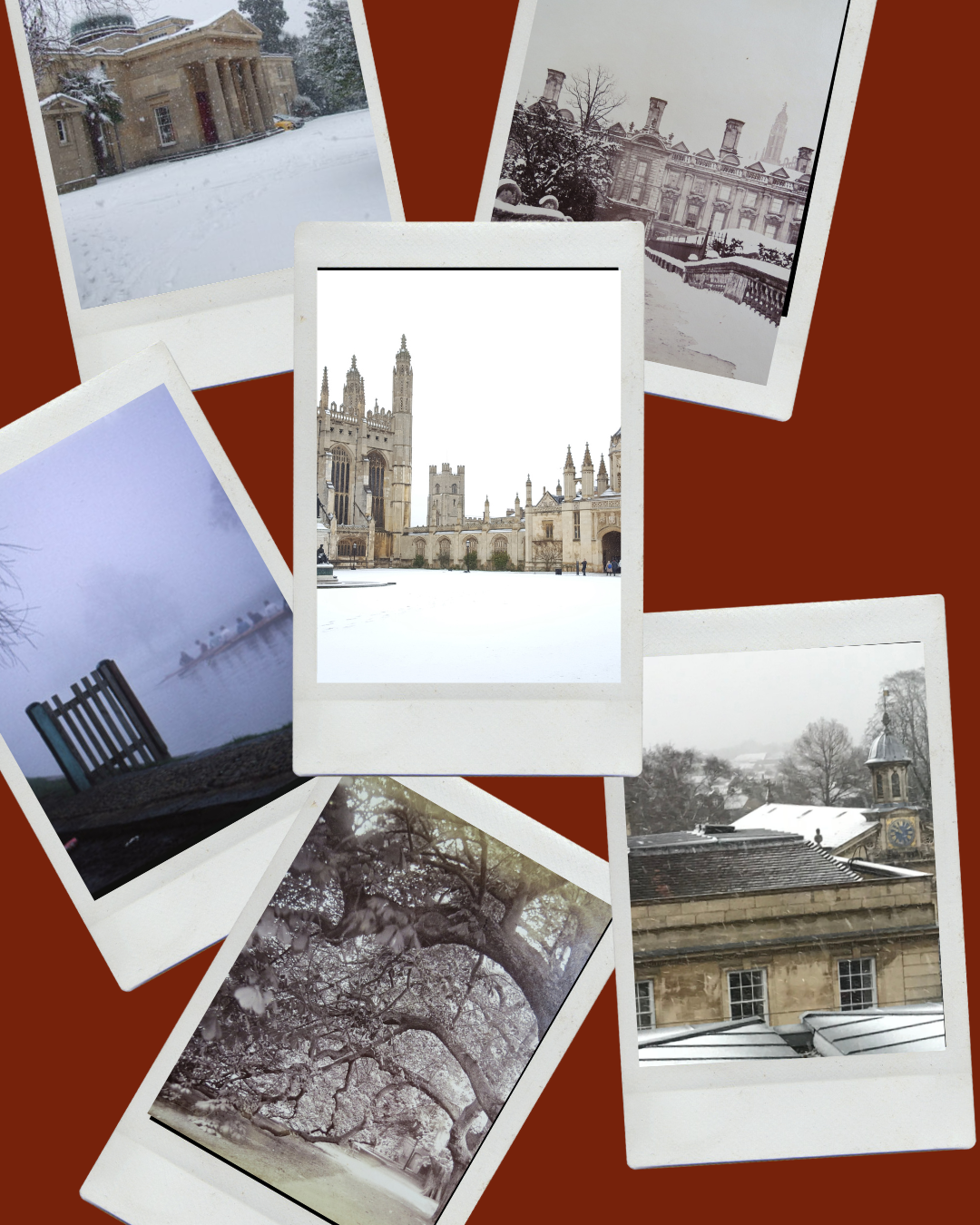
14 December 2025
On November 15th, 1844, a young draping apprentice, having just moved to Cambridge, woke up at half one or two in the morning to hear Christmas music sounding “beautiful in the dead of night.”
His name was Josiah Chater, and what he heard was the town ‘Waites,’ local musicians who would traditionally receive a salary to play in everything from university college meals to street performances, and, from the middle of November until Christmas day, they would play into the night.
Just over one hundred and eighty years later, I set out on my own December night walk through Cambridge. There was little sign of the Christmas sounds that Josiah spoke of. Instead, the gentle spin of bicycle wheels and passing footsteps punctured the night air. Christmas, it seemed, was everywhere I looked – lights on every shop-front, a warm glow and a laid table in a pub, Christmas trees in college courts – but almost nowhere I could hear.
As I returned to my room from the cold, I began to wonder why I couldn’t find any sign of Christmas in the sounds I heard. Had Christmas become silent? Was it the stress of students nearing the end of term? Had I been searching for a Christmas sound that only existed in films?
So, I returned to Chater’s diary – not to look for music this time, but to see what kind of December he was living through. And as I read, I realised that for Chater, the Waites, and public celebration, was only one thread in the much wider fabric of Christmas. On the 10th of December he skates briefly on the frozen pond in Emmanuel; he wonders at large orders of mistletoe and poultry; on the 25th he plays games with his family and sings carols.
Although he was never a student at the University, I begin to catch glimpses of student Christmases today. Ponds don’t freeze over anymore, but students gather at artificial rinks; instead of mistletoe and poultry, I find myself haling unreasonable amounts of mince pies and mulled wine from the supermarket for a Music Society event; and nights of card games and “Secret Santa” feel surprisingly close to Chater’s descriptions of family Christmases. In fact, the tradition of Christmas games goes back at least as far as 1549, when the university banned fencing and dice, but allowed card games as a special exception only at Christmas time.
These moments aren’t necessarily the biggest celebrations, the loudest parties, or the most public display, but they’re the quieter kinds of Christmas you hear when you start listening differently.
The next night, I went out walking again. This time I let my ears listen for the small interpersonal sounds that I had written off before. Small eruptions of conversation, pairs of uneven footsteps, students returning from formals or preparing for late night escapades, all going somewhere different to celebrate their own Christmas.
That night, at half one or two, I woke to singing in the streets. It wasn’t quite the Waites, but a group of students returning from a club singing All I Want for Christmas Is You. In that moment, the historic stone buildings seemed to become an instrument. Their voices ricocheted through the empty lanes, and hollowed courtyards, uninhibited. As they rounded the corner, I could almost hear the quiet presence of people tucked away behind lit windows.
It struck me then that the Waites, wandering at one or two in the morning, would have been singing into much the same kind of quiet. Their music wasn’t filling crowded streets – it was sounding across the sleeping market town.
On my last day in Cambridge, as I treated myself to a celebratory market lunch, I caught myself pausing mid-stride. So excited for my food, I had assumed I had been soundtracking my day with Christmas tunes, but there it was: a brass quartet of students playing carols in the square, their music bright and a little wobbly in the cold.
Ultimately, I defer to the Christmas expertise of the muppets:
“It’s in the singing of the street corner choir. It’s going home and getting warm by the fire. It’s true, wherever you find love it feels like Christmas.”
The Muppet Christmas Carol, 1992