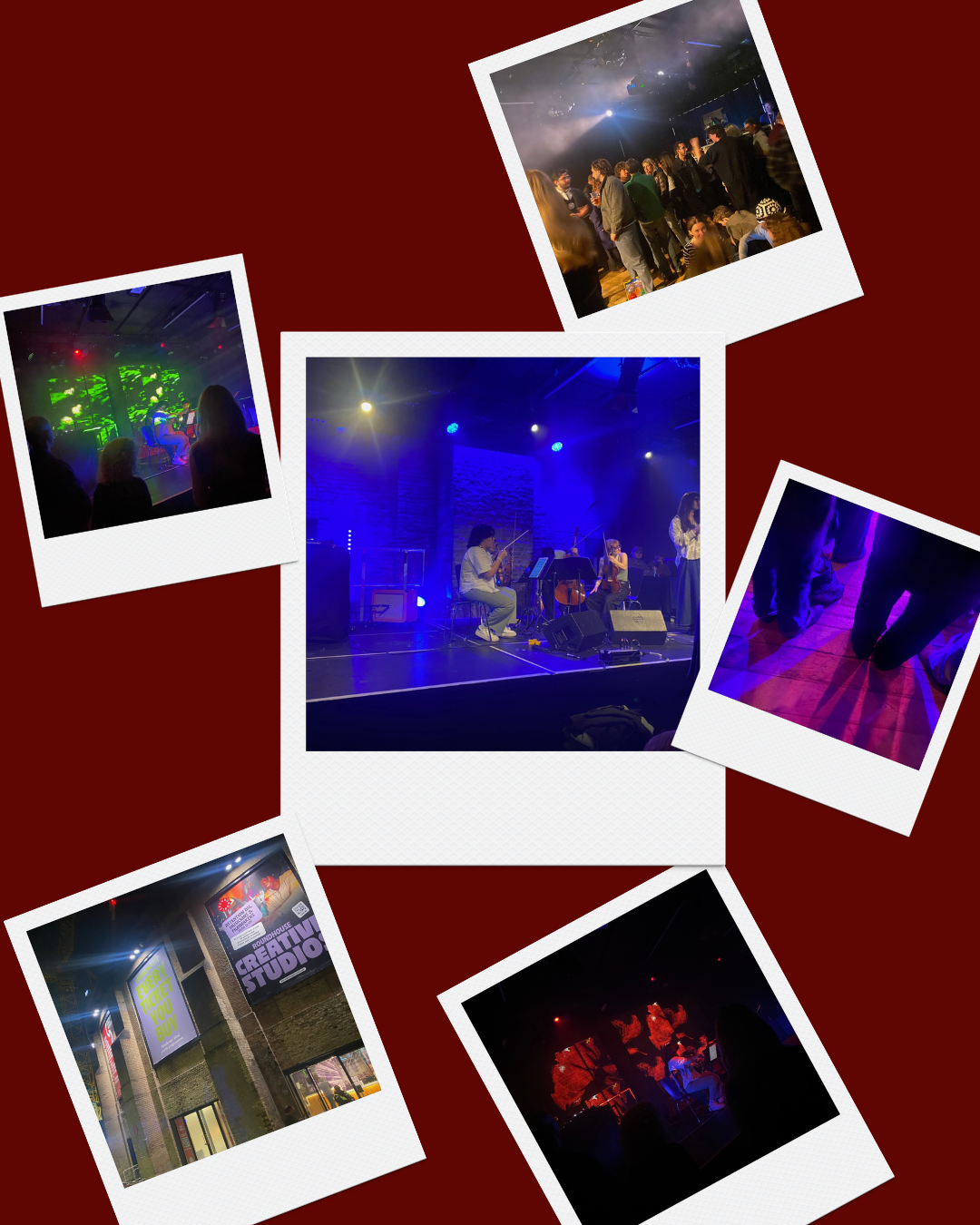
Photos by Sydney Minor
Dear Reader,
It was the night of 17 October 2026. I was walking from Kentish Town West Overground station, leather jacket and oversized scarf wrapped around me, headphones playing the new Avalanches album, No Bad Memories. It suddenly dawned on me that we had entered London winter. In winter, we all shift into a different routine: instead of going to outdoor festivals during the day, we go through our own version of hibernation as we bundle up and head into darkened music venues.
My destination was the Roundhouse’s Studio Theatre, where I was seeing the Jasmine Quartet perform their concert Above the Fray, an experimental, multimedia string quartet programme. Kentish Town and the Roundhouse seemed a fitting setting for an experimental classical concert. Edgy yet established.
Walking in, I was hit by the smell of a smoke machine (not something I’m used to at a typical classical concert) and 2010s pop blasting. I immediately recognised several composers and string players from my undergrad, all dressed the part in their baggy jeans and sling bags.
The MC introduced the quartet and each piece, encouraging the audience to clap between movements and come and go as they please, trying to “break the rigid classical standards.” A bit on the nose, but I appreciated the sentiment. I find that these kinds of contemporary classical concerts can sometimes lean too far into “the scene” of it all. Whether that comes down to the audience, the venue, or the ensemble itself varies case by case, but it’s something I’m definitely wary of. At what point does a contemporary classical performance become a gimmick?
As for Above the Fray, the concert was phenomenal. The programming was new and refreshing, and I particularly enjoyed “Disgusting Music” by Will Everitt and “Lift” by Paul Wiancko. Everitt’s piece blended metal with the string quartet, which made me think of all those Spotify playlists labelled “classical music for heavy metal lovers.” There’s a lot more overlap than you would think. “Lift” could best be described as an odyssey to heaven and hell and back. The Jasmine Quartet added a multimedia element, with projections and animations aplenty, that complemented the final piece without overwhelming the evening to the point of feeling like a gimmick. But most importantly, the playing was electric.
The only way to describe how the Jasmine Quartet played is that they were so locked in that the music itself became the centre of attention. There were moments when I tuned in to synced-up bowing or intense eye contact between the players, but for the most part the playing was so seamless that I let the music wash over me. That’s not to say the playing wasn’t worthy of attention; it was charismatic and engaging, but in this setting I let the focus rest on the music.
After the final piece and subsequent bows, the audience was invited to stay for a techno set by Maiyanaya. As someone who loves techno, I have always appreciated the link between contemporary classical and electronic music, and I enjoy it when the two share a setting. After staying for a bit of the set, I wandered back out into the dark, cold London night, ready for the coming months of indoor evening gigs.