26 April 2026
Dear Reader,
NYC has finally been hit by its first glimpse of spring. The day has come to shed our winter layers and step into a version of ourselves that feels freer. The streets of Bowery were busy. Were we finally out of hibernation? You never know in April.
With the arrival of spring, came the reopening of the New Museum’s expanded 60,000 square-foot space, housing New Humans: Memories of the Future (21 March 2026). The exhibition felt less like a collection of works, and more like a question unfurling across three floors: what does it mean to be human? Each work resisted standing alone. Instead, they spoke to one another, like a roundtable, all trying to offer a different answer or add to an existing idea.
Oskar Schlemmer and Rudolf Laban introduce the body through a choreographic lens. In Das triadische Ballett (1922) dancers are encased in geometric costumes composed of metal, wire, wood, and rubber that dictate the limits of their movement. They can move—but only within the constraints imposed on them, like a system following instructions. Nearby, and pivoting away from staged choreography, Laban’s notation charts attempt something else: to translate movement into a written score. No longer was dance simply performed; it started to resemble code.
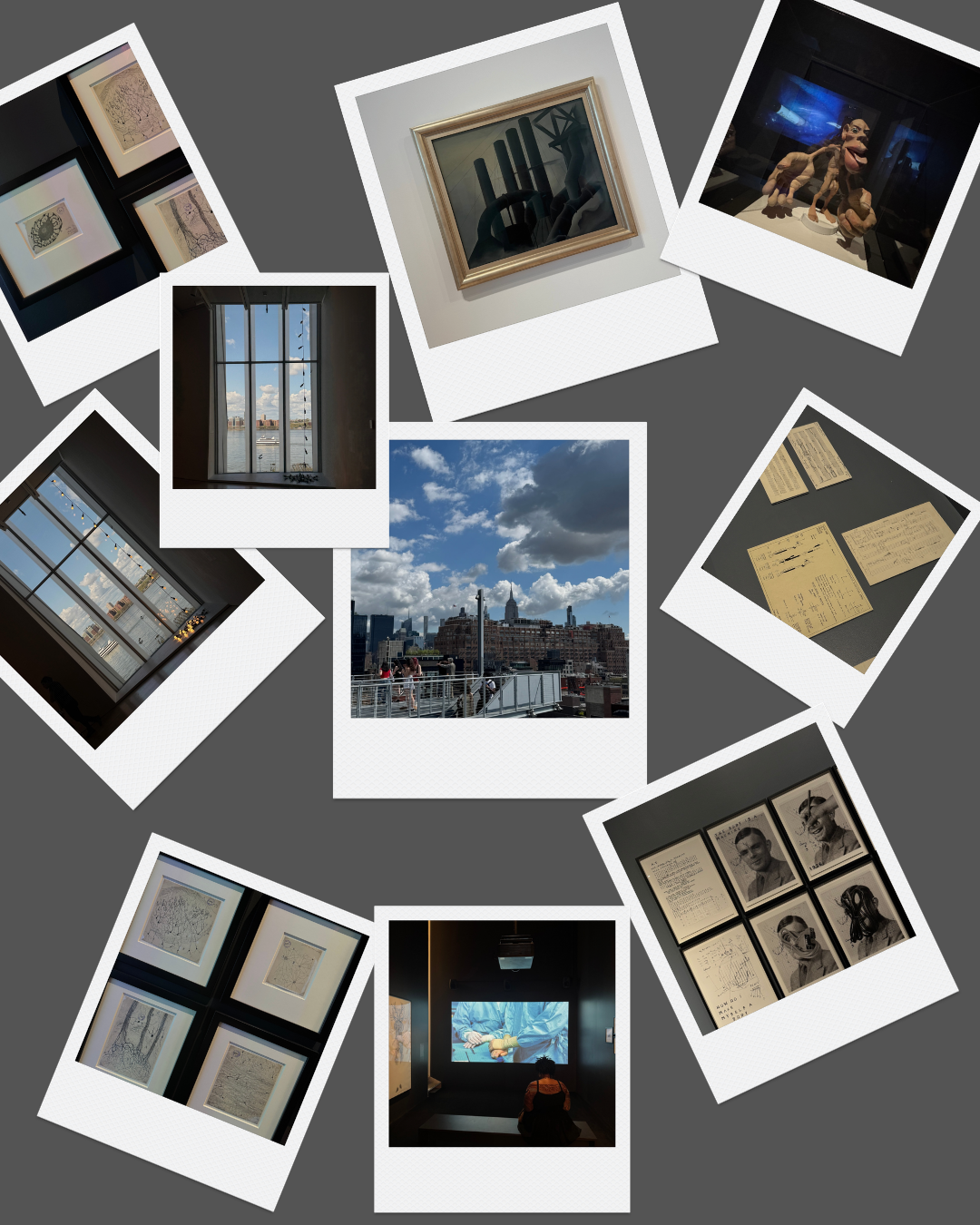
All photos taken at the exhibitions by Olivia Merola.
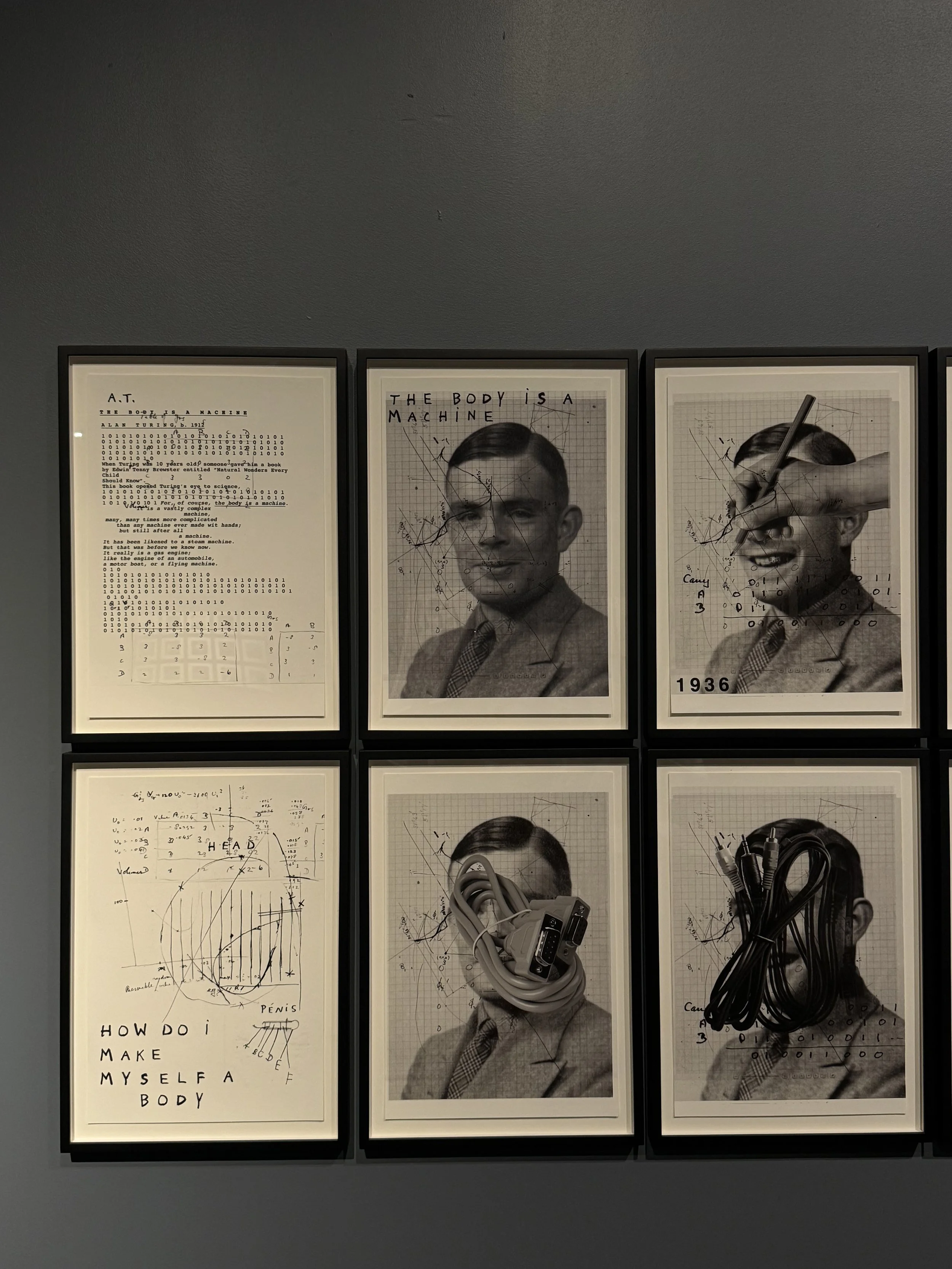
Around the corner, Henrik Olesen’s piece A.T. (2012), a computer collage on cardstock, extends this idea. Referencing Alan Turing, Olesen examines queerness and identity through Turing’s computation and theoretical computer science contributions during World War II. The question becomes harder to ignore: if movement can be coded, and identity can be explored through systems of logic, what does it mean for the body to be a machine?
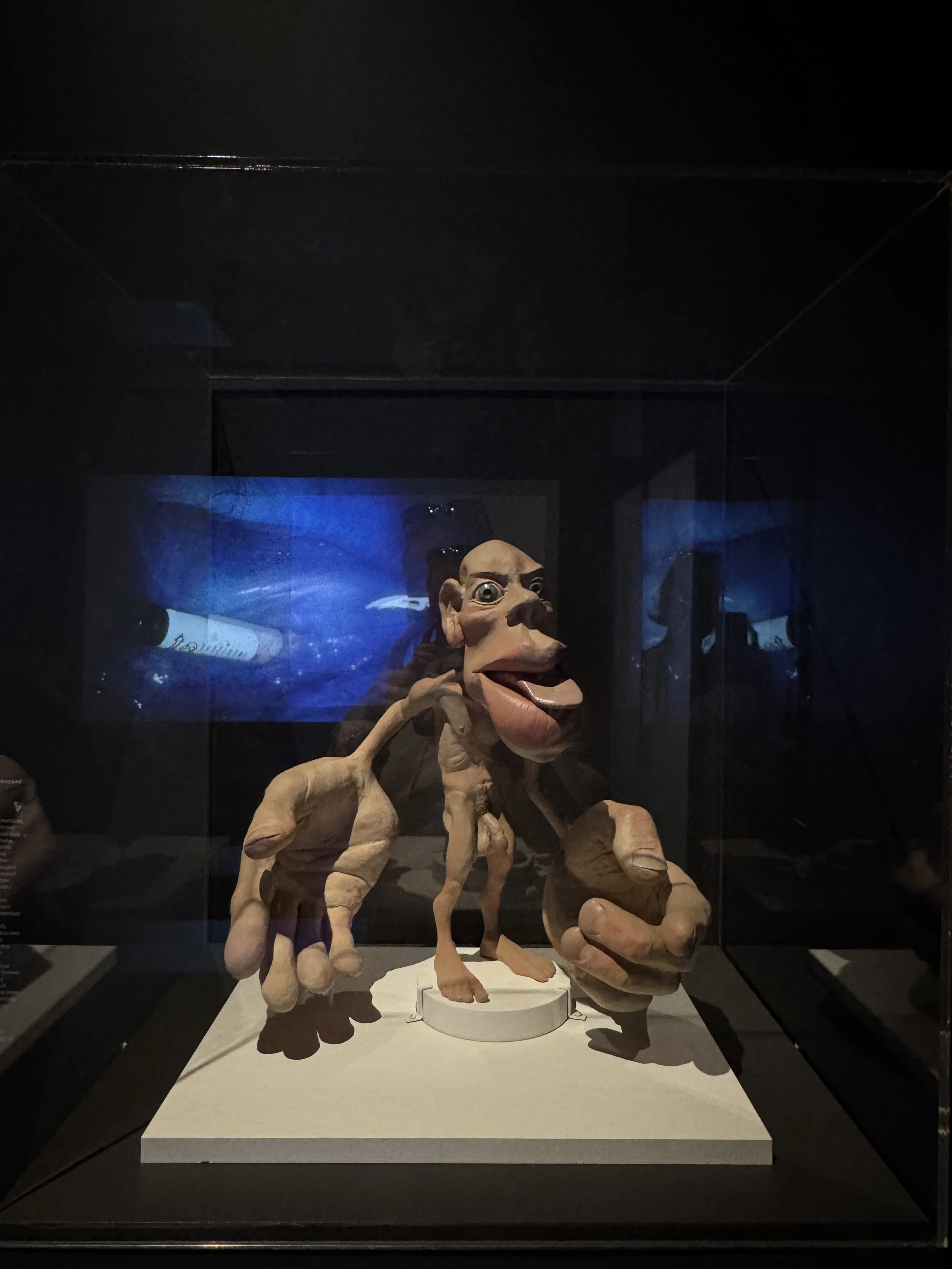
Then there is the homunculus used in scientific disciplines as a teaching tool. Familiar to anyone who has encountered a psychology or neuroscience textbook, it’s a beastly-looking figure, haunting and strange. Developed in the 1930s by Wilder Graves Penfield, the motor and sensory homunculi functions to reimagine the human not by form, but by function. Disproportioned lips, hands, and tongue are exaggerated against a slender torso. Science begins to reassemble the human’s image of itself, and the body is reimagined and restructured.
Across the room, Santiago Ramón y Cajal’s intricate drawings of the nervous system line the walls, their branching, tree-like structures appearing as much as artworks as they were accurate anatomical diagrams.
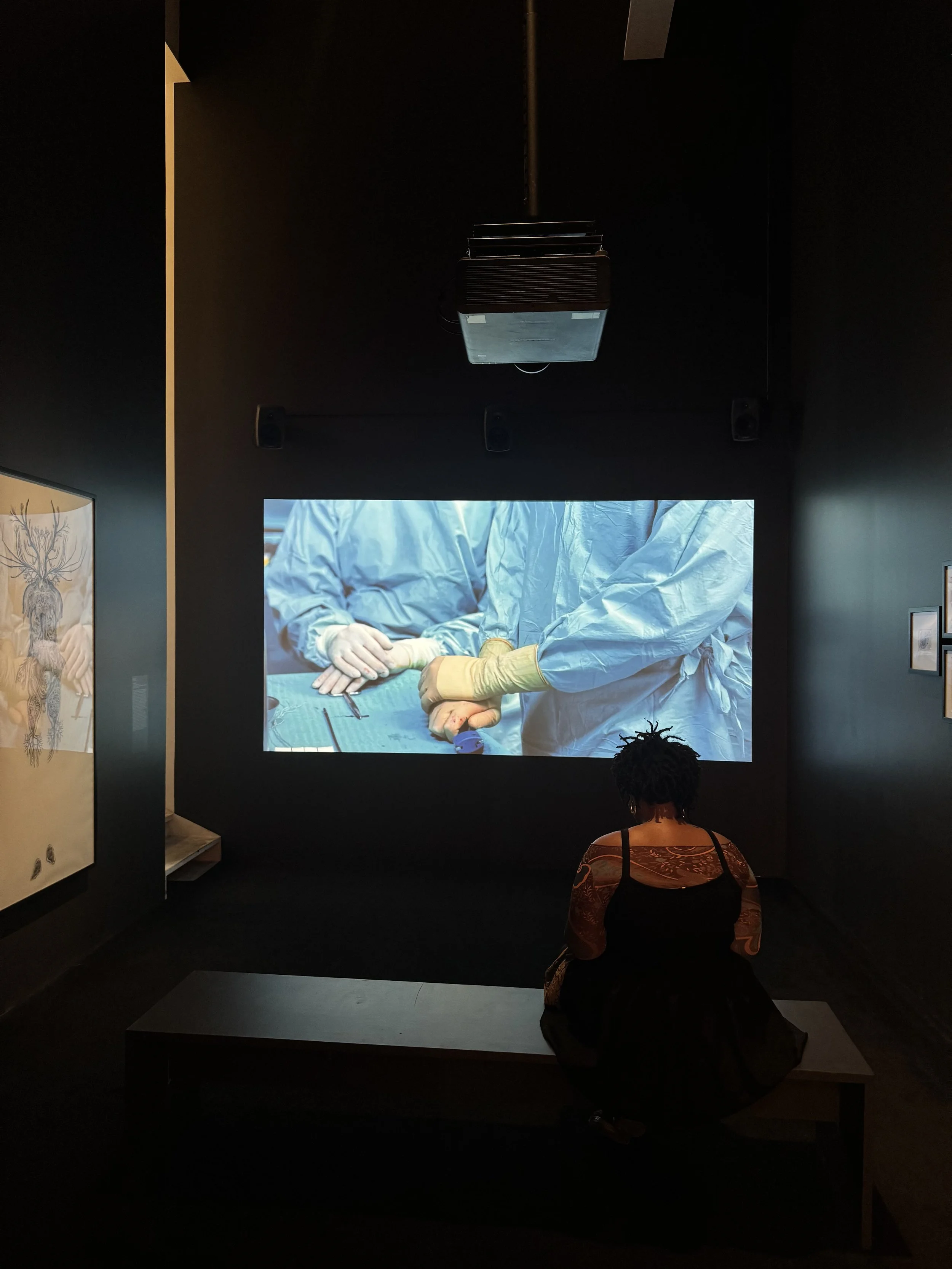
In Yuri Ancarani’s film, Da Vinci, (2012), the body is pulled into direct conversation with something other than itself: the Da Vinci Surgical System, a human-operated surgical robot that performs medical procedures from a distance. No longer is the body being investigated on its own, but now it is intervened upon and manipulated by another system, forcing us to consider how we engage, literally, with technology in the present day.
Across town, the focus shifts. If the New Museum dissects and reconstitutes the body, the Whitney Biennial 2026 grounds it, and places it back into our environment. Here the question is no longer what are we, but where are we?
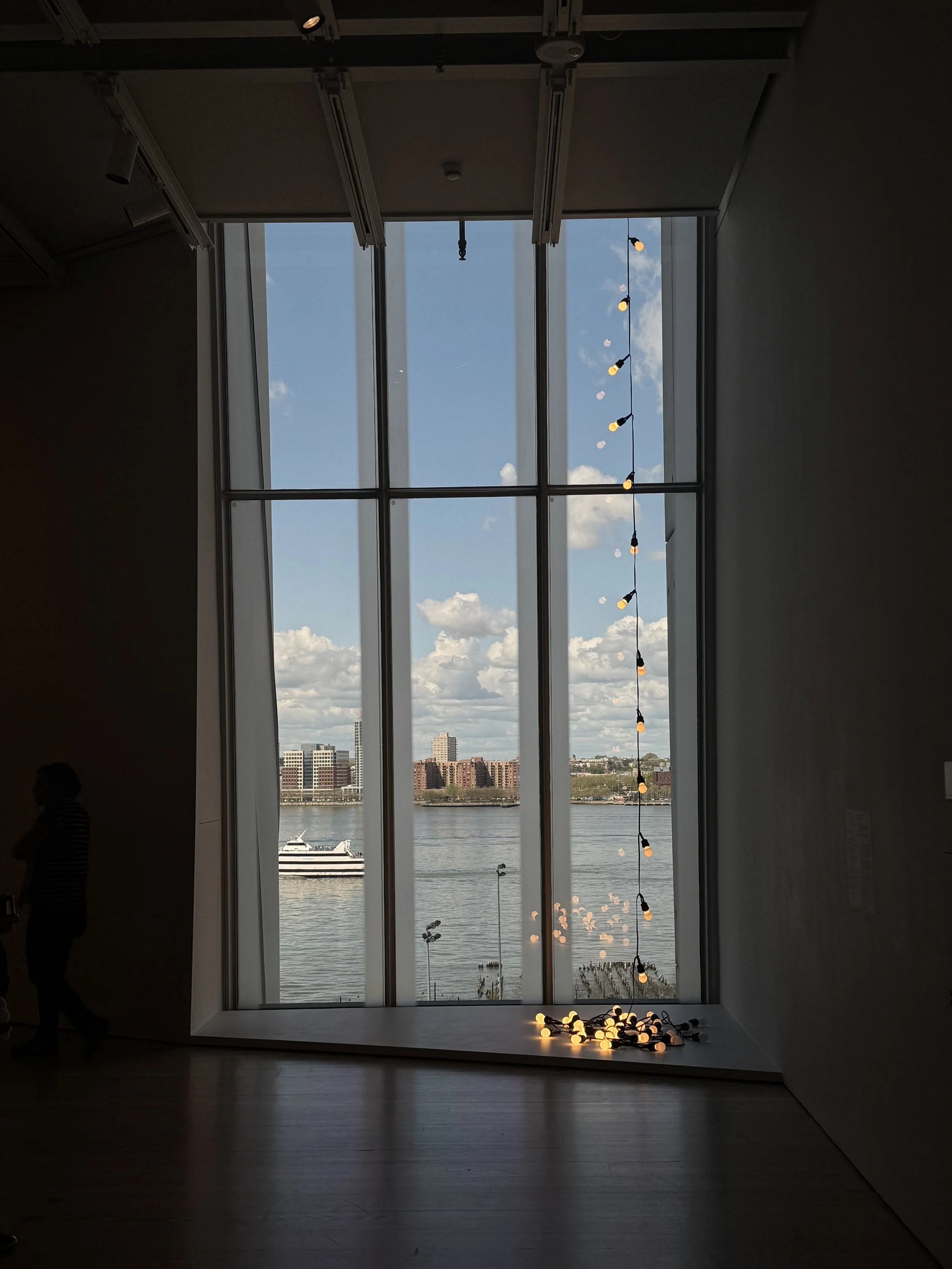
Unassumingly, in the floor-to-ceiling glass window overlooking the Hudson River hangs Felix Gonzalez-Torres’s “Untitled”(America), 1994. A simple string of lights, with no fixed instructions for display, serves as an ephemeral legacy of the artist’s vision of America. The work exists only through the act of being assembled. Like the systems explored at the New Museum, it depends on body participation. Gonzalez-Torres writes, “I remember the America I imagined…That particular America was full of lights. Of shiny reflections, of mirages. Paradise.” His America feels like a flickering memory, something you’re only able to recall for a moment.
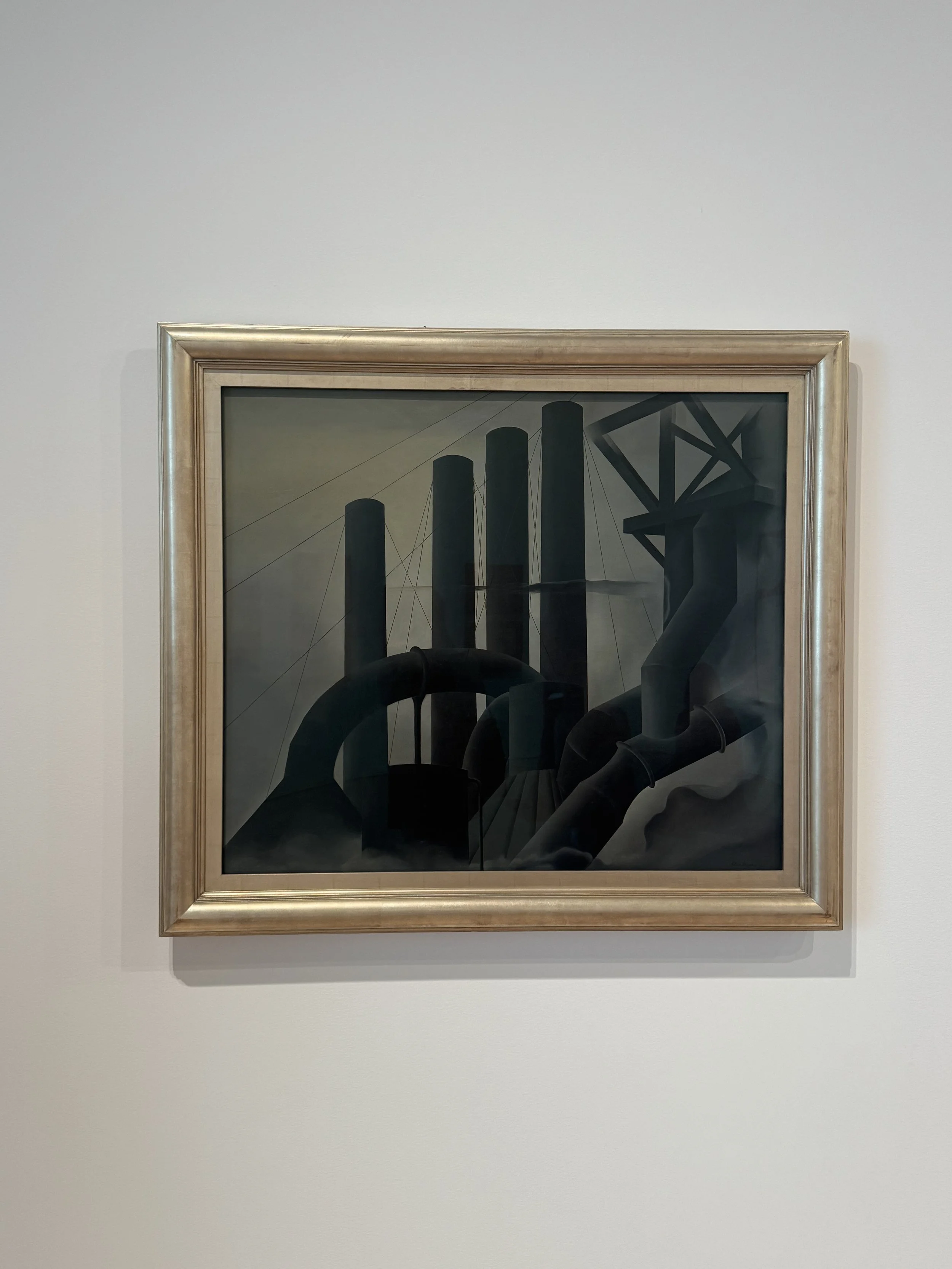
Down the hall hangs Elsie Driggs’ Pittsburgh (1927). Driggs’ America was inspired by a different kind of memory: her view from a train window that she saw as a child, and then revisited years later. Towering smokestacks circled by a hazy pallet of grey sprawls the canvas. She reminds us of systems of production, evoking a nation built through labor and repetition.
David L. Johnson brings us to present NYC. His work, Rules (2024-Ongoing), comprises a collection of removed codes-of-conduct signs from privately owned public spaces. They act as directives, rather than guidelines. “No feeding birds.” “No laying down on benches.” The notices begin to resemble a kind of strict choreographic score, echoing the structured rigidity of Oskar Schlemmer and Rudolf Laban, just across town.
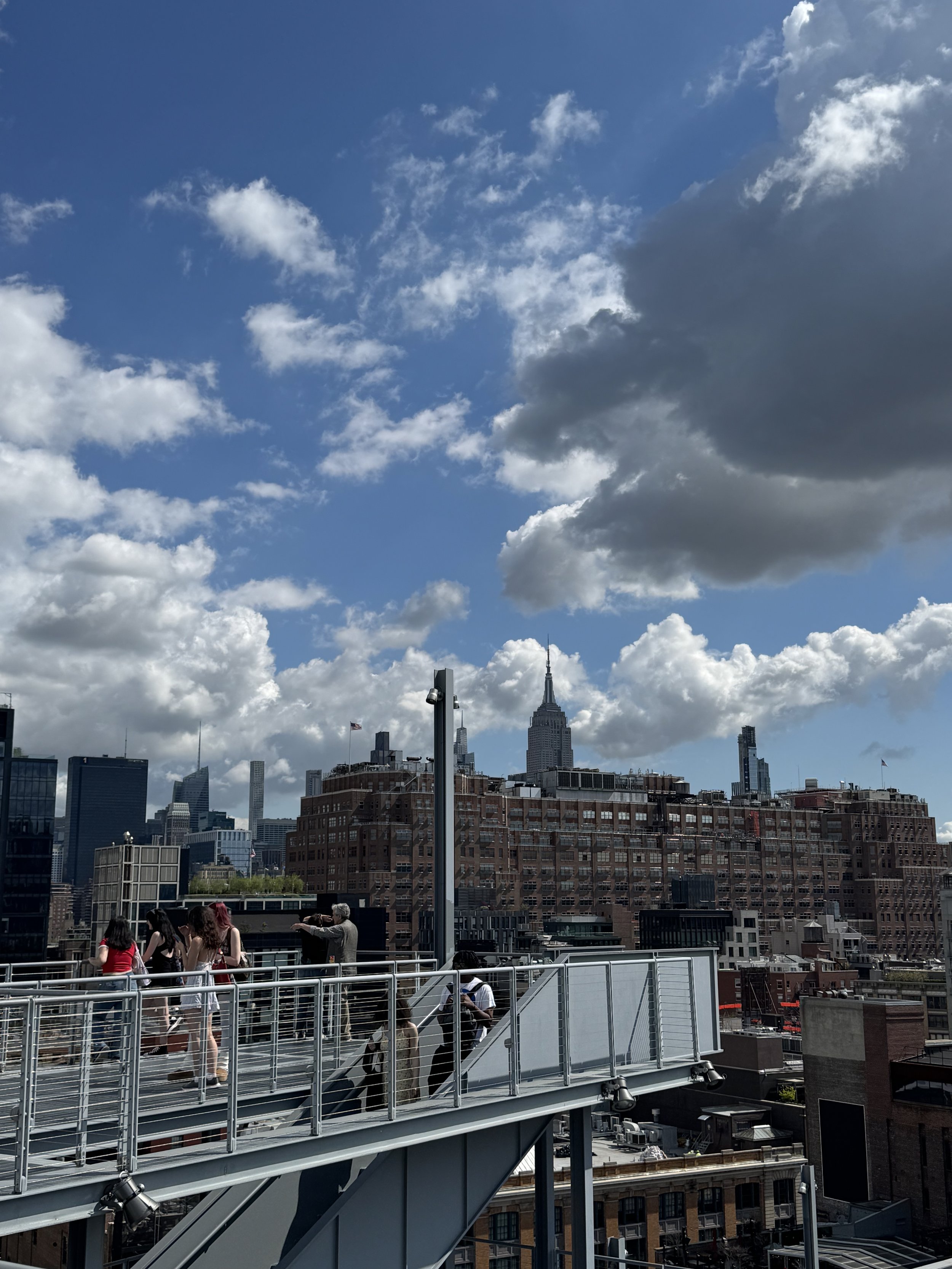
As I step onto the Whitney’s balcony and gaze out into my America, the Empire State building to my left, the Freedom Tower to my right, the city itself becomes part of the exhibition, and I, placed within it. If the New Museum explores a future in which the body is the subject, the Whitney reminds us that we are constantly being shaped by the spaces we live in, and move through.
From NYC,
Olivia