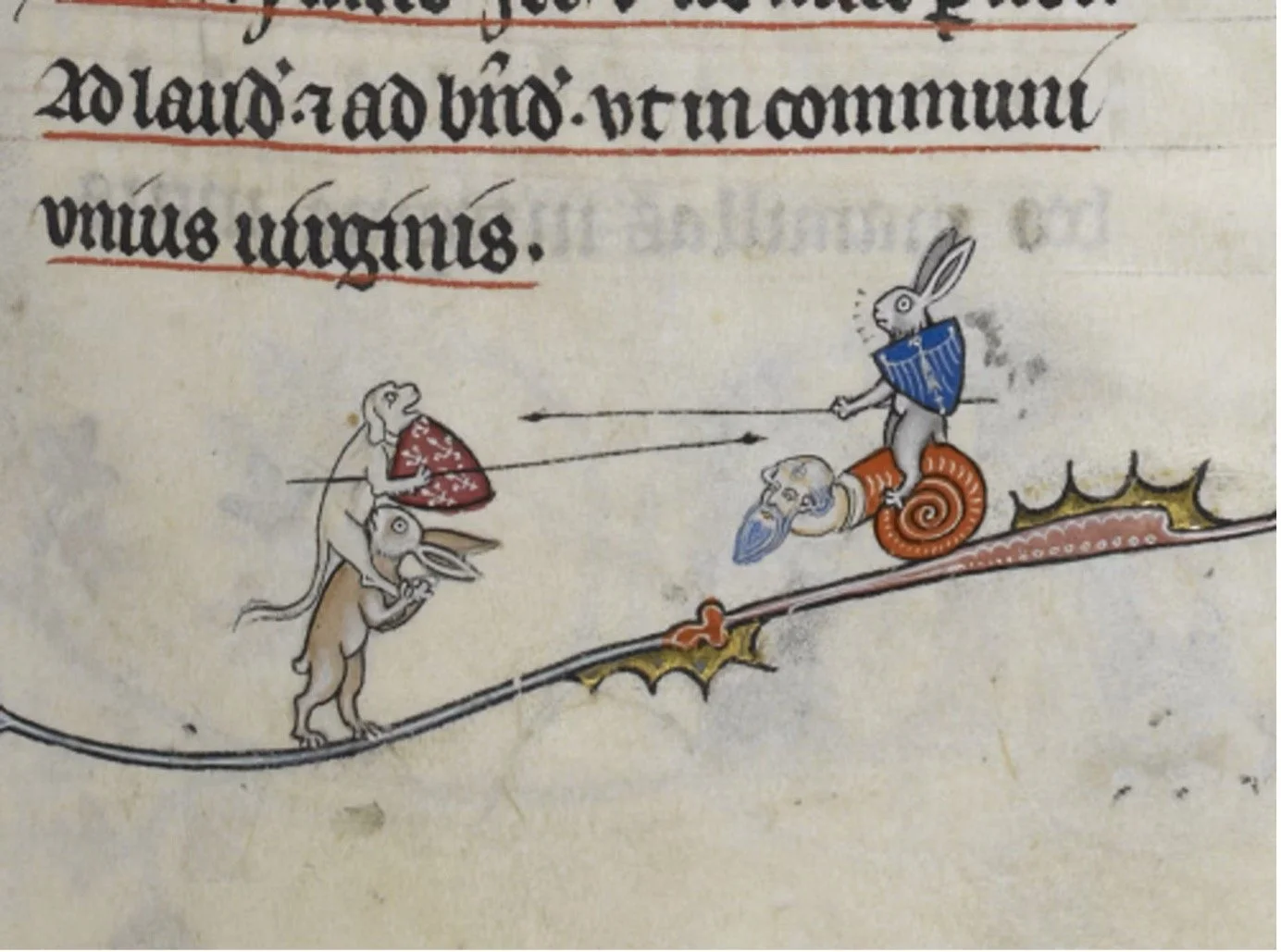
A hound riding on a rabbit and a rabbit riding on a snail battle with shields and lances. The Breviary of Renaud de Bar (Winter portion), Metz, France, 1302-03: Yates Thompson MS 8, f. 294rHeight: 16 cm Width: 10.5 cm, parchment. British Library.
17 April 2026
The medieval world is often seen as gloomy and strictly religious, but this overlooks its surprisingly playful side. Medieval manuscripts and cathedral carvings show that people then shared a familiar sense of humour, evident in quirky creatures, rabbits jousting, naughty nuns, and plenty of cats. These unexpected details reveal that medieval life wasn't just serious—it was lively and relatable, challenging our assumptions about the era.
In the medieval period, books were the ultimate luxury, painstakingly illuminated on costly parchment. Within these prestigious objects, the margins functioned as a “liminal” space where artists painted drolleries—bizarre, subversive, and often satirical illustrations that acted as a visual commentary on the sacred text. Take the famous “Knight vs. Snail” motif: a heavily armoured warrior cowering before a garden snail. This recurring gag on cowardice became a pan-European “meme,” proliferating through manuscripts from England to France.
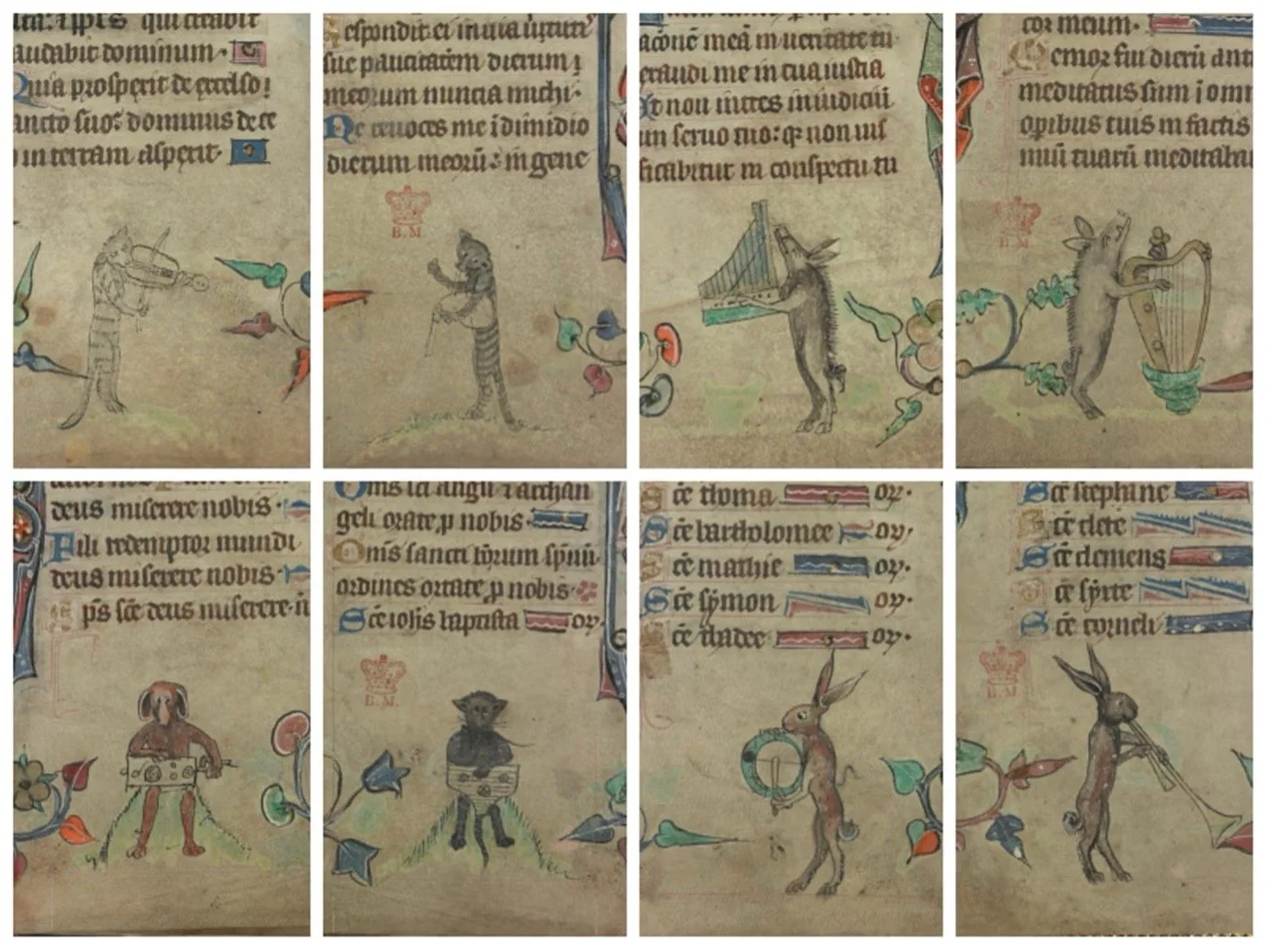
Fiddle playing cat (f. 40r), on bagpipes (f. 40v); organist boar (f. 41r), harpist (f. 41v); hurdy gurdy dog (f. 43r); psaltery cat (f. 43v); drummer rabbit (f. 44r); trumpet rabbit (f. 44v). Harley MS 6563, ff. 71v-72r. Anonymous, London, 1320-30, Height: 16 cm Width: 10.5 cm, parchment. British Library.
You may have seen "Murderous Rabbits" online. While rabbits usually stood for innocence, medieval artists loved le monde renversé—the world upside down. They drew rabbits capturing hunters and leading executions. This humour was subversive. In one manuscript, a six-page story shows mice defeating cats. These role-reversal tales offered a safe way to explore social tension, allowing people to process anxieties allegorically by depicting the weak beating the strong. These margins were also full of hybrids (half-human, half-spirit) and word play, with animals whose names echoed words from the text or the patrons’ names. Sound imagery is also particularly common, adding another playful layer to the margins.
In cathedrals, misericords—carved wooden ledges under choir seats—supported weary monks during services. Since these carvings were tucked out of sight, artists let their imaginations run wild. Forget solemnity; here you’d find cats playing fiddles or someone sneaking a kiss. Animal antics are scattered all over church architecture, from stone grotesques to stained glass. The Pilgrim’s Window at York Minster even hides "comic strips" at the bottom, including a fox’s funeral procession.
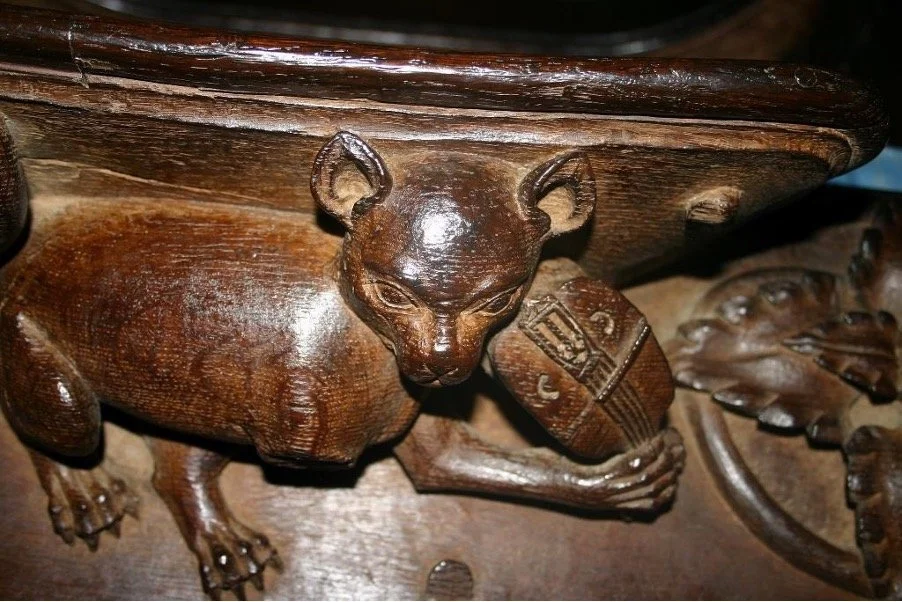
Cat playing the fiddle in church architecture. Cast replica of woodwork , Wells cathedral, Wood, 43 x 22 cm. Wells Cathedral
Medieval art deserves more credit than it often receives. While its perspective can seem two-dimensional and inaccurate, and it's sometimes dismissed as boring or unimpressive compared to the works of Tintoretto or Rothko, medieval art deserves a closer look. Beneath the surface, they reveal glimpses into the medieval mind—scenes of daily life, humour, and anxiety. Rabbits putting dogs on trial, jousting snails, and half-human, half-snail creatures fighting rabbits riding lions all show a playful imagination. When you open a medieval book of hours or manuscript, you'll find animals as allegories, clever iconography, and a surprising wit running through even the most religious objects. These works prove that the divine and the ridiculous coexist in the messiness of human life. To study the medieval margin is to realise that while our technology has evolved, our instinct to doodle, to mock power, and to find the absurd in the everyday remains fundamentally unchanged.
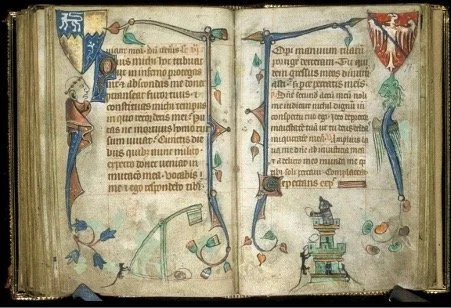
Battle of the cats and mice. Harley MS 6563, ff. 71v-72r. Anonymous, London, 1320-30, Height: 16 cm Width: 10.5 cm, parchment. British Library.