Bluegrass-Folk and Bach?
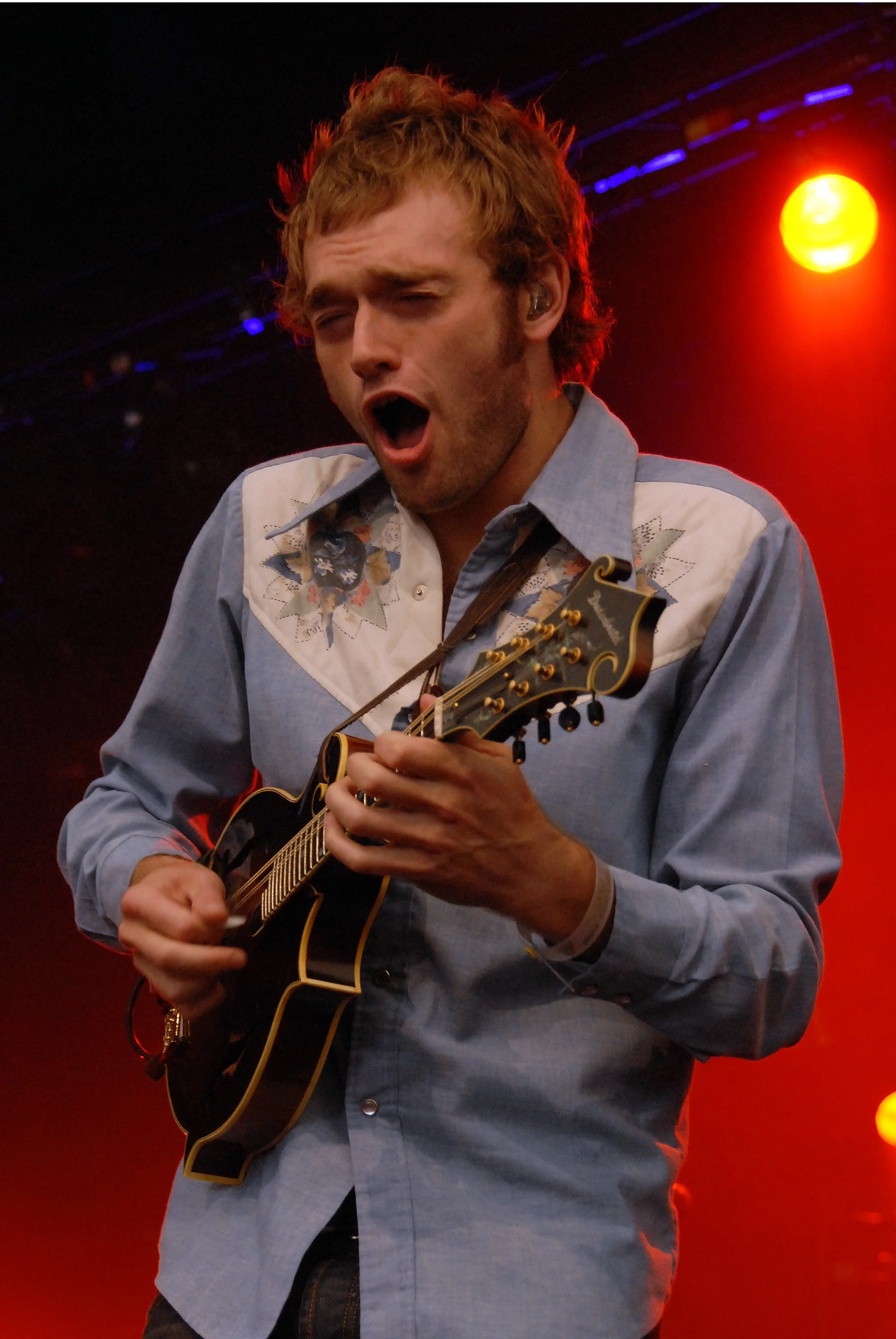
Christ Thile, 2006. Wikimedia Commons
6 March 2026
One can never be certain, but if I had to put my money on it, I’d wager that Bach would not have imagined that a bluegrass-folk mandolin player would play his sonatas and partitas for solo violin, and with astonishing depth and feeling. Trying to enter Bach’s imagination might be fun, but at the heart of this exercise lies a more profound question about the nature of transcriptions: What does transcribing a piece of music entail, especially when dealing with the music of one of the most revered composers to have ever lived. Classical musicians often approach the question in terms of what is allowed and not allowed to change in the music. Put like that, the discussion seems pointless - Bach has not been with us for nearly three hundred years, after all, he can’t give his opinion. But at its core, this is a question of balance in interpretation: How far can a musician go in inserting their voice into someone else’s piece, while keeping the composer’s voice intact?
This question is answered by Chris Thile in his newest album, Bach: Sonatas and Partitas Vol. 2, the second and final installment of his journey to record all of Bach’s masterworks for solo violin on his instrument of choice, the mandolin. Thile, a progressive-bluegrass focused mandolin virtuoso and singer-songwriter known best for his work with his band Punch Brothers, presents a personal love letter to Bach with his recordings of the Sonata No. 3 in C major and the Partitas in E major & D minor. It would be over-simplifying and misleading to say that this is a bluegrass-style recording of three solo violin pieces. The case presented here is a much more nuanced one.
Recorded in both traditional and non-traditional locations – such as NYC’s Tompkins Square Park – the album presents a refreshing, almost casual take on these oft-played works. The mandolin has the advantage over the violin of being able to play three and four voice chords uninterrupted (where the violinist would have to break them), allowing Thile to always keep the dance-like tempos moving. Movements such as the famous Gavotte of the Partita No. 3 in E major are given a brisk, light feeling, as if the listener is strolling past a bustling musician in the park, but executed with virtuosic precision. The Fugue of the Sonata in C major, a daunting polyphonic challenge for any violinist, is presented with surprising lightness, and yet every voice is given the utmost care and attention.
The highlight is, of course, the monumental Chaconne of Partita No. 2 in D minor: Thile takes the listener on a hypnotizing musical journey, showcasing his interpretive depth with every variation, his foot audibly tapping along to the sarabande rhythm even after the last note has faded away. The rawness of this recording can be heard throughout, with every imperfect pluck of the pick and audible finger-shift kept intact, adding spontaneity to the performance. The feeling that Chris Thile has managed to bottle up with this album shows the bottomless potential of classical music transcriptions, and is a must-listen to every type of acoustic music enthusiast.