From Sofia with Love: Dalí’s Triumph of Imagination in Pernik
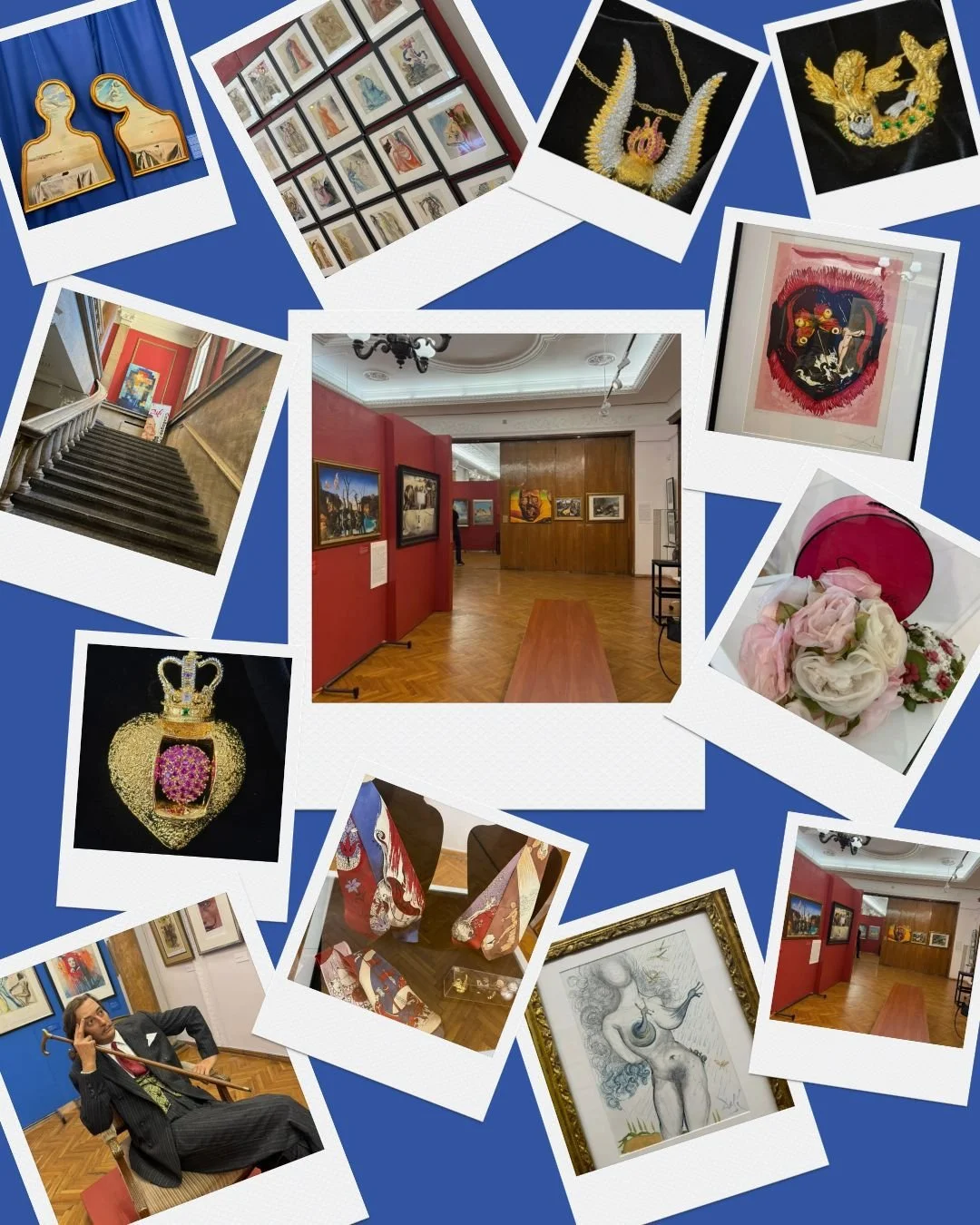
Dalí in Pernik. Exhibition photos by Maya Stoilova
19 July 2026
My dearest artlings,
It’s not often that I go home, much less have my whole family doing an activity that isn’t playing cards – and yelling. Competitively, that is. By a funny stroke of fate, I did go home, and we did do a lot together: eating, cooking, more eating, driving, shopping. My sister and I even found time for a squabble. But the activity that stuck with me – because it angered me far more than a silly mistake at Belote – was visiting an art gallery in a small town outside the Bulgarian capital, Pernik.
All Bulgarian newspapers were raving about our latest success, organising Eastern Europe’s largest exhibition of works by Salvador Dalí. My mother even used it – and a pair of high-heeled boots – to lure me home. Overly optimistic, if not naive, I believed it true. An ambitious collector, the news stories went, had reached out to an eclectic collector and art historian, who happened to have a ton of works by Dali. I doubted it for a second; surely we didn’t have the budget to transport and insure many paintings? Surely an unassuming art historian that I’d never heard of before wouldn’t even have that many of them? But social media – and my own excited mother – assured me it was true, and I could see a ton of Dali’s works in my home country. The joke was, of course, on us.
We climbed up the stairs to the town's local gallery. It was, like my primary school or any governmental institution, an artefact of our socialist past. With its soaring ceilings, cavernous grey corridors, and windows that began somewhere above your head, the building felt impersonal and unwelcoming. Western museums often fear they’re not accessible enough – and perhaps that’s true – but they hold nothing on museums in the Balkans. There’s no such thing as feeling integrated, welcomed, or guided here. For the most part, there are no elevators, and certainly no accessibility. Strolling up to the second floor, my hand in my mother’s, we bought tickets and headed inside.
It was awfully hot; the AC didn’t seem to be working. Worse, as we walked into the exhibition hall, the light also appeared amiss. Paintings – sorry, low-level prints of paintings – hung on the walls, uneven and unlit. I saw a reproduction of The Face of War, bolted centimeters above the work next to it; Elephants in a cheap frame, covered with plastic glass; The Persistence of Memory printed across a tapestry; et cetera. The closest this exhibition had to “an original” was the limited edition prints of Dali’s work, the Schiaparelli hat designs he inspired, and the bronze statuettes of elephants, which were cast from the same model in multiples.
But there were no true originals: nothing unique, nothing extraordinary, other than the ideas the objects represented. Now that I’m thinking about it, the most impressive of all was the small collection of jewels – a brooch in the form of lips, a diamond-and-ruby-studded cross and complementary earrings, and a beautiful necklace with leaf-like motifs (and sapphires!) – which lurked under a glass in the middle of the second hall. That was it. That – and more prints, and prints of prints, and prints of paintings – was all.
I was fuming. My mother scolded me to temper my expression and lower my voice. She knew telling me to be quiet was as good as telling me to come here again. I knew – I know – you cannot see much original Western European art in Eastern Europe, especially in the Balkans; that’s fine, that’s fair. The wall is very much still up in that sense. But I was angry that no one had thought to check, to report honestly, to show this exhibition for what it really was – a chaotic dump of cheap reproductions of paintings and the occasional edition print. Instead, it was hyped up to be a presentation of real works, and many people believed it. Still do. How could you distinguish an original from a fake if you’ve never seen them before, if you’ve grown up in a country that allocates less than 0.5% of its GDP to culture? How could you doubt it when every media outlet you know is telling you that this is indeed the case?
Walking down the stairs and onto the square, I found myself considering not the show, or Dali’s oeuvre, but just how important it is to think critically, to question, and to expose yourself to as much information and as many encounters as possible. And, more than that, I once again told myself I should not judge, criticise the absolute lack of curation, lighting, labels, storytelling, or proper catalogue. It is good – admirable even – that a small town in Sofia’s outskirts endeavoured to organise an exhibition this grand; and kudos to their PR, who did the best, most surreal job of all.
It is also a blessing, I thought, that I have had the opportunity to see good works, real, authentic, great originals in London, where I now live, and to return to them often, for they are accessible and available to the general public, be it in museums, private galleries, or auction houses. It is, I believe, somewhat of a self-imposed duty to speak of them, to publish and post about them, to make them accessible – and understandable – virtually, since so few of us can see them in person. That is why I write.
From Sofia with love,
Maya
You might also enjoy. . .
Fake or Genius? Inside the High-Stakes World of Art Forgery
An Underground Network Escape: The American Journalist who Saved Europe’s Creatives from the Nazis