From New York with Love: Frida and Diego at the MoMA
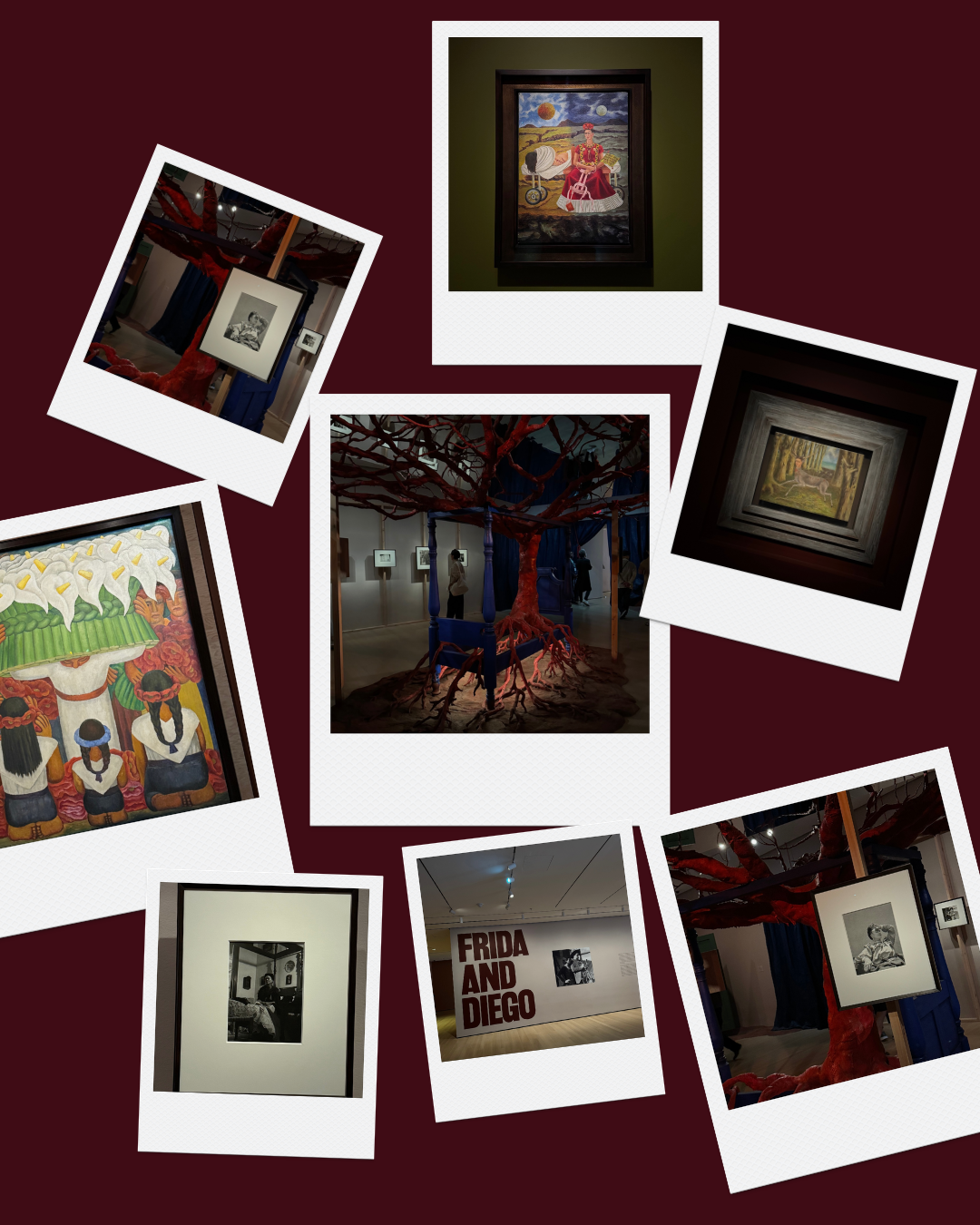
Fried and Diego: The Last Dream, MoMA, NYC, through 12 September 2026. Exhibition images by Olivia Merola.
21 June 2026
Dear Reader,
“Your twenties are some of the best years of your life!”
“You’re so young!”
“You’ll figure it out.”
I’m in my mid-twenties now, which still feels strange to write. Lately, the conversations I have with the older generations always seem to gingerly circle back to the same topic: dating.
“So, who are you seeing now?”
“Any fun dates recently?”
Maybe it’s fun for them. Maybe a part of them wants to live vicariously through me and revel in the ridiculousness of it all. Maybe there’s genuine curiosity. Maybe it just makes for some good entertainment—and, admittedly, it does. Maybe I secretly want them to ask so I can vent for a moment.
I usually respond with a long sigh, and a loose chuckle that nods to a collective fatigue shared by my fellow twenty-somethings and the generations that probably felt sorry they asked in the first place. And really, we’re all hoping for the same thing: that one day the story will feel a little less unfinished.
I don’t really mind dating. It’s messy and imperfect, but I’m continually amazed by how many kinds of people exist in the world, or, more specifically, how many kinds of men. It also has forced me to learn things about myself, which I know everyone loves to say, but happens to be true.
Perhaps that’s why I found myself lingering longer than expected in front of a bed sprouting a tree at the MoMA.
The bedframe was painted a vibrant cobalt blue, the same blue, I imagined, as Casa Azul, the home Frida Kahlo and Diego Rivera shared in Mexico City. From its center grew a crimson tree, almost the color of blood, its branches reaching toward a mirrored ceiling above. The installation was beautiful, though there was something undeniably sad about it.
The exhibition Frida and Diego: The Last Dream, was created alongside the Metropolitan Opera’s new production of El Último Sueño de Frida y Diego. I hadn’t seen the opera, yet the message of the installation didn’t require a libretto. On one side of the bed hung a photograph of Frida. Opposite her, obscured by the tangled branches, was Diego.
Their relationship was chaotic and unfinished: marriage, divorce, remarriage, infidelity, heartbreak, passion. By most measures it was a love story doomed from the start that contained nearly every red flag one is taught to avoid. Somehow though, it also became one of the great artistic partnerships of the 20th century.
Frida spent much of her time confined to her bed because of chronic illness and injury. The bed therefore became more than a place of recovery; it became a place of artistic creation. The mirror above her allowed her to observe herself while painting her iconic self-portraits.
Frida’s The Wounded Deer hung down the hallway. Her face appears atop the body of a deer pierced by arrows. Yet, she remained looking directly at us, galloping through the dark forest. The arrows seemed to speak to both Frida’s physical suffering and the emotional wounds that marked her relationship with Diego.
But what stuck with me long after I left the museum was the image of the bed and the tree. Frida and Diego’s relationship was tumultuous, and so was her life. Yet the installation did not feel tragic. It felt hopeful and reminiscent, almost like it was preserving a memory.
Relationships are complicated. Life is complicated. Yet from the center of that cobalt-blue bed, a crimson tree continued to grow.
Yours from New York,
Olivia