Margarita Balanas, cellist and conductor: “Live by Your Own Rules and Don’t Have Any Regrets!”
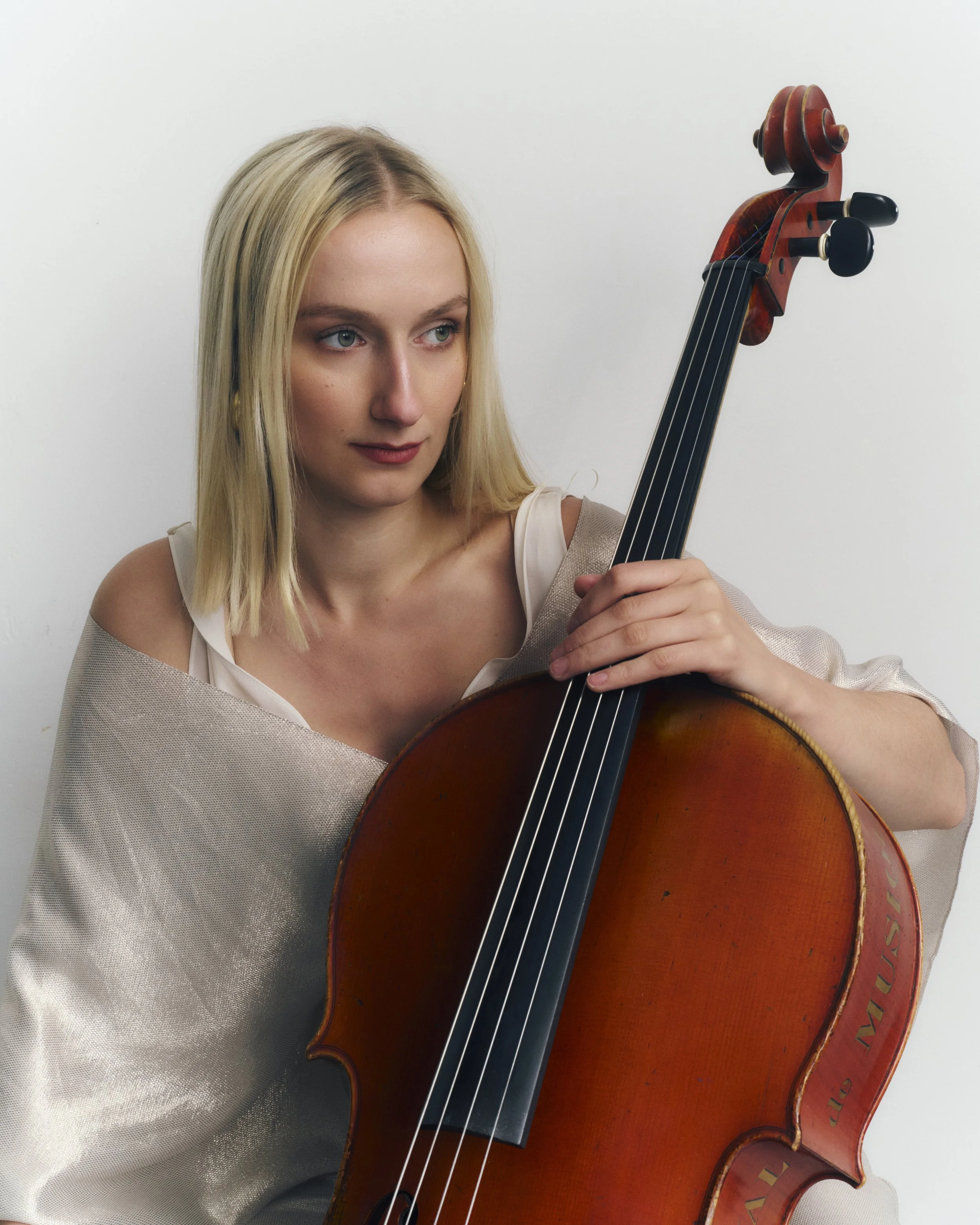
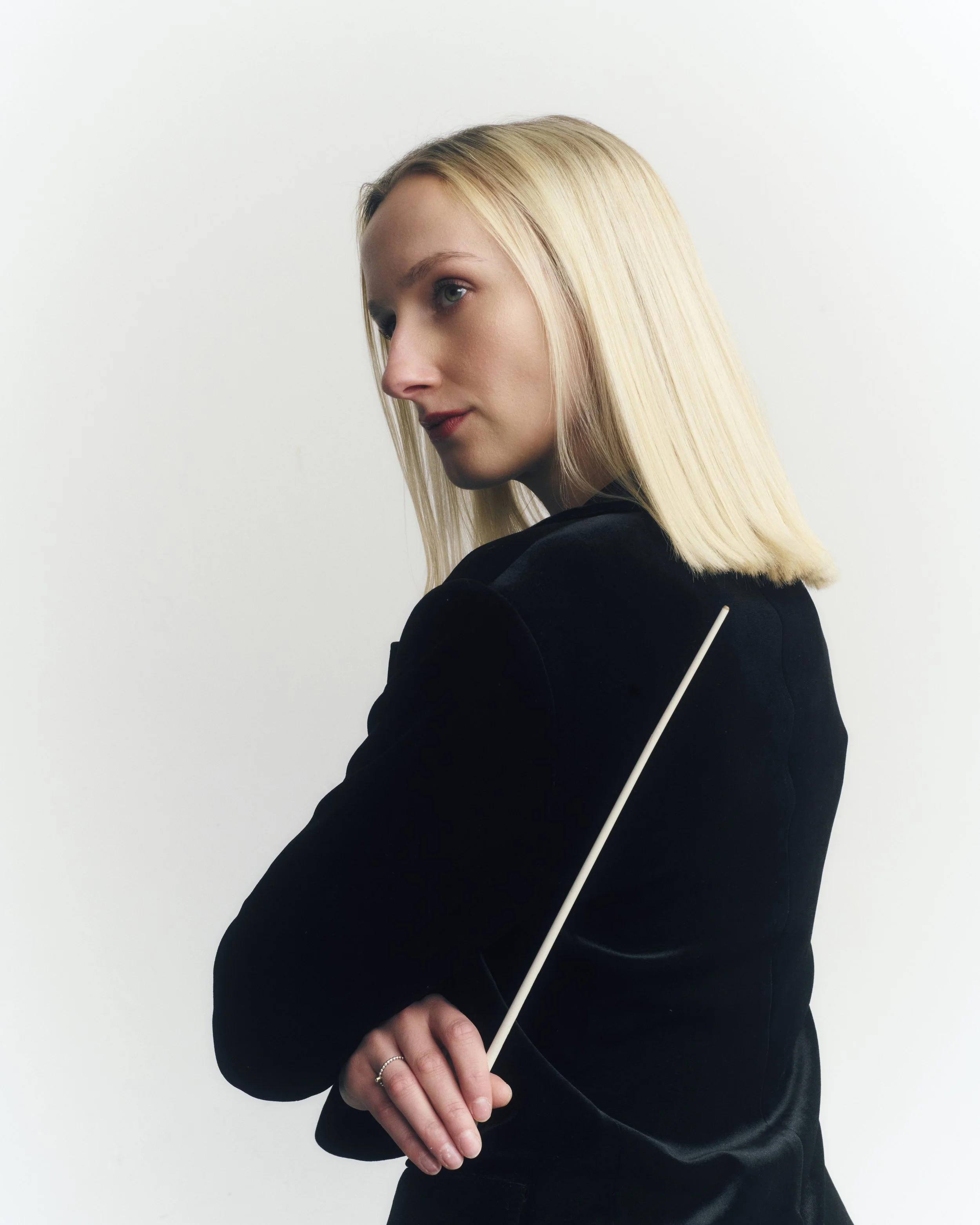
Photos on the left and right by Jamie Sinclair.
12 June 2026
Margarita Balanas is a fountain of energy, passion and curiosity who manages to pursue several impressive careers at once: she is a conductor, a cellist who performs worldwide as a soloist, and the founder and chief conductor of the London-based orchestra ANONIMI. She is also Latvia’s first woman to conduct symphony orchestras, and she and her sister violinist Kristine Balanas are the first Latvian artists signed to Decca Classics. TWoA talked to Margarita about performing rock and roll for a live audience as a toddler, busking as a pathway to London’s Royal Academy of Music, about becoming the assistant conductor to Paarvo Järvi at the Tonhalle-Orchester Zurich and much more. The interview will be published in two parts – get ready to be inspired. Click here for part II.
How did your musical journey begin?
I come from a family of non-musicians, but we siblings all became musicians. We grew up in a very small town in Latvia called Dobele, a town so small that when you walk around, you don't see anybody you haven't seen before. My parents wanted us to have better lives than they did. It was very difficult for them, coming from a very modest background, there were not a lot of possibilities. My dad taught himself how to play guitar. He loves rock and roll; my mom also loves rock and roll. She loves dancing to Rockabilly, she has so much energy, everyone in the town thought she's crazy. When you know more of our story, you'll understand why. She had the type of vision people did not have when we were growing up.
My dad taught himself how to play guitar and sing rock and roll. There was no internet, he would put tapes in the tape player and write down the lyrics phonetically. I don't think he had ever studied English. He would write down what he heard so that he could later teach us. He taught us all these rock and roll songs, and sometimes also composed songs, even though he did not have a music education.
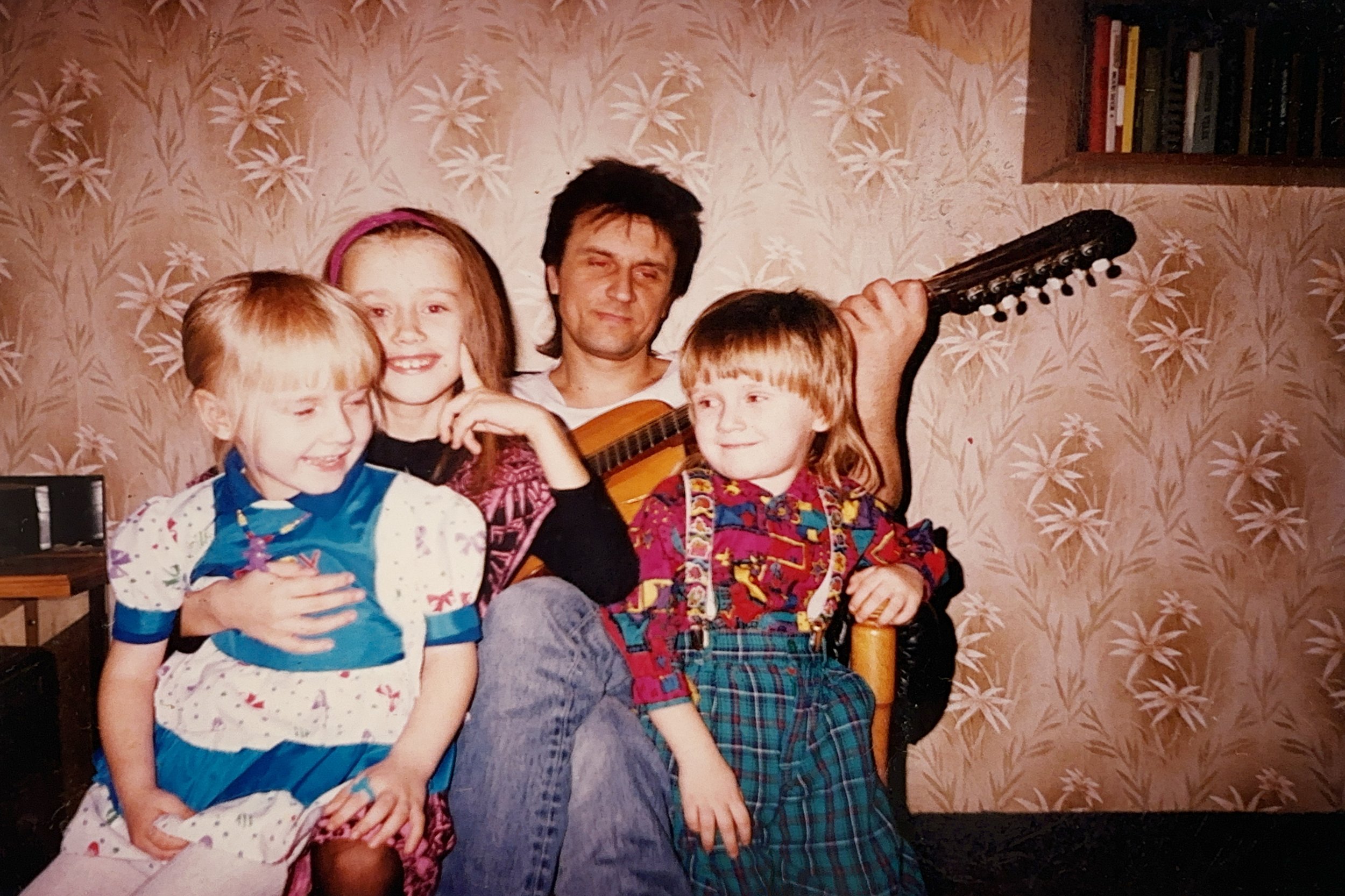
The Balanas kids and their father.
My mom had all this passion to go out and do things. They were a perfect combination. We started singing rock and roll. I was already on stage at the age of barely two. I could not yet stand, my dad had to hold my hand, I was afraid of the drums. I was the youngest participant in this rock festival. Every summer, we would go around Latvia, and sometimes around the Baltics, we would also go on television. My mom would create outrageous rock and roll outfits. It was so cool, but also a bit crazy for that time in Latvia, nobody could quite understand it. The outfits looked a bit like Lady Gaga, Madonna.
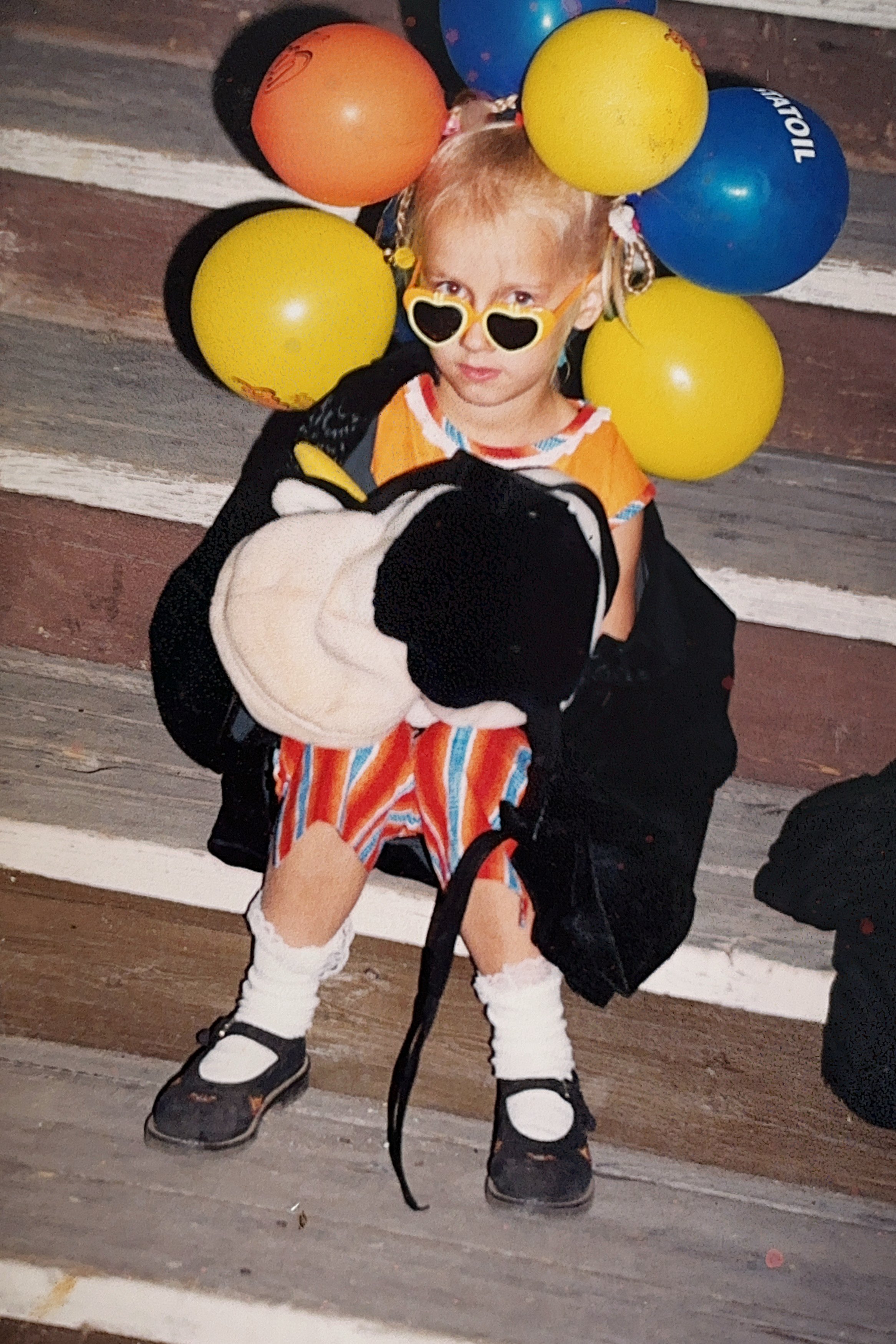
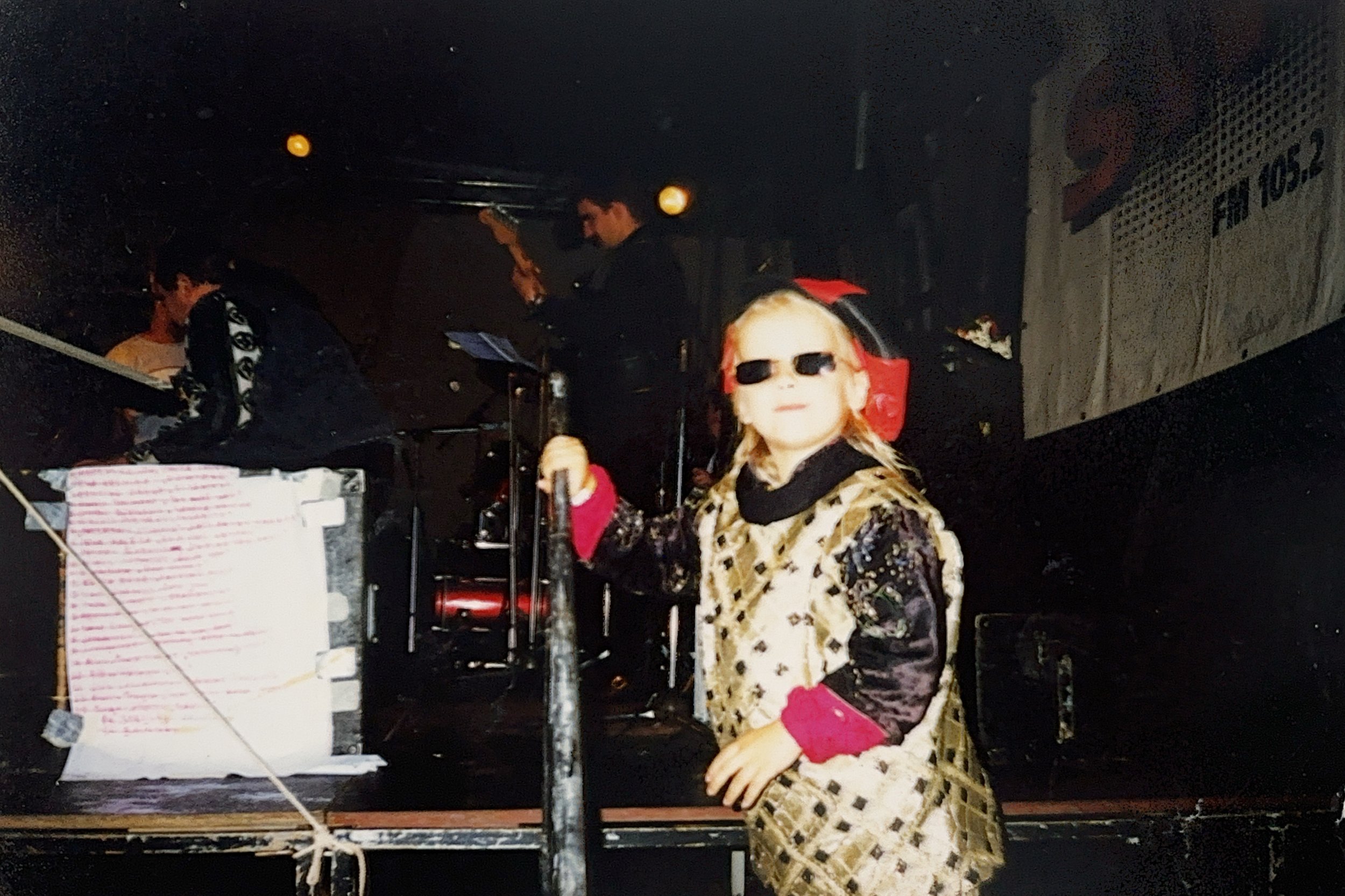
There was this drive and persistence; mom really wanted us to do well. We were very lucky later on because music education in Latvia is government subsidized, so we could enter music schools. My sister went first. She's a couple of years older. There was no childcare, so I would just go with her to music school. I would sit through her music lessons and learn solfège harmony. I would watch her violin lessons. When I was four or five years old, I also started with the violin, but I only got as far as holding it and then my parents decided to move to Riga, the capital of Latvia, because there would be more opportunities for us. Long story short, I started with the cello when I was around six years old.
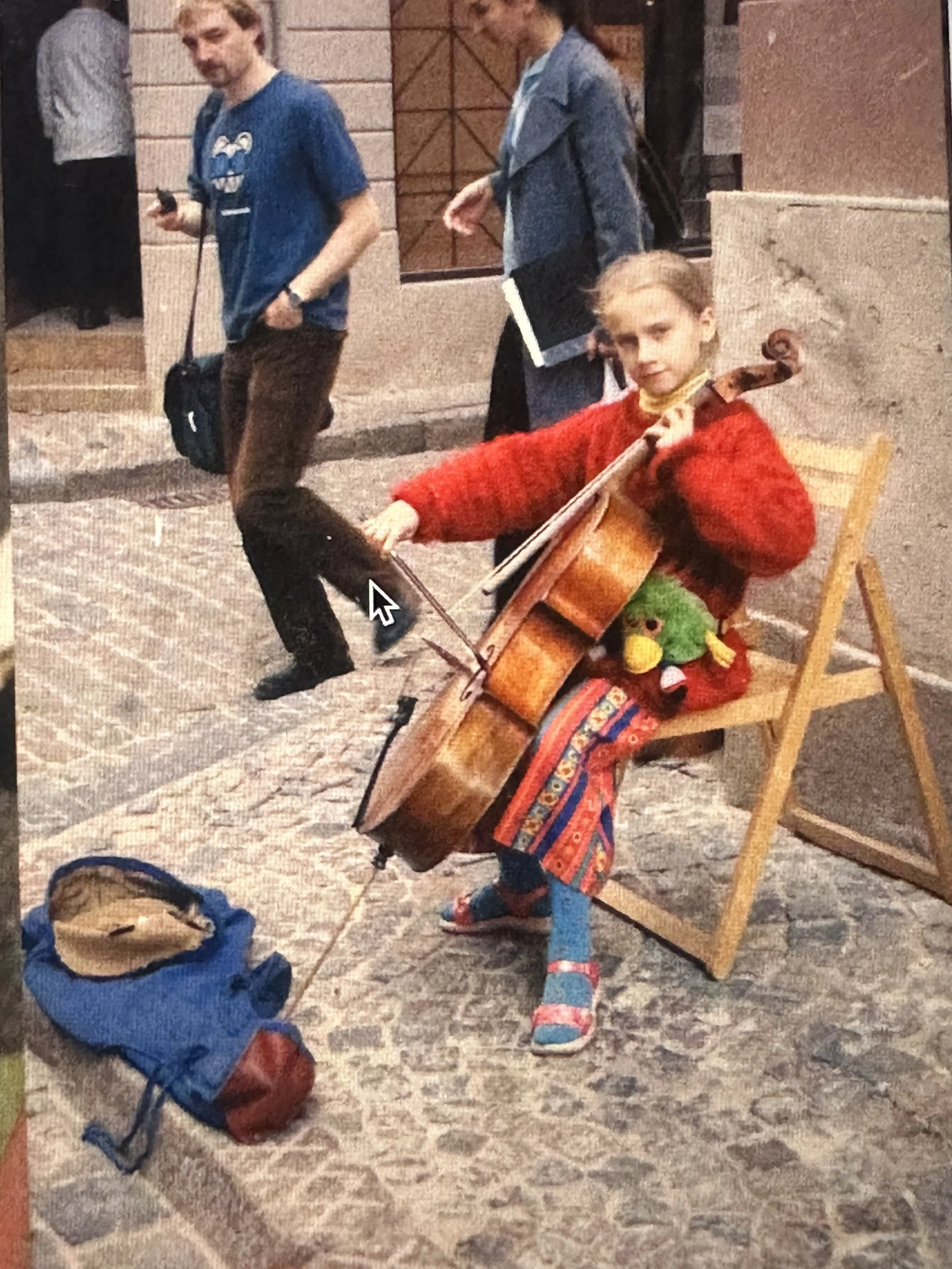
My brother, my sister and I were so lucky, we had the best teachers. Our parents never made us practice, they never forced us: we always had so much respect for our teachers, and we just loved music, so we just made sure that we were always prepared for the lessons. We also knew that for us to be able to do something in life, we had to do it ourselves. This was the environment. To be able to go to international competitions, we had to start busking on the streets because my parents did not earn enough money for the three of us to go to Austria, Croatia, Slovakia, Germany. We would go at least two, three times to competitions every year. My mom said we should try to go play outside. This taught us a lot about how people listen to music, and that everyone is busy. Nobody wants to stay and listen to you. You have to grab their attention, and if you don't have anything to say, no one is going to listen to you. We somehow learned how to communicate with people.
You come across all kinds of things while you are on the streets, you see all kinds of people. You meet professors, you meet concert organizers, you meet people who have just come from a concert, and then they hear you. I was on street playing with my sister at age eight. We earned money to fund competitions, we also bought our first instruments with this money. Had we not done it, we wouldn't have been able to go abroad. This was our kind of childhood. We were financially independent from our parents. I remember earning more in a day than my dad would earn in a month. We would save the money and tie it in plastic bags. We would make this long row of bubbles which we could count.
These were great and crazy times. Busking ultimately enabled us to move abroad, to get more opportunities and to grow as artists. You cannot stay all your life in the same place. You need to have new experiences. My sister used the busking money to apply to a master class in London with György Pauk, who later on invited her to study at the Royal Academy of Music. At that time, I was fifteen, so I could not go to the academy, but I was also looking for a change of teacher: you need new insights. We found the Purcell School. My sister was my legal guardian for the four years that I studied there, she was barely eighteen when she moved to the UK and we didn't know anybody. We were completely alone, which is why she had to be my guardian. It was incredibly tricky for her. In those days, when technology was not that advanced, you could not get help so easily and find your way around. It was very tough on her, and much easier for me because I was in a boarding school. But later on, I joined her at the Royal Academy. My brother had joined me at the Purcell School for the last two years that I was there. All three of us ended up studying at the academy.
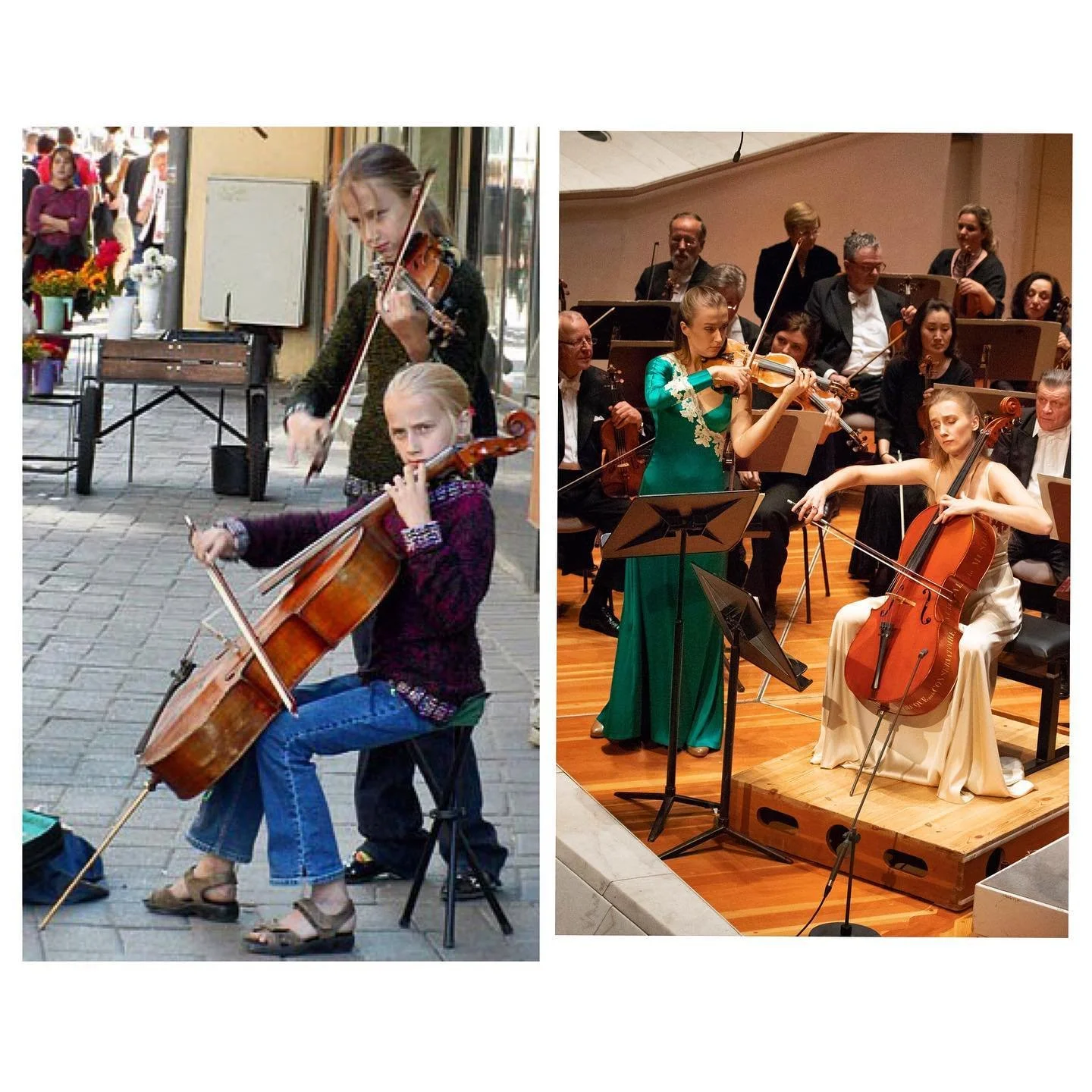
Margarita (cello) and Kristine Balanas (violin) then and now.
What was the biggest challenge for you when you moved to the Purcell School at age fifteen?
I did not speak English. I remember doing my audition, I could communicate through music. I was very confident in that; it was like a second language. But I could not talk to anybody. When I arrived at the school, I felt very awkward because I was put in a room with three girls, one from Spain, one from Scotland, and the other one was from London. But they really helped me, they really took me in. I had to do all the normal subjects in English. I would communicate with drawings and with signs. That was very difficult for me, but when you have no choice, you just go and do it. Maybe it was a bit awkward, but now, looking back, people were always kind and looking out for each other. I don't think I was homesick. I was just so excited to be in this new environment and to take advantage of any opportunity that came my way. Like painting, I never had this offered to me before, so I was very open.
How did you get into conducting?
That’s quite complicated and ambiguous. I always loved conducting. I always saw people conducting, I saw these workshops, I often applied. I did two or three random conducting workshops in London. I had no technique at all. I did not know how to conduct. I just applied. I went, people played some music, I tried to do something, but it was not very productive. Then, during the Corona pandemic, I saw that Paavo Järvi was doing a master class in Estonia at Pärnu Music Festival. I thought: I'm going to apply. I need to get in.
I always get this urge to apply to things. It was very difficult to arrange recording tapes, because I had no repertoire, I had no recording equipment. I had to book people to play in an ensemble, I booked a place and scores. I memorized Stravinsky's Devil's Dance; I knew I had no technique, so I had to find a way to be noticed. At home, I put the score on the sink because I had mirrors in the bathroom. I would break down the piece beat by beat and tried to understand what I would want to see when I'm playing, what gesture I would understand if I was sitting in the orchestra. I would learn every single gesture that I thought was right. Today, looking at this tape, it is actually great.
I had no foundation, nothing. I was very fortunate that Paavo took me into this class. Once I stepped on that podium, I never wanted to be leave it again because of the way you can connect with musicians: you feel like the sound is in your hands. There is also the vast repertoire that you cannot do just playing the cello, there is the infinity of color characters. I also find communicating with people very interesting.
That is how it started. I participated in the master class for two years, and then Paavo asked me to assist him on some projects. I jumped at the opportunity. And then one day he called me and told me he had a proposition for me: “Would you like to be my assistant conductor in Zurich?” I was so shocked. He said: “Why don’t you sleep on it.” I called him back five minutes later, after having called my sister. It was the happiest day of my life. I called him back after five minutes and told him: “Hi, just to let you know that I've slept on it and I will do it.” I didn’t want to risk this chance slipping away from me. We siblings had learned this very quickly. There’s never perfect timing. Of course, I was not ready. I did not feel incredibly confident at that time, but you always rise to the challenge. If you have to be ready, you'll be ready. By the time everything started, I was already ready. I had to conduct some projects there. You just do it. If you love it, you will do it. You need to always find the reason for wanting to do it. It has to come from you. It can't come from anybody else. If you have it inside you, you should always follow that. You will always find a way, like there's no other way. I felt like this with conducting.
You are both a cellist – a soloist - and a conductor. What different qualities do you need for each role?
The roles are incredibly different. As a soloist, you can spend your day alone. You practice your part, even though you also learn the orchestra part so that you know where the interactions happen. It's closer to chamber music: you know your part, you go to one or two rehearsals. Then you have the concert and the communication happens.
The conductor's role is very complicated, you become the “connector“ between the music, the audience and the performers. You need to respect the score, but you also have your own ideas, and you need to respect the musicians. They all have their own ideas, their experiences, they have something to say, which is why they got their position. When I conduct a certain symphony, even though I might feel like a phrase should go a certain way, I need to allow the performers to play. It's very complicated. You do a lot of compromise, but you also need to make sure you get your idea across.
Another intriguing aspect is how you communicate your ideas. For me, the less I talk to the orchestra, the better. I don't like talking. I'm not good with words. I would be happy if I could just do music. But sometimes you do need to talk, you need to know the best way to get your idea understood by everybody in the orchestra. There's a lot of psychology involved with the orchestra and the management. It's like a living organism, everybody has their own role, and you need to know everybody's role. It's very interesting. I learned so much when I was working as Paavo’s assistant conductor at Zurich’s Tonhalle for two years. I could see all these mechanisms turning and how we need certain things to be in place; everyone has their own role. It is really fascinating. I don't know how to explain it in short. When you're a conductor, very different parts of your brain need to be working, you are communicating but it is also a management role. As a cellist, you can just go and play your heart out and make sure that you are communicating with everybody else.
How would you compare the day-to-day life of a soloist versus an orchestral musician?
Both paths are not easy, but they are difficult in different ways. I think when we are at school or conservatory, we all think we want to do solo, but we are not told what is asked of soloists nowadays. As soloist, you need to have a lot to say, but the music is just one aspect. There are so many different aspects, like social media, networking. You are not told at conservatory that you will need to actively take care of your career. You just think that you'll practice in your room and if you're great, suddenly everything will happen. Nothing, nothing will happen. It's about a lot of active choices and making sure you're seen, you're heard. It's a lot of hustle, somehow.
As an orchestra musician, you prepare your part separately, and then you rehearse and play the music together, you create your own community, you chat. It's much more group oriented. You need to make sure you work well with other people, that you get along with all kinds of people. To get a permanent position, you need to play one concerto very well and know your excerpts, and then you audition for as many positions as possible. Once you get a stable position, that's it: you have your routine and stability. As a soloist, you never get stability, or at least it takes many, many years.
I think the choice between soloist and orchestral musician has a lot to do with your character, and whether you understand from the very beginning what you really want, what would suit you. Being in an orchestra is amazing. When I was working at the Tonhalle, I would always look at the cello section and think: “These guys are having so much fun!” And I would be sitting with four different scores of Mahler’s seventh symphony, wondering about every note. It really depends on what you want. There are many options. I think it's good to understand this as early as possible and also to try out different options: there are so many auditions for short-term positions with orchestras, just try and see what works best for you because the roles and the lives are very different.
When you play with an orchestra, you go on tours together. It can be like an excursion with friends. But as a soloist, you're always alone. I love being on my own. I'm so used to being alone, it doesn't bother me. Sometimes you don't see your family for months. I haven't seen my mom for about a year. It’s great that I often play together with my sister and my brother, that’s always fun. It never feels like work for us. One great aspect of being a soloist is that you don't have to be there at ten for your rehearsal every day. It’s different lifestyles, different routines. But neither is easier than the other, both are complicated.
It is very unusual to pursue both a conducting and a soloist career from the early years of your career – most people do only one thing, some soloists turn to conducting when their career is very advanced. How do you do it?
You engage with music in very different ways, which is why I would not be able to choose. As a conductor, the scale of your engagement with the music and your involvement is much broader. I communicate in different ways when I'm conducting an orchestra, because there are so many voices. There's just so much more to work with. When I play the cello, it's somehow more personal. When you're playing, you're expressing yourself in a very different way. I feel like I cannot allow anybody to take either of these experiences away from me, because it’s just the way I am. I also do oil painting; I love doing all kinds of things. My brain would not allow me to just focus on one. I love both. I could not just quit the cello; I have so much that I want to say and share with the audience. It’s the engagement you have when you are actually producing the sound; the cello repertoire is very small, but I just love to be able to control every single thing that I do. When you are conducting an orchestra, you can't control everything, but when I play the cello, I can choose how I want to approach each little note. Now, when I play concerti or a sonata or something on the cello, I treasure each note even more because and I see the larger picture as well, and how my part as cellist fits in. Each role - being a soloist and a conductor - feeds from the other. Not being able to do one of them would be like cutting a limb off, I would struggle a lot. People have told me that I will have to choose, but it's like asking somebody to choose between your mom or dad. In the end, it’s about the music: doing both gives me so much variety that I cannot get from doing just one or the other. Instrumentalists usually become conductors later in life, but I feel very lucky that I've been able to do both at this point in my life.
In part II of this interview, TWoA talks to Margarita about ANONIMI, the classical music industry, the next generation of musician and audiences and upcoming projects.