Eat With Your Eyes: Japanese Food Replica Culture

Example food replicas on display © Masuda Yoshirо̄ for Japan House
September 2026
On the streets of Japan, various tempting dishes of food sit in display cases in front of restaurants. Ripe red strawberries tumble with heaps of whipped cream and a melting scoop of vanilla ice cream. There are glossy slices of sushi-grade salmon, thinly cut and draped over little bricks of rice. The most beautiful ramen, with thick noodles swimming in an umami-rich broth and topped with the most perfectly cooked soft-boiled egg, might make your mouth water, but is a treat for the eyes rather than the stomach.
Shokuhin Sampuru, or food samples, is the Japanese art and industry of creating hyper-realistic, inedible food replicas that are commonly displayed outside restaurants in Japan. This unique aspect of Japanese culture originated in the 1920s when rapid modernization drew rural workers into the cities, creating a new class of urban diners who struggled with understanding city dishes and exotic Western imports like spaghetti and hamburgers. Popularized in the dining halls of department stores, where Shokuhin Sampuru would be on display in Tokyo, and particularly relevant in an era where literacy was not yet widespread, this small innovation was eventually adopted by restaurants across Japan.
Originally, Shokuhin Sampuru provided the practical solution of a visual menu. Since then, they have evolved from commercial tools to an artisanal art form. While the materials have changed since the craft first started being manufactured, the technique has remained, with four basic steps involved: mould-making, casting, colouring and presentation. Let’s take, for example, a restaurant that wants a replica of one of their dishes, omurice, a Japanese dish consisting of fried rice topped with a special omelette. The restaurant will supply the real dish to the artisan, who then pours silicone over it (early techniques used agar jelly) to create a mould. They then fill the mould with vinyl resin, a material innovation after heated restaurant display cases in the 1970s caused wax models to melt.

Using an airbrush to add colour to a replica Yobuko squid. Image taken for the 'Looks Delicious!' exhibition at Japan House London, 2 October 2024 - 16 February 2025. Picture taken at Iwasaki Co., Ltd (Osaka). © Masuda Yoshirо̄
The next step is where Shokuhin Sampuru’s reputation of precision and creativity is demonstrated. The craftsperson colours the object by hand, using airbrushes, stencils and paintbrushes. Our omurice, for example, will transform from a plastic product to a stunningly realistic dish. Artisans will delicately paint the individual grains of rice, perfect that egg-yolk yellow colour, and technically craft the sauce’s glossy sheen. These specialised techniques have stood the test against 3D printing, QR code menus, and menus with photographs for a reason: more than just imitations of food, Shokuhin Sampuru are a testament to the dedication and skill of artisans, and a symbol of the pride and precision ingrained in Japanese artistic and culinary identity.
As exhibitions begin displaying these products globally — most recently at the Japan House in London and Los Angeles last year — the transformation of Shokuhin Sampuru from a promotional product to lure diners into restaurants to a celebrated art form is clear. This unique Japanese discipline continues to captivate people globally for its ability to communicate cultural identity with meticulous artistry and tangible craft.
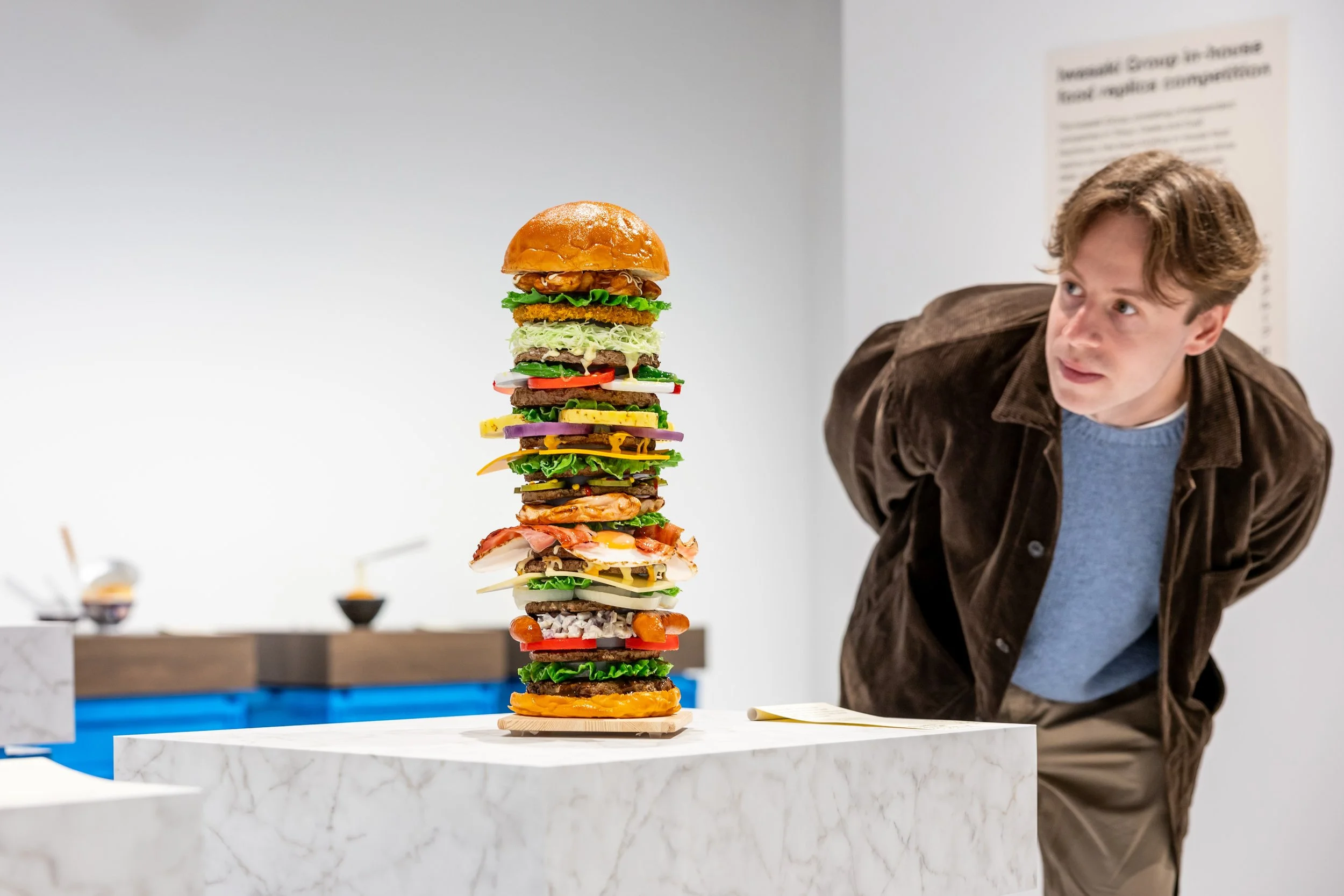
Looks Delicious! exhibition photography. Photo by Jeremie Souteyrat © Japan House London
You might also enjoy…