From London with Love: “Mayerling” - When a Crown Prince Longs for Death
12 April 2026
My dearest artlings,
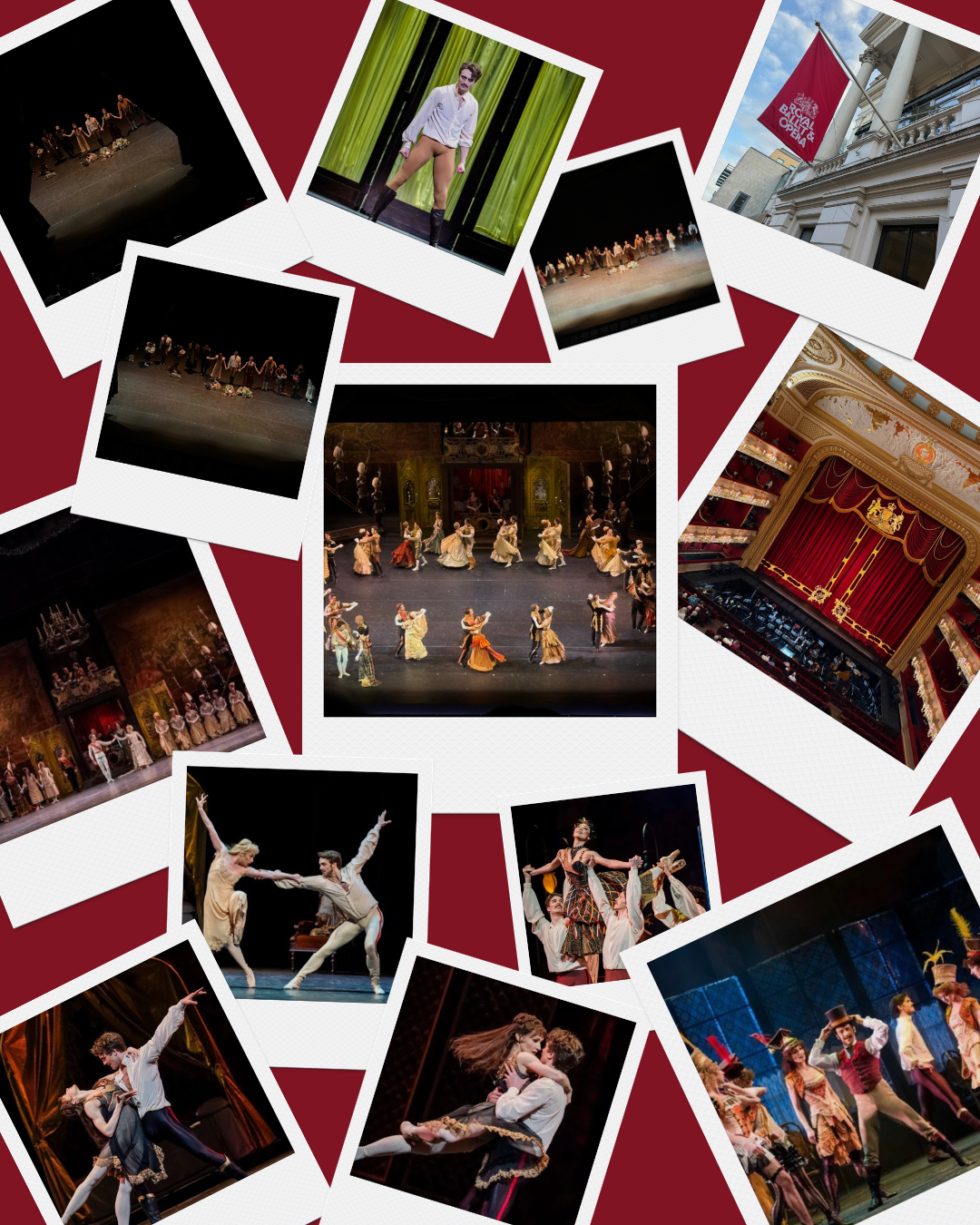
Something unusual happened that Monday: as I approached the Royal Opera House, the crowd felt subdued, sombre even, a complete mismatch for Covent Garden’s usual atmosphere. I almost wondered what I was walking into. Was I in the right place? Perhaps there was another performance happening? Scanning the banners yet again, I figured there wasn’t. Just Mayerling.
At least Bow Street felt lively. As always, it was brimming with people–locals, drinking pints in their work attire; tourists, with comfortable shoes; ballet aficionados, a notch more dressed up; and the occasional phone-snatcher, distinguished by his bike and black mask. With my friend running late, and myself about twenty minutes early, I did what any woman in uncomfortable heels would: I sat, and I people-watched.
It strikes me as deeply curious to observe attendees. Their vibe, I think, reveals something about the show itself. Later that evening, we would watch Crown Prince Rudolf of Austria succumb to desire, depravity, and, eventually, death. It’s no wonder the crowd was more macabre than usual. The heaviness I felt made sense.
Mayerling was first staged here, in 1978, shortly after Kenneth MacMillan resigned as artistic director of the Royal Ballet and found the time to choreograph again. Drawing on George Marek’s book The Eagles Die, his ballet tracks the waning days of the Habsburg empire–and instead of romanticising the imperial family, as is often the case, it examines the social, political, and psychological pressures that drove their heir, Rudolf, towards catastrophe.
Just as I pull on my memory to remember what venereal diseases impaired him and his wife, where he shot himself and his mistress, and who that mistress was, the clicking of heels–and my friend’s American chirpiness–pulls me out of my thoughts. “I’m sorry I’m late, the tube…”
“Don’t worry, I know. Let’s go in.”
We leave our black coats, sprint up the red stairs, plop ourselves down in our seats, and mere moments later, the first act begins: a coffin is lowered into the rain. Only later do we understand that the body is his mistress’s, Baroness Mary Vetsera, buried secretly at Heiligenkreuz after Rudolf has already been laid to rest in the Imperial Crypt. Death, therefore, appears not as an ending but as the premise of everything that unfolds.
Portraying Rudolf, Matthew Ball scarcely leaves the stage: across three acts, he performs seven major pas de deux with five different women, an extraordinary demand on the male lead and still unusual in classical repertoire. Each encounter feels more forceful than the former. Like Rudolf’s own life, the choreography intensifies, then maddens, breaking away from the structure of the court and its wedding waltz and tipping towards collapse.
My favourite part of it, I think, is the contrast between Rudolf’s pas de deux with his ex-mistress, Marie Larisch, and his duet with Mary Vetsera. While the former resists his tilt towards death, represented by the gun they dance with, the latter embraces it, a desire expressed through the morbid, scorpionic sensuality of their last on-stage encounter. It is so Rufolf shoots her, then himself, at the imperial hunting lodge in Maryerling, before we return to Mary’s body being buried into the ground.
For a moment, the opera house is still and dour. Another second, two, and it erupts into an ovation, dubbing the season’s debut performance of Mayerling a success. As we make our way down, careful not to trip over and roll the poor lady before us down the stairs, my friend turns to me, her hand gripping the handrail: “Did you manage to follow everything?”
“Not really,” I admit. I could intuit the dances’ emotion–but I could not necessarily tie all of them to events in Rudolf’s life. “I think I might need to go back to the synopsis.”
“At least the designs were incredible!” she beams. “The costumes! The set decor!”
She’s right. I, too, feel it wasn’t so much the dancing as Nicholas Georgiadis’ brilliant designs–and John Lanchbery’s arrangement of Liszt’s music–that carried the story forward. And, perhaps, that’s on me. I have much to learn.
From London with love,
Maya