From New York with Love: Notes from the Underground
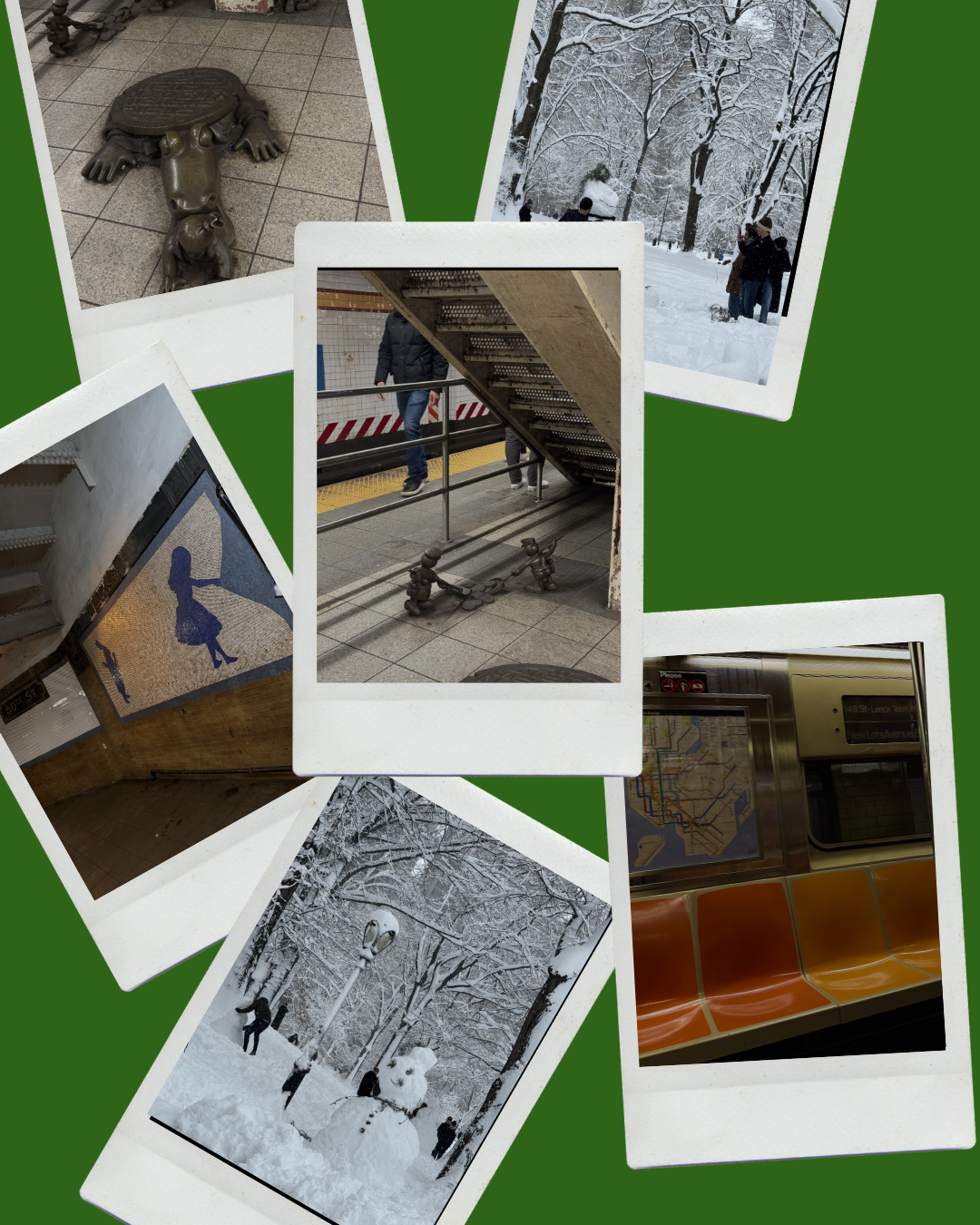
Photos by Olivia Merola
30 March 2026
Dear Reader,
The 1 train at 50th Street has been my subway for years. First, on my way to Barnard, then back and forth to my parents’ house in Park Slope. I used it practically: a way to get from point A to point B, tracking time, delays, whether I’d make it to where I needed to go.
But the subway is something else too. A moving collection of characters, tiled mosaics, poems nestled in train cars, even the subway map itself lends itself as a work of art. It’s a museum of the city’s narratives; the lives of the millions moving above it, and in it.
The descent underground, wafted by the sharp mix of urine, heat, and metal, feels almost like slipping into another version of New York. As I journeyed down into the 50th street stop, Alice: The Way Out (1994) patterns the walls. I fall. Down into the rabbit hole.
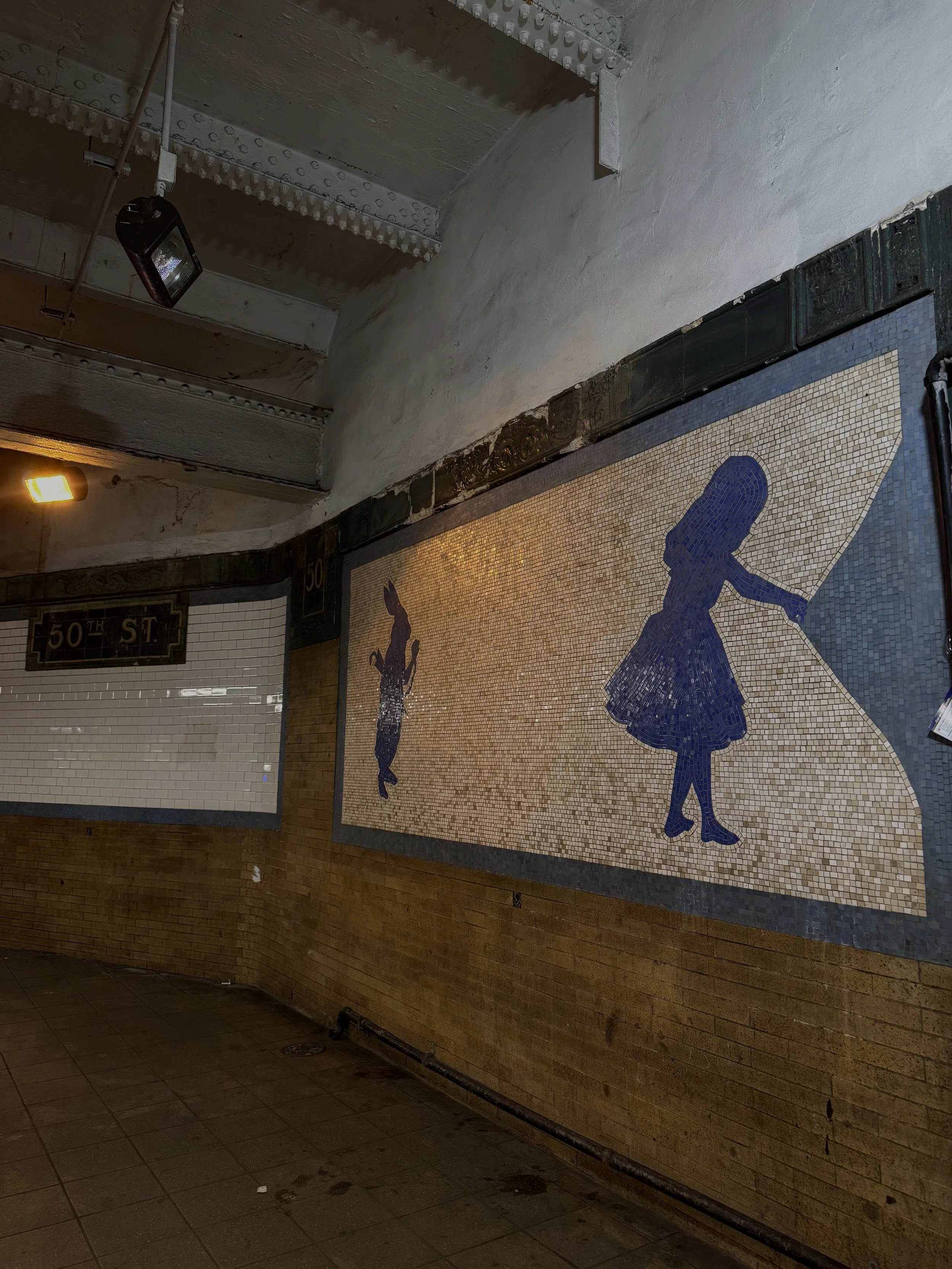
Liliana Porter, Alice: The Way Out (1994). Ceramic mosaic, 50th Street subway station. Commissioned by MTA Arts for Transit and MTA New York City Transit.
The car arrives, screeching its way into the station. A local beast. Tattered, grunge, worn. It runs 24/7, relentlessly chugging towards infinity. I enter and land directly in front of Massimo Vignelli’s 1972 design: the map. Commuters and tourists alike glance, squint, and trace their fingers through brightly colored lines. But it’s an abstraction. A simplification of a city that can shapeshift at a moment’s notice. The map offers ideal pathway, but miss the conductor’s subtle, riddle-like announcements, and you might end up somewhere else entirely. Best to not study it too closely. Better to stay loose. Be light on your feet. Because once you’re down there, anything can happen.
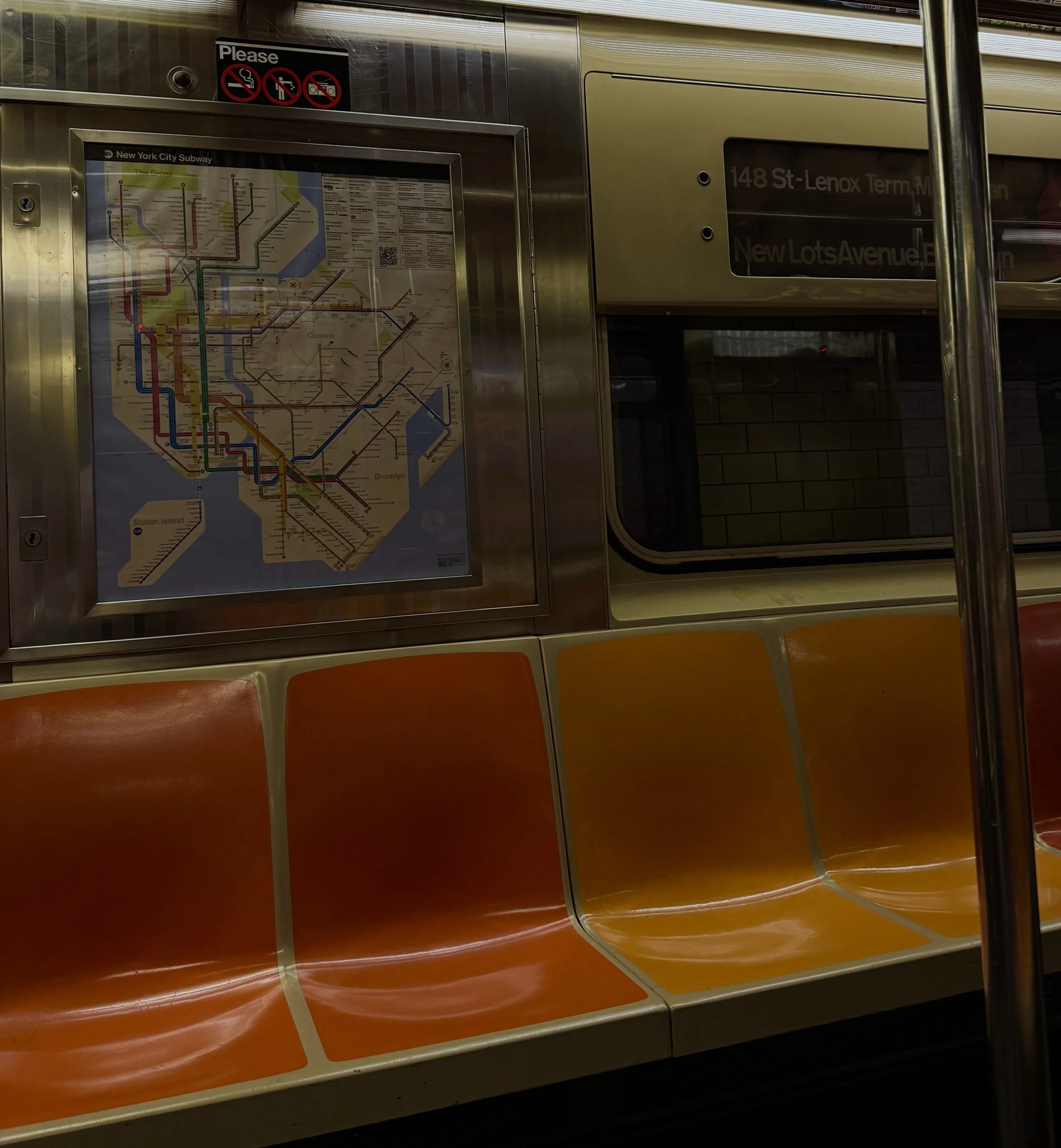
New York City subway map inside a 3 train car, based on Massimo Vignelli’s design.
After transferring, I arrive at another kind of installation. Life Underground by Tom Otterness. His small bronze figures appear as tiny surprises; scattered throughout the station behind railings, on benches, among the flow of commuters. Two of them sweep a spilled pile of coins, frozen in a scene of endless labor. An alligator in a business suit chomps at a victim just beside them. Another one sleeps on the dingy floor, just behind them. But there’s one that has his back to us, glancing out at those stepping off the train. There’s something hopeful in his gesture—almost childlike. He looks at us, and we at him. Are we observing the art, or part of it?
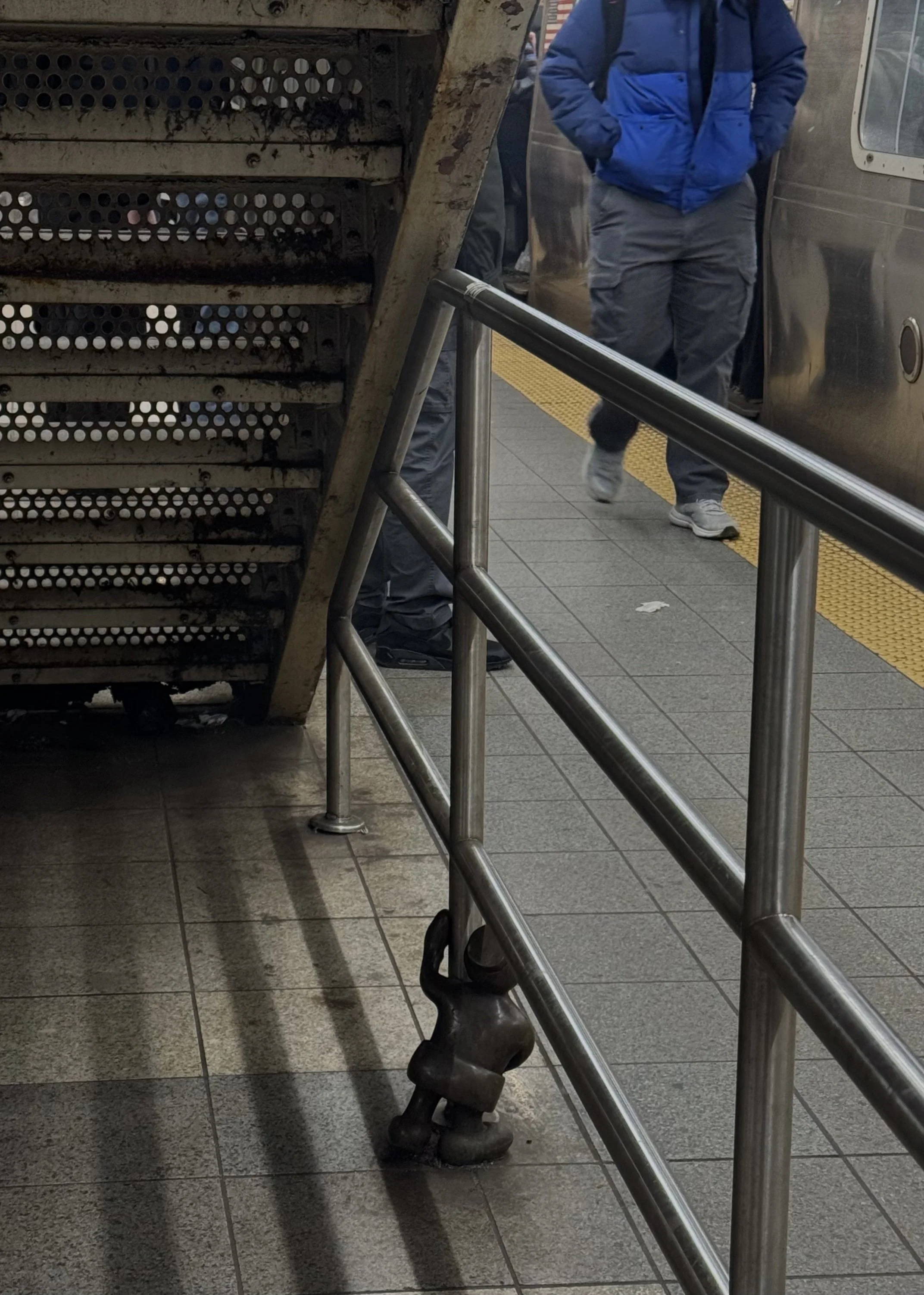
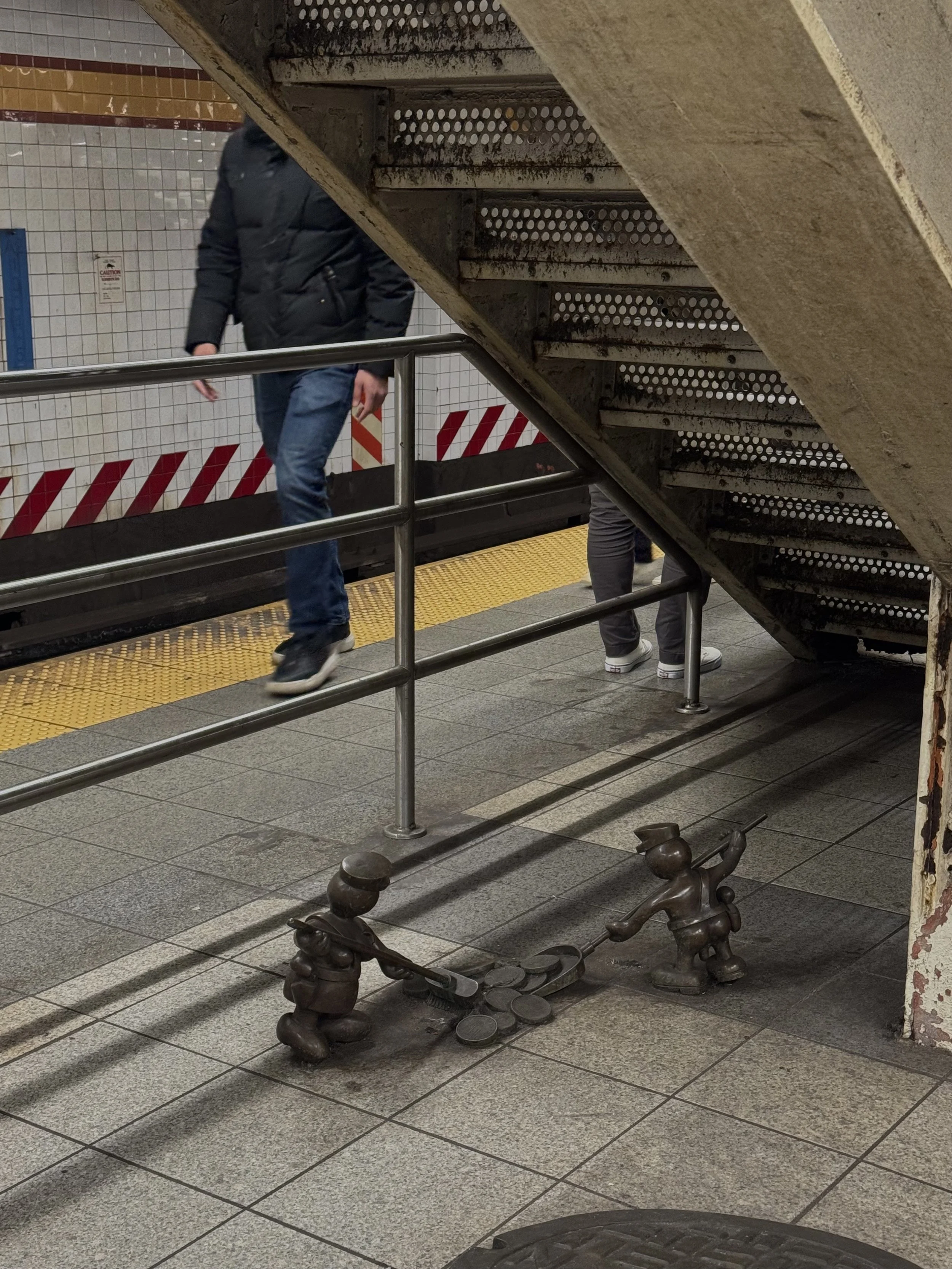
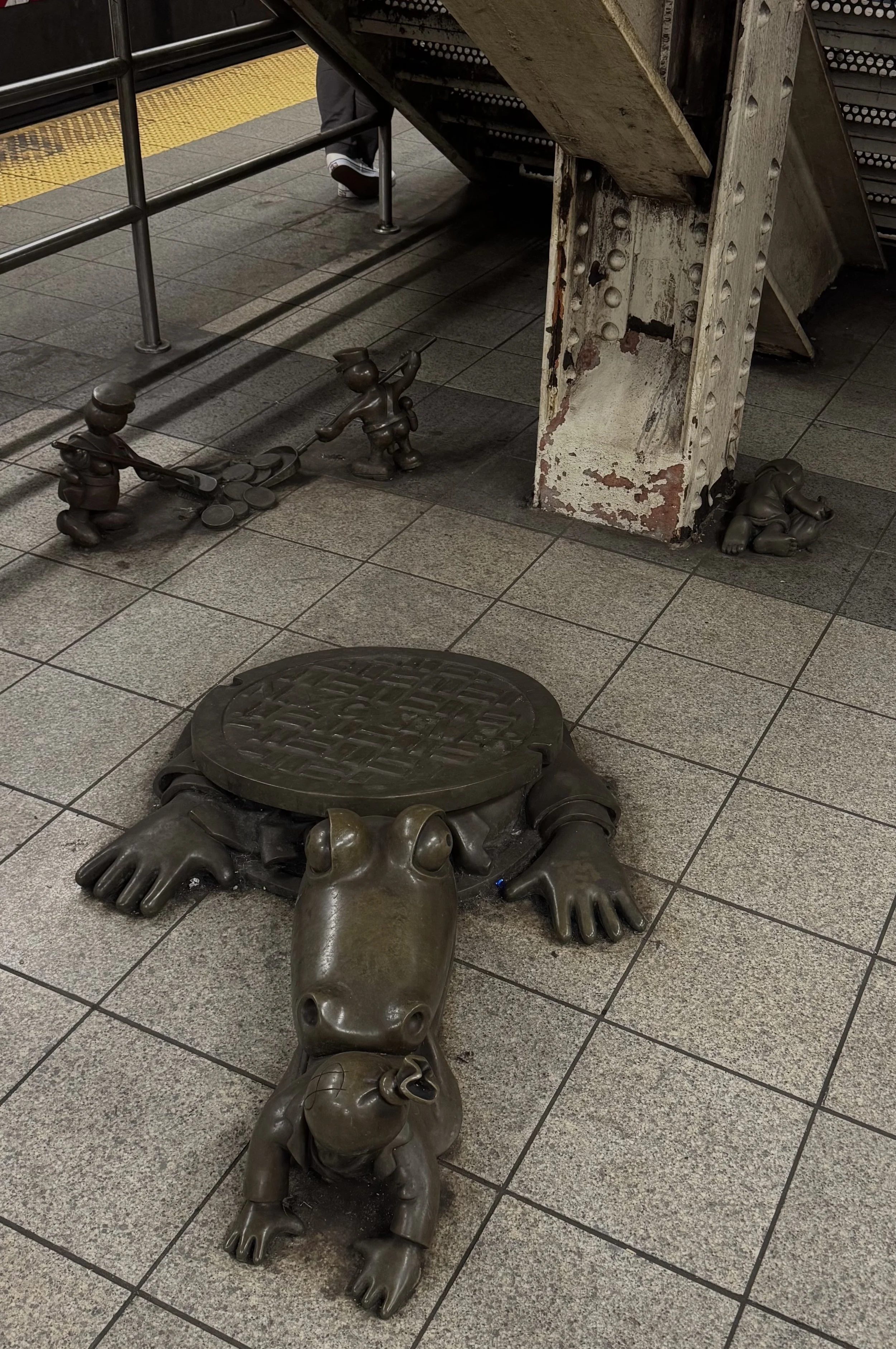
Tom Otterness, Life Underground (2001). Bronze sculptures, 14th Street-8th Avenue subway station, commissioned by MTA Arts for Transit.
And at this point it’s getting late, and I begin my journey back uptown, toward the beginning of our story. Poem on the Radio by Matthew Rohrer cycles through the digital ad system on the C train. These cars are more modern, though I still prefer the vintage orange seats of the 1. I wonder if people actually read these. They must. I’m reading it. It flashes for maybe seven seconds. Like a memory. A woman next to me, who I’m sure is glancing over my shoulder, watches me time the cycle of ads so I can catch the poem.
Maybe she reads it too.
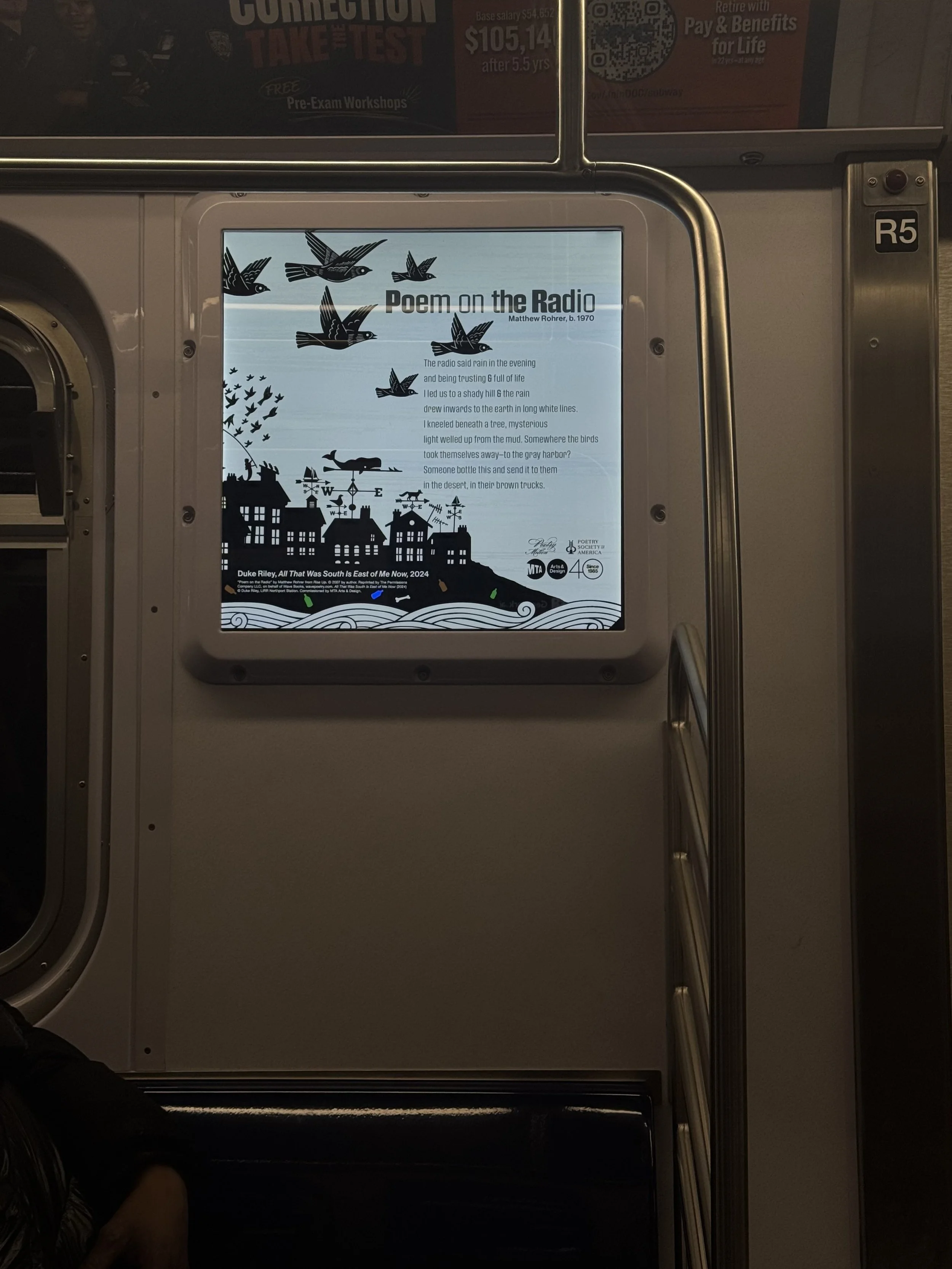
“Poem on the Radio,” by Matthew Rohrer, b. 1970, displayed inside a C train car.
A few weeks ago, the city was buried in snow. I took a walk through Central Park, because seeing the city in white feels like something you shouldn’t miss. And what I found was another kind of exhibition. Above ground this time. Snowmen. Uncommissioned. An enterprise of joy, and spontaneous community. Existing only for as long as the cold will allow, and a tender spectacle for whoever happened to be there that day. And like the subway, I moved through them. Nodding to each one for a moment, before moving on to my next stop.
From below New York,
Olivia
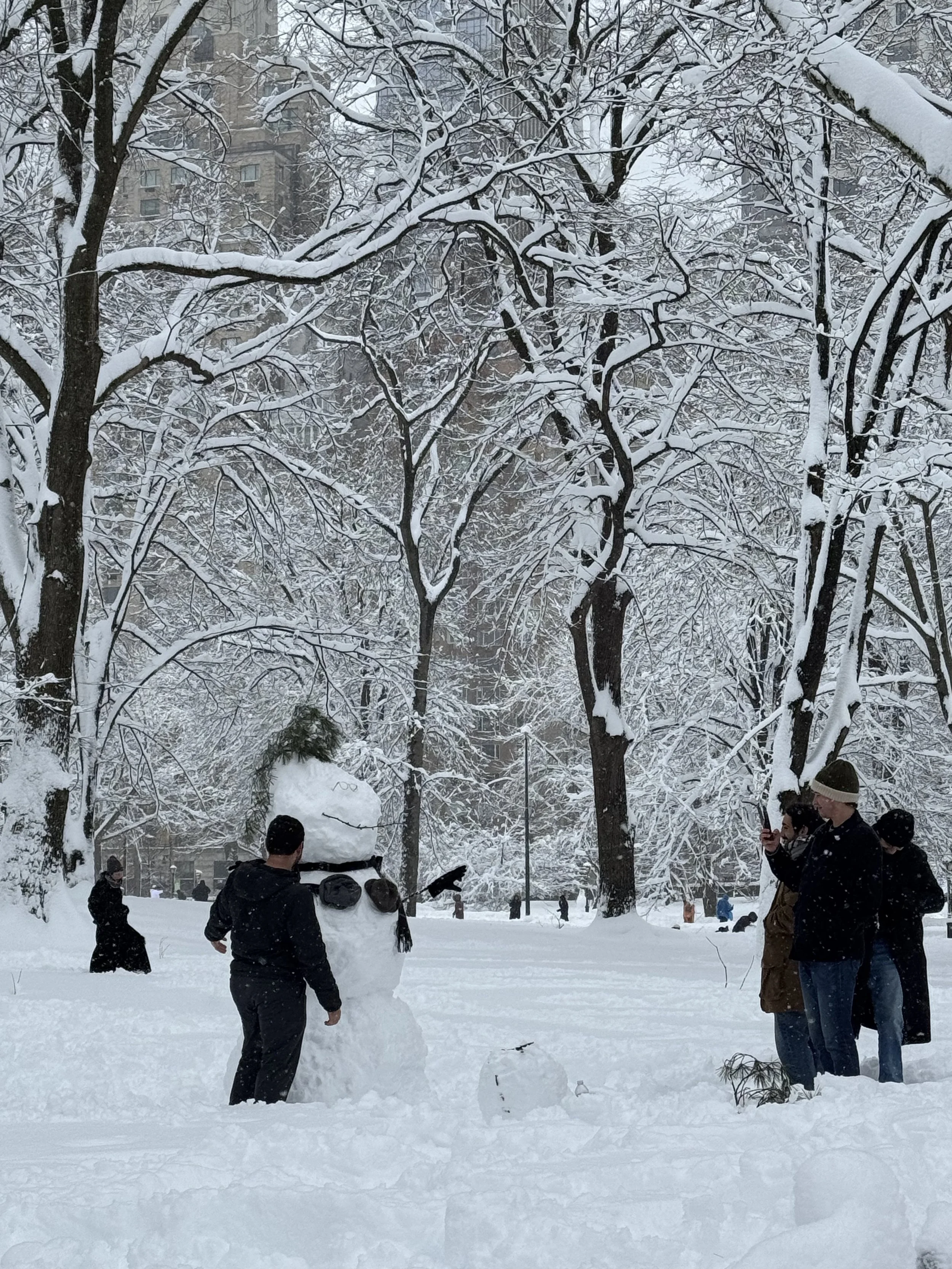

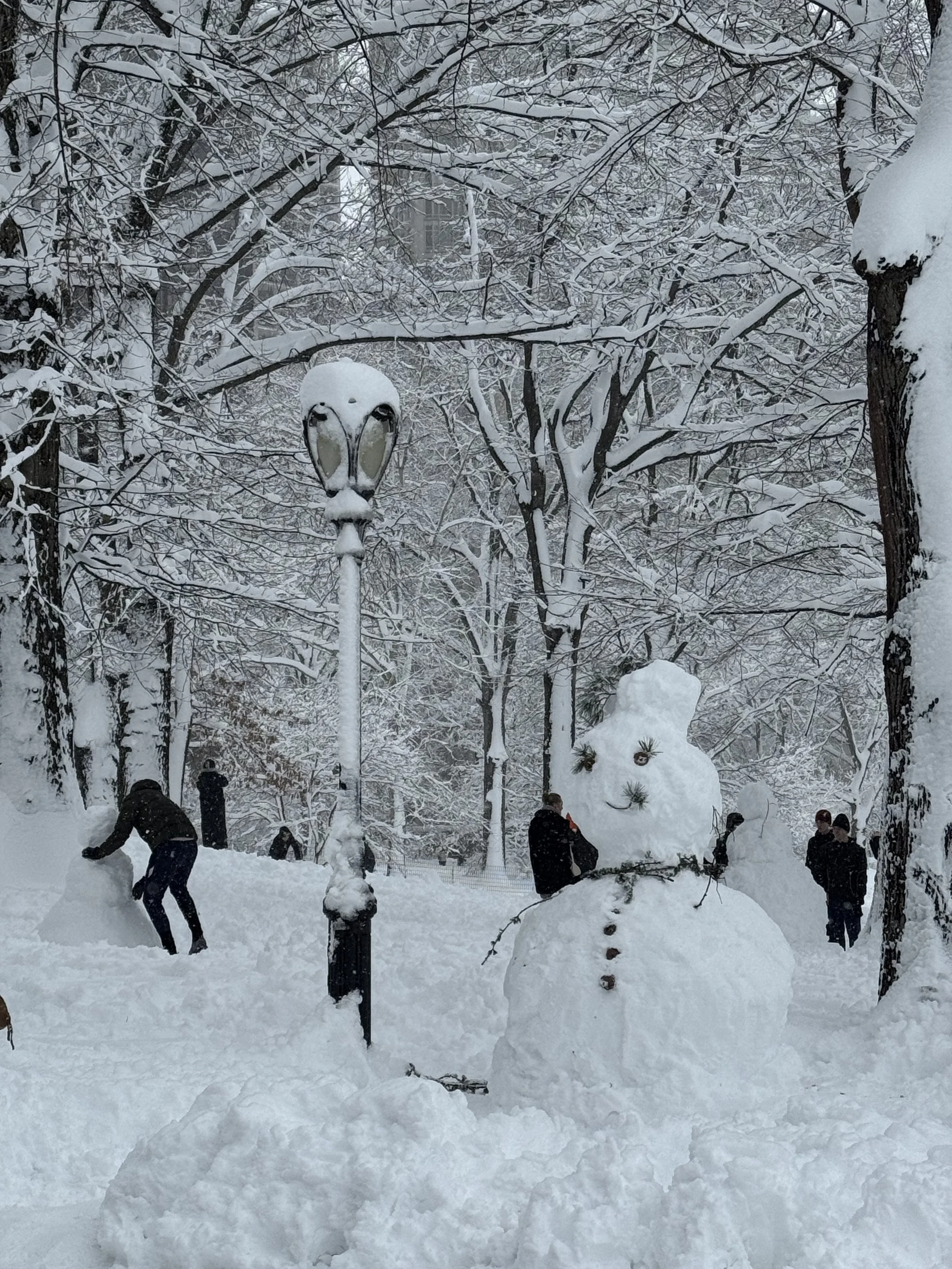
Snowmen in Central Park after a winter storm. By the people of NYC.