Winter with Van Gogh, Monet and Stieglitz
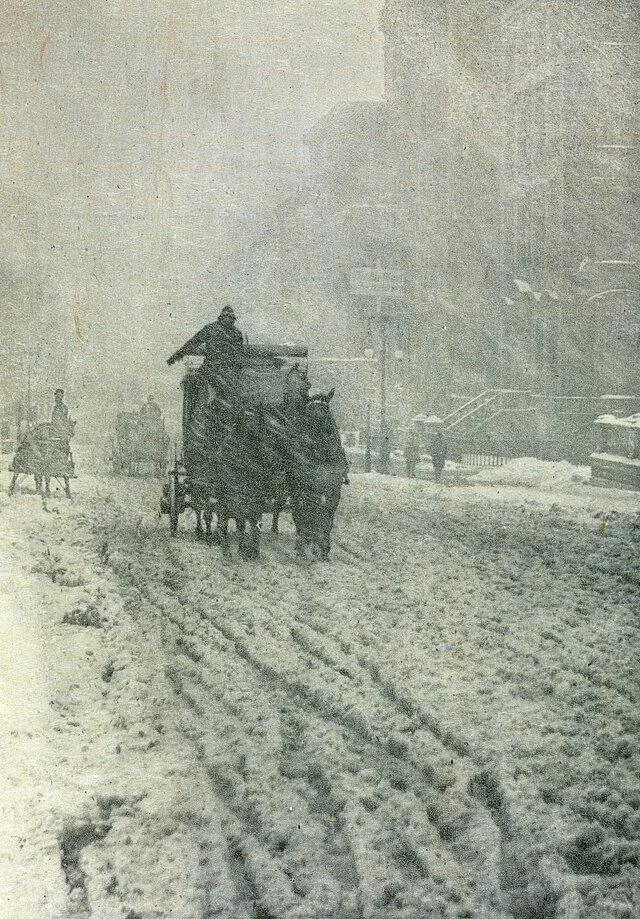
Alfred Stieglitz, Winter, Fifth Avenue, 1893
23 January 2026
Every winter, I am attracted to the vast numbers of snowy landscape paintings that hang on the walls of our galleries. Artists have forever been enamoured with the simultaneously harsh and yet fragile and ethereal beauty of snowfall. Over the last few weeks, countries across Europe have felt a firm icy chill spread down from the Arctic. For some, the weather has been brutal, disrupting day to day life, whilst for others, heavy snowfall has created idyllic fairytale postcards. As a city dweller, I take a keen interest in the way artists capture the blend of industry and the urban with the unique weather phenomenon of snow. Nineteenth century artists, in particular, sought out this duality of nature and life as the industrial world continued to grow. Here are just a few who showed that as much as we try to bend the natural world to our will through urbanisation and industrialisation, a fall of snow tells us how far away from mastery we remain…
A Worker’s Plight
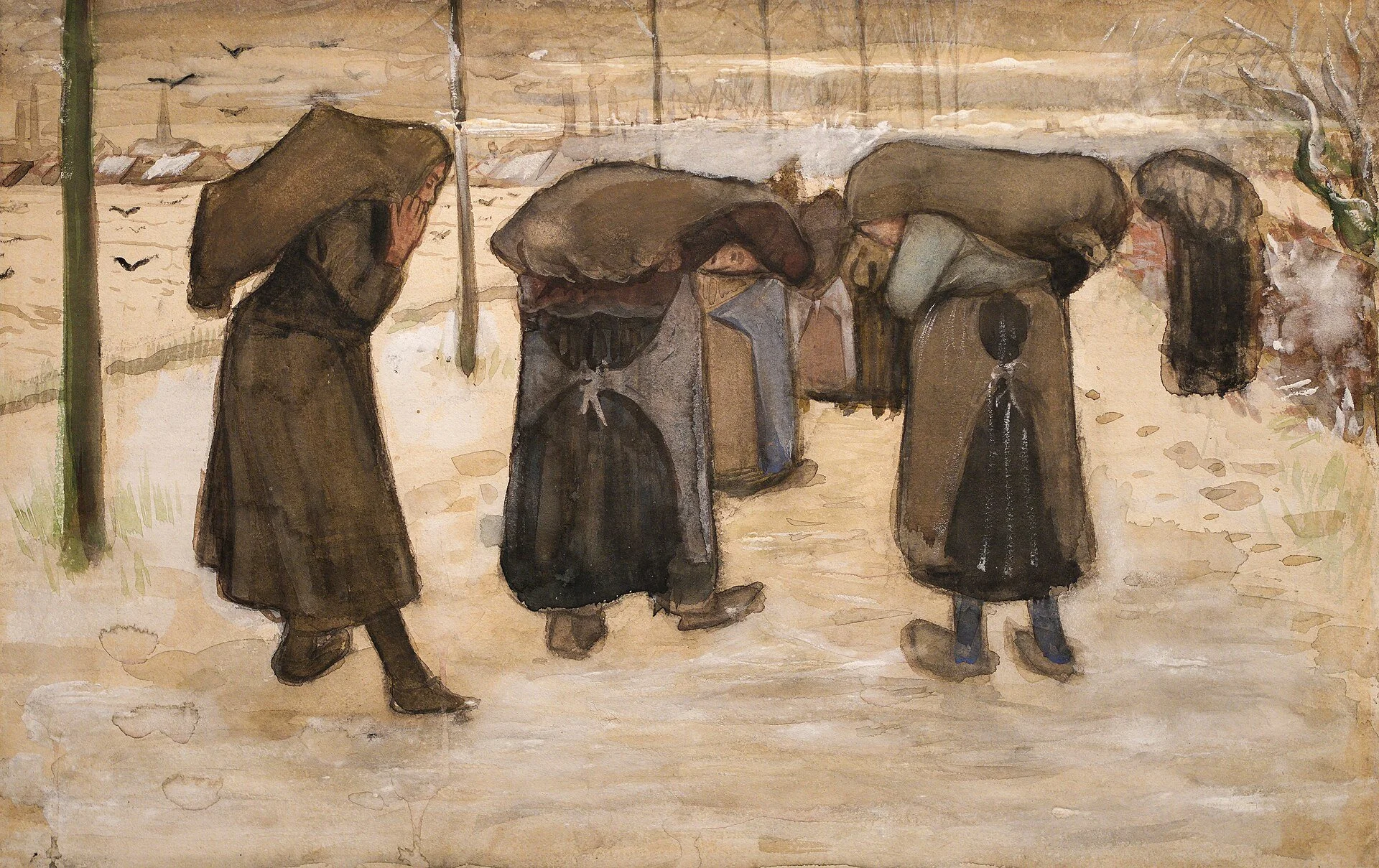
Vincent Van Gogh, Women Carrying Sacks of Coal in the Snow, 1882
Vincent Van Gogh - known for his idiosyncratic, brightly coloured, swirly landscape paintings - felt a great affiliation and sympathy for the workers of a changing world. By the middle of the nineteenth century, the Industrial Revolution had dramatically changed European landscapes and the lives of those within it. In this watercolour painting, Van Gogh captures the sharpness of a cold winter; the sky and ground the same greyish yellow; the women, carrying sacks of coal from the miners, bent double in drab clothes of browns and greys. Snow is all encompassing, and the women are bound to it, as they take tentative steps on an icy lane. The winter landscape seems to mirror the cold repetition of these women’s lives. As the women seem to drift towards this frozen horizon, it feels as if this will go on forever.
An Icy Wait
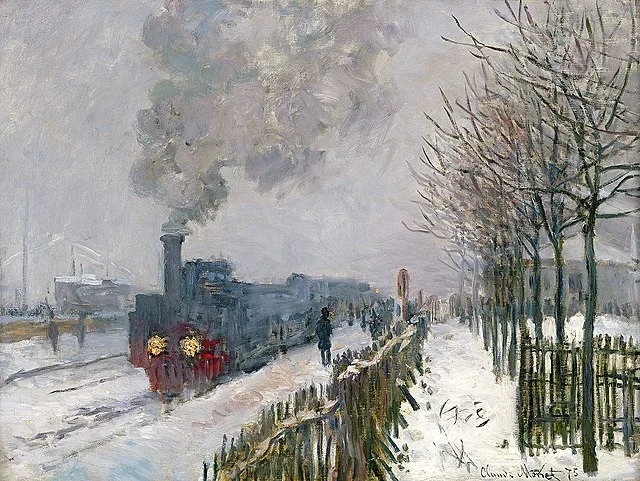
Claude Monet, The Train in the Snow, 1875
In a similar vein, Claude Monet wanted to work the change of industry into his landscape paintings. The Train in the Snow depicts just that… a beautiful blue and red train is moving towards us with a great plume of smoke billowing from the top. The landscape swirls with snow, blending colours of whites, purples and blues. Just visible is a receding crowd of people waiting on the platform. Perhaps like many of us today, these people have been waiting for a long time as the snow disrupts the line.
Out in the Cold
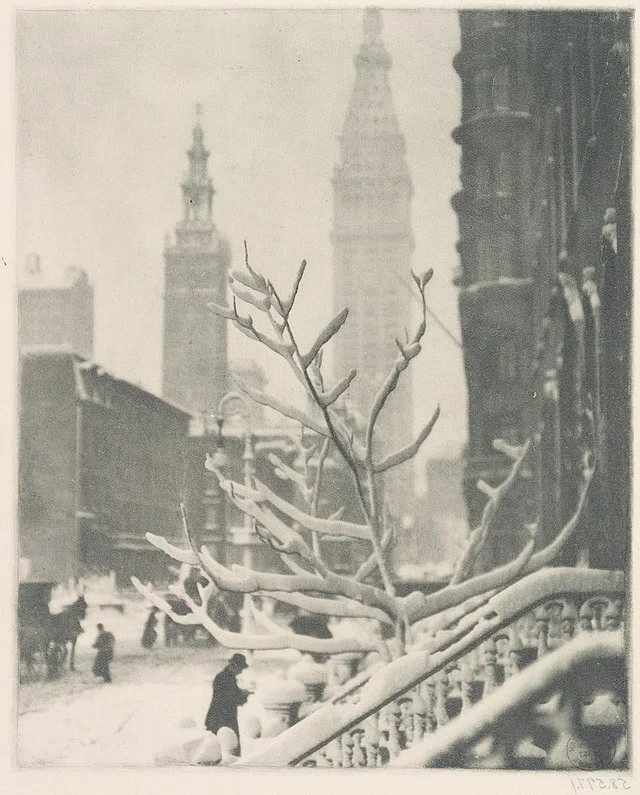
Alfred Stieglitz, Two Towers, 1911
One of my favourite photographers, Alfred Stieglitz, used the weather as a character in his photographs. Winter, Fifth Avenue (see image above) is just one of a series of black and white New York photographs taken on a blustery snowy winter day. But whilst the effect is one of spontaneity, the photographer actually spent a few hours waiting for the exact composition and conditions to get the image. Like Van Gogh and Monet, Stieglitz has captured the urban and the natural with one image. Twenty years on, Stieglitz’s taste for shooting the city through a layer of snow was unchanged; in his Two Towers, Stieglitz photographs the titular two towers through a focused shot of snow capped trees and town house railings. Stieglitz came from a transcendentalist background, which infused his work with a deep respect for nature and its relationship with humans. Transcendentalism was a 19th century philosophical movement that extolled the virtues of self reliance and the inherent goodness of people and nature.
These are but a few artists who found inspiration in snowy urban landscapes. There is an irony, that the snow that once disrupted industry, has itself been beaten back and made rarer by two hundred years of unrelenting industrial and urban growth.
You might also enjoy. . .