Piano Department Film Night
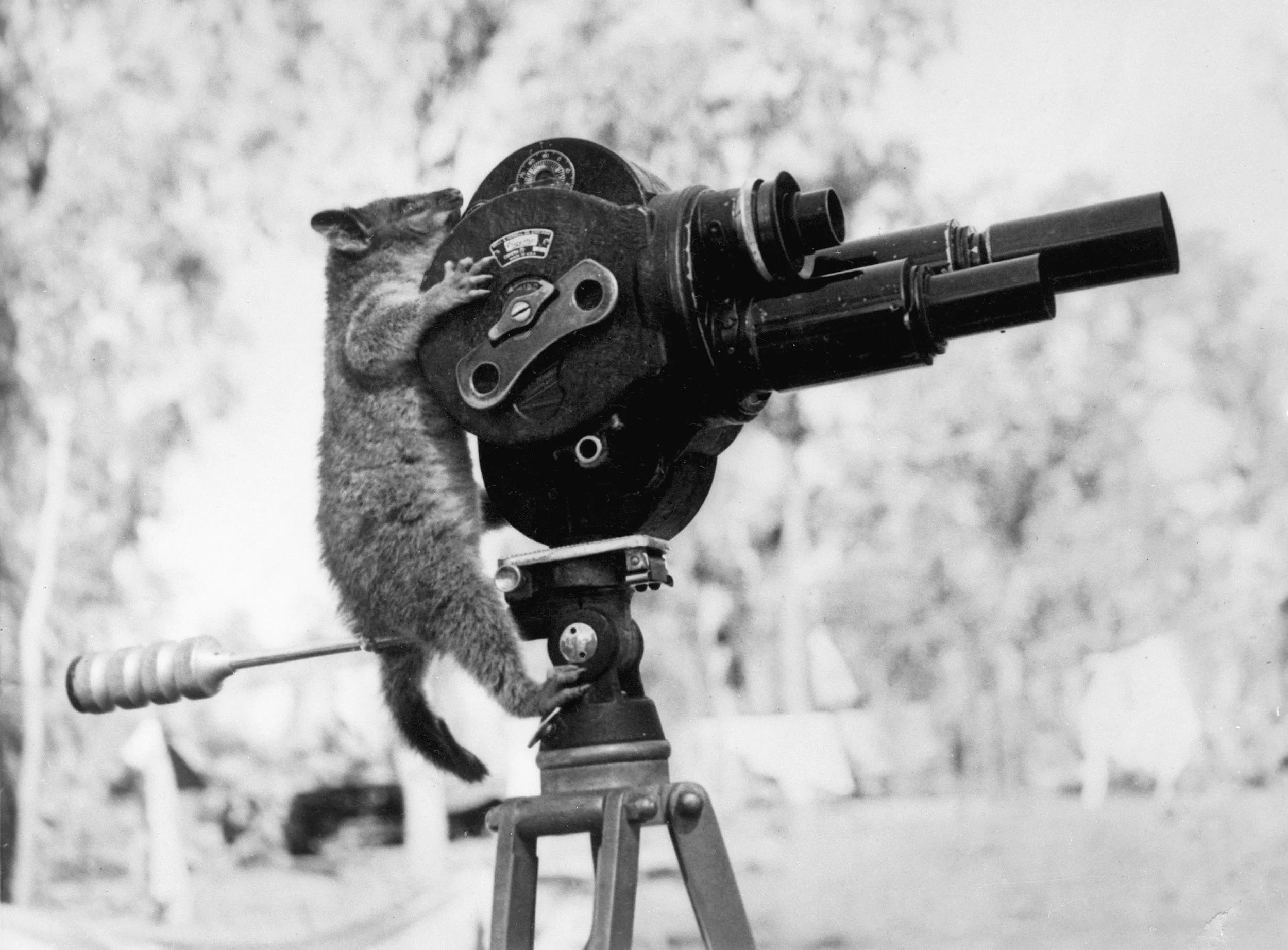
Australian War Memorial Collection, 1943
23 January 2026
During my time at music school, a couple weeks of every term were dedicated to orchestral projects. Our regular classes stopped, and, for hours every day, all the students would be cooped up in orchestral rehearsals. All the students except for the pianists, that is – we weren’t usually needed in the orchestra – and this was a problem for the piano faculty, since they weren’t allowed to let us go home early. How on earth were you supposed to keep 100-odd students occupied for two weeks? Over the years they tried various classes – theory, sight-reading, even yoga – but somehow what stuck was the Piano Department Film Night. We’d gather around an ancient projector which had been fished out of the bottom of some obscure cupboard, and watch documentaries about anything piano related. In case you were thinking of holding a similar event for your music-nerd friends, here are some of the films we watched.
The Art of Piano (1995) (1h 45 mins)
This is a compilation of short profiles, covering sixteen of the most legendary pianists of the early and mid-twentieth century, and containing an absolute feast of footage of their concerts and recordings. Pianists from our own time are also interviewed about their impressions on these old greats, which is a useful way into these older recordings since the style of playing from this age is so different to that of our own; I actually hadn’t heard so many of these people play, despite them being so famous. Indeed, their interpretations are often surprising – my piano teacher would probably tell me off if I tried to play like some of these legends – but every single excerpt is a treat to listen to, whether it was the extreme, almost reckless virtuosity of György Cziffra, or Michelangeli’s pristine Scarlatti playing. The film is a portrait of an age of individualism, and you get a sense of the musical personalities of each pianist, their philosophies, preoccupations, and eccentricities.
The Wanderer - A Film About Schubert by András Schiff (1997) (50 mins)
When I first started playing Schubert he felt a little enigmatic to me, but this helped point the way to what his music was really about. András Schiff, renowned performer of Schubert’s works, presents the documentary, and takes us through Schubert’s biography and important works; but for much of the film András Schiff says little at all, leaving the gorgeous Viennese scenery, Schiff’s delicate and songful pianism, and of course the hauntingly beautiful music to speak for itself. Somehow, like much of Schubert, the film goes by like a dream – Schiff’s spare, reflective commentary focuses on the inspirations behind the music, whether it’s Schubert’s yearning for nature and the unrequited romance behind his famous Fantasie; his early illness and obsession with death; his love of poetry and song; it all comes from a personal connection to the composer, as if he has a way into Schubert’s inner world.
Glenn Gould - How Mozart Became a Bad Composer (1968) (40 mins)
This one is a little different to the others – it’s a bit more of a lecture than a film, but Gould’s trademark humour and delightful eccentricities make it an entertaining watch even if you don’t manage to follow everything he says. Essentially, Gould accuses Mozart of laziness. He undertakes a short analysis on the C minor Concerto to prove his case, and meticulously lays out every banal harmonic progression and predictable melodic pattern for us to see. But, as Gould explains later, it is also a deeper part of Mozart’s creative personality that he takes issue with. Ultimately, everything is simply too perfect for him; the melodies are charming, the forms are balanced and satisfying, the harmonies follow seamlessly from one chord to the next. For lovers of Mozart such as myself, we are happy to leave it at that, to sit back and enjoy the music. But this isn’t enough for Gould. There must be something unexpected in every work, something truly creative and inventive has to have taken place in the genesis of the piece. Otherwise, the artist is futile, the artwork unextraordinary.
“I snuck into Juilliard to interrogate pianists in their practice rooms” - Tonebase Piano (2023) (35 mins)
Okay, so not exactly a film – but a break from all these old (or dead) men was probably due… This lovely little YouTube video pretty much does what it says on the tin, with presenter Ben Laude barging into the practice rooms of five Juilliard pianists with a camera and some questions about their process. The video gives you a chance to have a peek into one of the most famous music schools in the world, though those endless practice corridors, bare walls and general lack of natural light will feel familiar to anyone who has ever stepped foot in any music institution. I very much appreciate that it doesn’t over-romanticize the music school lifestyle (unlike those glamourous Instagram vlogs I watch while slouched in front of a beaten up piano, endlessly repeating the same few bars), and the students are refreshingly down-to-earth in how they talk about their work. Watching how they tackle those perennial problems that occupy all musicians – memorizing pieces, tackling tricky passages – is a nice insight into the lives of these talented students.
Some more videos and films you might enjoy:
Bloody Daughter – Stéphanie Argerich (2012) (1h 35mins)– a look into the personal life of the world-famous pianist Martha Argerich, as filmed by her daughter.
Ivo Pogorelich masterclass with Alice Kezeradze (1983) (25mins) – a masterclass and interview about their musical lives.
Nahre Sol Answers Your Questions (2020) (8mins) – my favourite video of this wonderfully eclectic pianist and composer.
A vlog by Tiffany Poon (2024) (16mins) as she travels to Dublin to give a recital and shares her reflections.
Can you tell I spend too much time online? Happy watching!