On Artists and New Year Resolutions
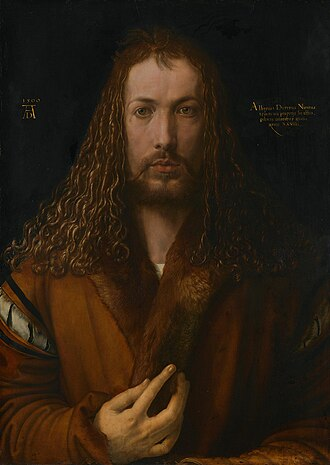
Albrech Dürer, Self-Portrait at Twenty-Eight, 1500, oil on panel. Alte Pinakothek, Munich
9 January 2026
Have you made any New Year’s resolutions? Have you failed them—or not yet? Perhaps you won’t! You see, the key to achieving your resolutions is to declare the—boldly—and ensure reputational destruction in case you fail. At least, that seems to have been the strategy of these artists…
Albrech Dürer (1471-1528)
Amidst the Northern Renaissance, artists were no longer mere artisans, but creators and intellectuals equal to theologians and rulers. To reflect that idea, Dürer adopted religious iconography in Self-Portrait at Twenty-Eight, presenting himself frontally with the symmetry and gravity previously reserved for Christ. This not only exalted the role of the artist, but resolved that he, in particular, was—and would remain—a creative of divine status. Talk about bragging.
Pablo Picasso (1881-1973)
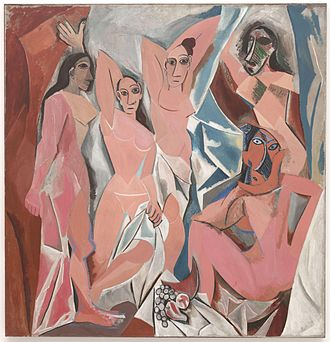
Pablo Picasso, Les Demoiselles d’Avignon, 1901, oil on canvas. MoMA, New York City
And while Dürer may have become a god, but Picasso was a superstar. Resolved to challenge established convention, he created Les Demoiselles d’Avignon. By flattening space, fracturing bodies, and basing faces on Iberian sculpture and African masks rather than classical muses, he decisively dismantled perspective, beauty, and the entire fiction of the Renaissance nude.
Kehinde Wiley (b. 1977)
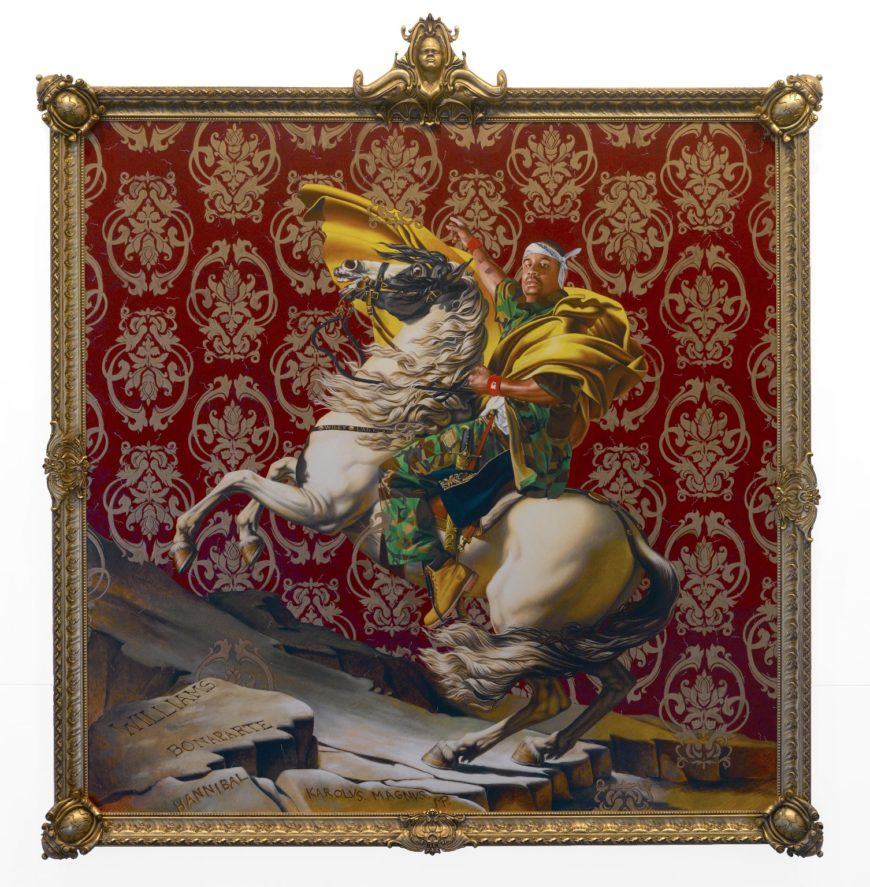
Kehinde Wiley, Napoleon Leading the Army over the Alps, 2005, oil on canvas. Brooklyn Museum of Art, New York. © Kehinde Wiley
But rupturing the canon also extends into symbolism. In Napoleon Leading the Army over the Alps, Wiley inserts a young Black man into a composition historically associated with imperial authority. By occupying rather than rejecting the canon’s visual language, the painting reclaims and redistributes the imagery of power, exposing the canon as historically contingent rather than a neutral inheritance. In the footsteps of Dürer and Picasso, Wiley turns this painting into a public resolution—one that announces status, intention, and the necessity for change.
Perhaps the lesson is simple: resolutions are easier to keep when your entire image–and career–are at stake.
You might also enjoy. . .