© Annaliese Mansfield
6 November 2026
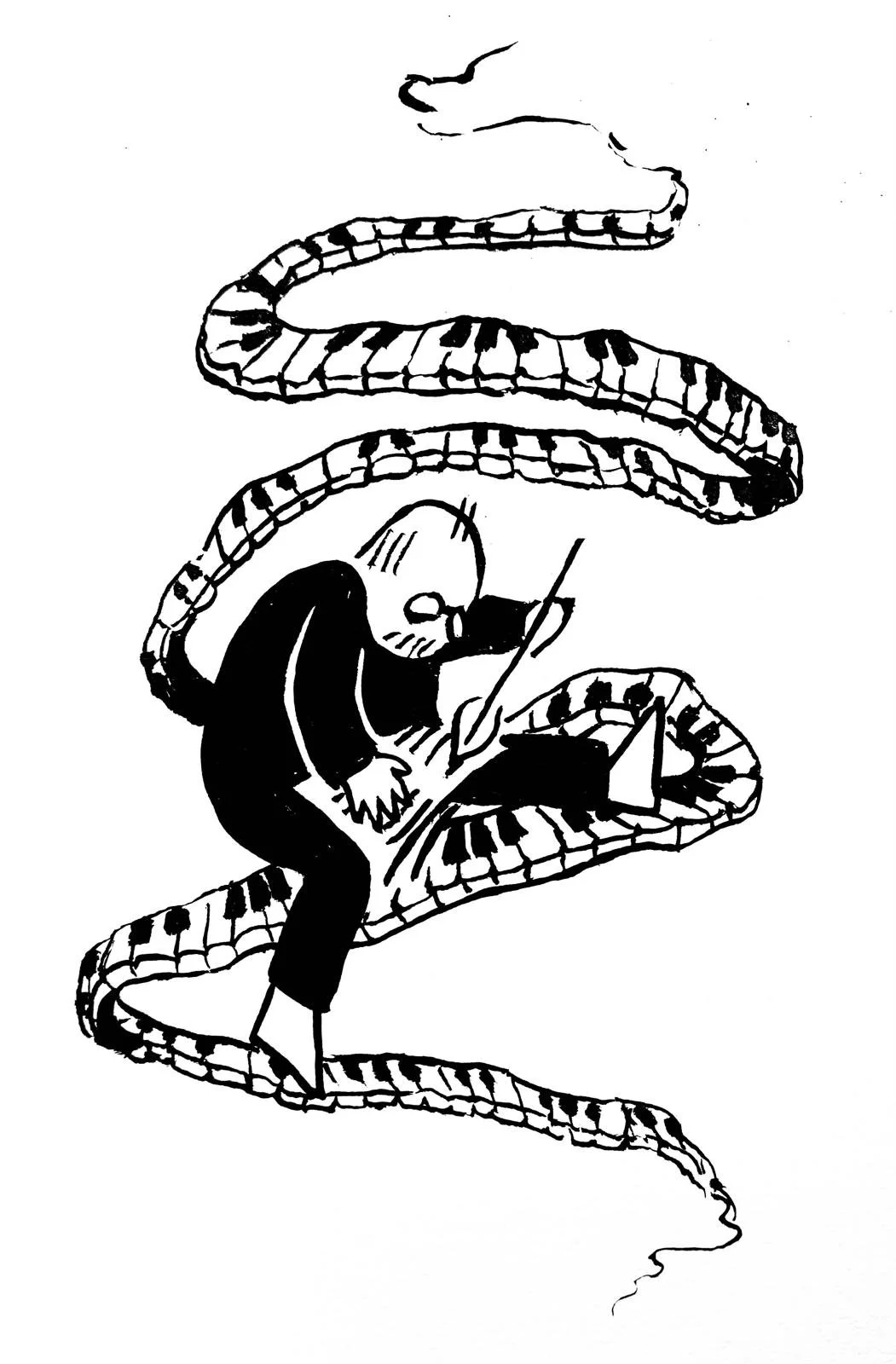
“Before I compose a piece, I walk around it three times, accompanied by myself.” Thus spoke the Parisian composer and eccentric Erik Satie, who, after ten years living in Montmartre, suddenly uprooted and moved to Arcueil-Cachan, a distant suburb south of Paris. Nevertheless, each day, armed with a hammer in his pocket, he trekked the ten kilometres to Montmartre and back, stopping to compose at cafés enroute. He was never seen without his immaculate three-piece suit, with bowler hat and umbrella in hand. Let us follow him as he walks back one day.
In cafés
During his numerous café stops, Satie would jot down the ideas he would develop upon arriving at home. His material is typically banal and uninspiring, often deliberately repetitive to the point of boredom – a few broken chords suffice to depict Sur un vaisseau’s maritime scenery, for example. Montmartre’s cafés and cabarets had become the center of Paris’ avant-garde, where artistic misfits gathered to perform and discuss new works over glasses of absinthe. Le Chat Noir in particular was infamous for shadow theatre shows, where cinematic adaptations of Flaubert were programmed alongside one-act scatological farces. Wordplay, mockery and the risqué were central to artistic endeavour here.
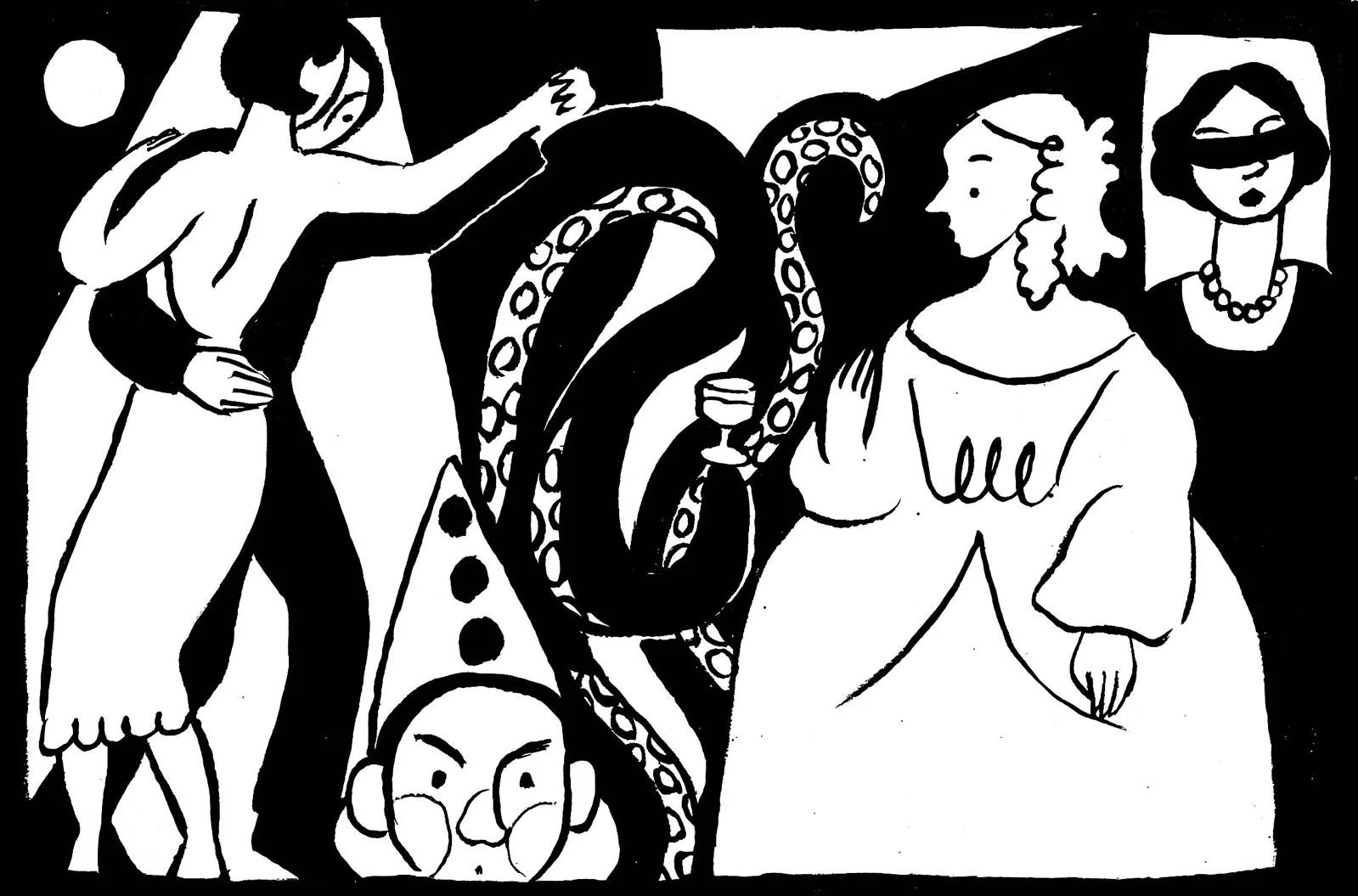
Against this backdrop of artistic cross-pollination, Satie adorned much of his works with prose-poetry. The Sonatine bureaucratique describes an office worker as he reflects on promotions and penholders, whilst the music parodies Clementi’s Sonatina in C, a cornerstone of the beginner student’s repertoire. He forbade readings of his texts in performances – thus, only the pianist is allowed access to the work in its entirety. Satie was often seen around Montmartre in a floor-length priest’s gown, as his alter ego, the High Priest of his one-man Metropolitan Church of Art of Jesus the Conductor. Though his ‘Abbatiale’ (abbey) was but his tiny room, he took his role extremely seriously – the mystical Danses Gothiques were among the works penned by this Master of the Chapel.
“It is rare for jokes to find their source in beauty’s graceful innards, but certainly they often emerge from the smelly armpits of malice. And so I do not make jokes.”
© Annaliese Mansfield
New Paris
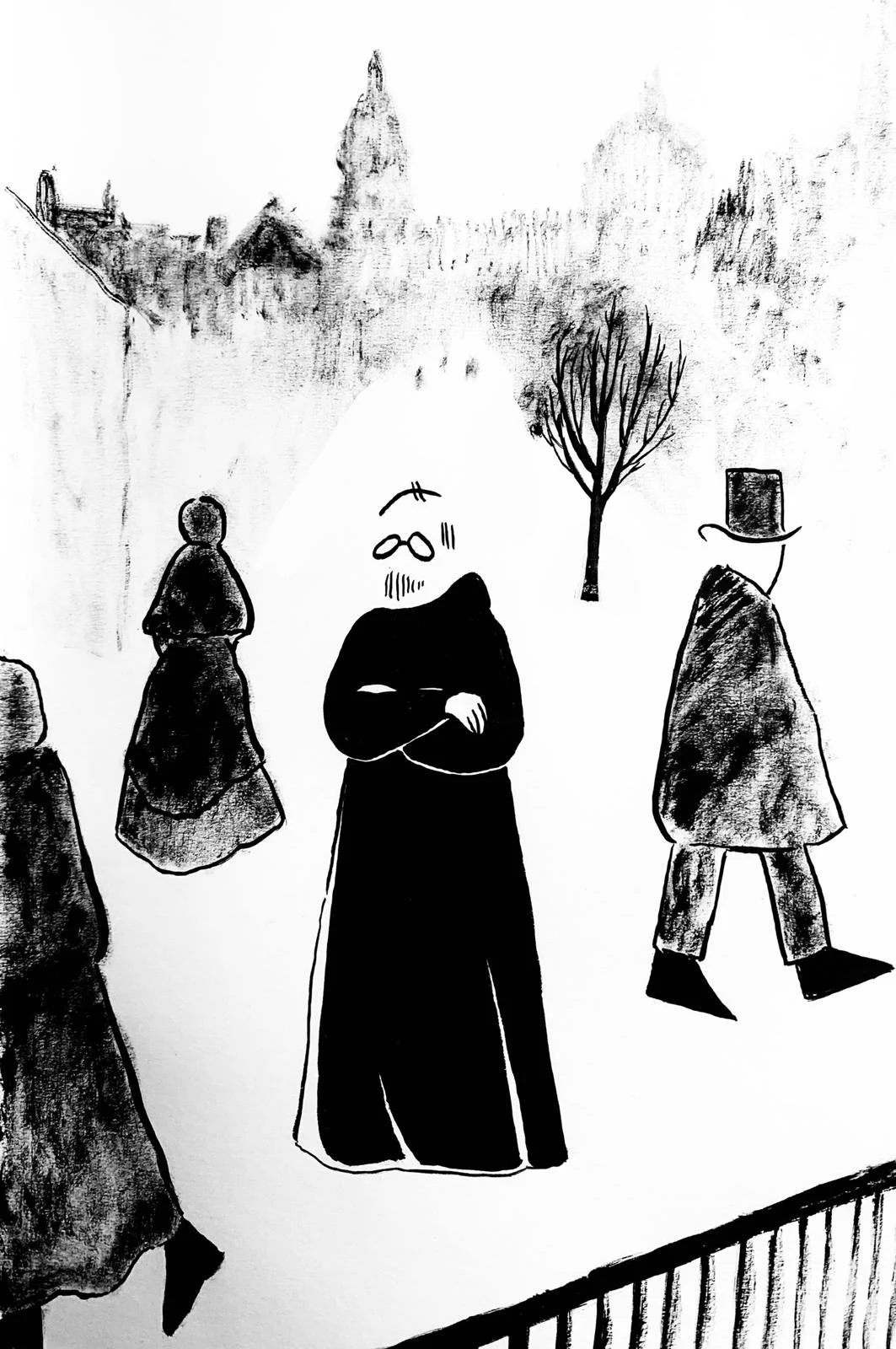
Over the second half of the 19th century, Paris gradually took on a radical new appearance. Under the direction of Baron Haussmann, wide, clean boulevards ran across the city in straight lines, ploughing through dark and overcrowded medieval villages, and by 1900, Parisians could ascend the Eiffel Tower by elevator, or ride the newly-opened Metro for near-instant access to the city’s entertainments. The immaculately dressed dandy, with his poised, distant demeanor, personified the public life of the period, enjoying the city’s new attractions as a connoisseur does fine wine.
Satie’s Sports et divertissements was published in 1923 in the high-fashion magazine La Gazette du Bon Ton. Preceded by an Unappetizing Chorale, twenty minuscule piano pieces appeared in pristine calligraphy alongside colourful art-deco illustrations by Charles Martin. Each piece evokes its leisure activity in the manner of a mosaic, with many short, self-contained blocks of music following each other instantaneously without transition. With Satie borrowing from styles as diverse as Mozartian opera to the tango, the effect is a dazzling kaleidoscope of ideas, with piece after piece flying past the listener.
“I can’t find anywhere to live in Paris. I need something huge, you realise, thirty rooms at least… I’ve got many ideas to house!”
© Annaliese Mansfield
On the road
Satie’s daily walks seem somewhere between a commute and a pilgrimage; the famous Gymnopédies show how the physical toil of his walking – the repetitive tread, the solitude and monotony – becomes transfigured in his work. However, it is the flaneur, not the pilgrim, who is usually associated with urban walking. With his prodigious gifts of observation, the flaneur finds in the fleeting crowd the object for his deepest fascination. His soul works like a mirror, taking the shape of the happenings of the crowd in front of it, but without his city he is totally empty.
Upon listening to Socrate there is the strange impression of amnesia. The beautiful vocal line, setting passages from Plato’s dialogues, was actually written last – the gently undulating accompaniment came beforehand, meticulously constructed so that frequent, subtle contrasts of key or rhythm keep listeners stimulated. The piece’s subtitle, Drama Symphonique, is completely ironic – over its 30-minute course, there is absolutely no emotion, only the serenity of the marble statues of antiquity. The discontinuities of the piano part, and the lack of a dramatic arc to cling onto, mean that, after the piece ends, all but a few melodic fragments evaporate quickly from the memory.
“I very rarely dance. When I walk, I hold my sides and look rigidly behind me. I breathe carefully (a little at a time).”
© Annaliese Mansfield
Domestic life
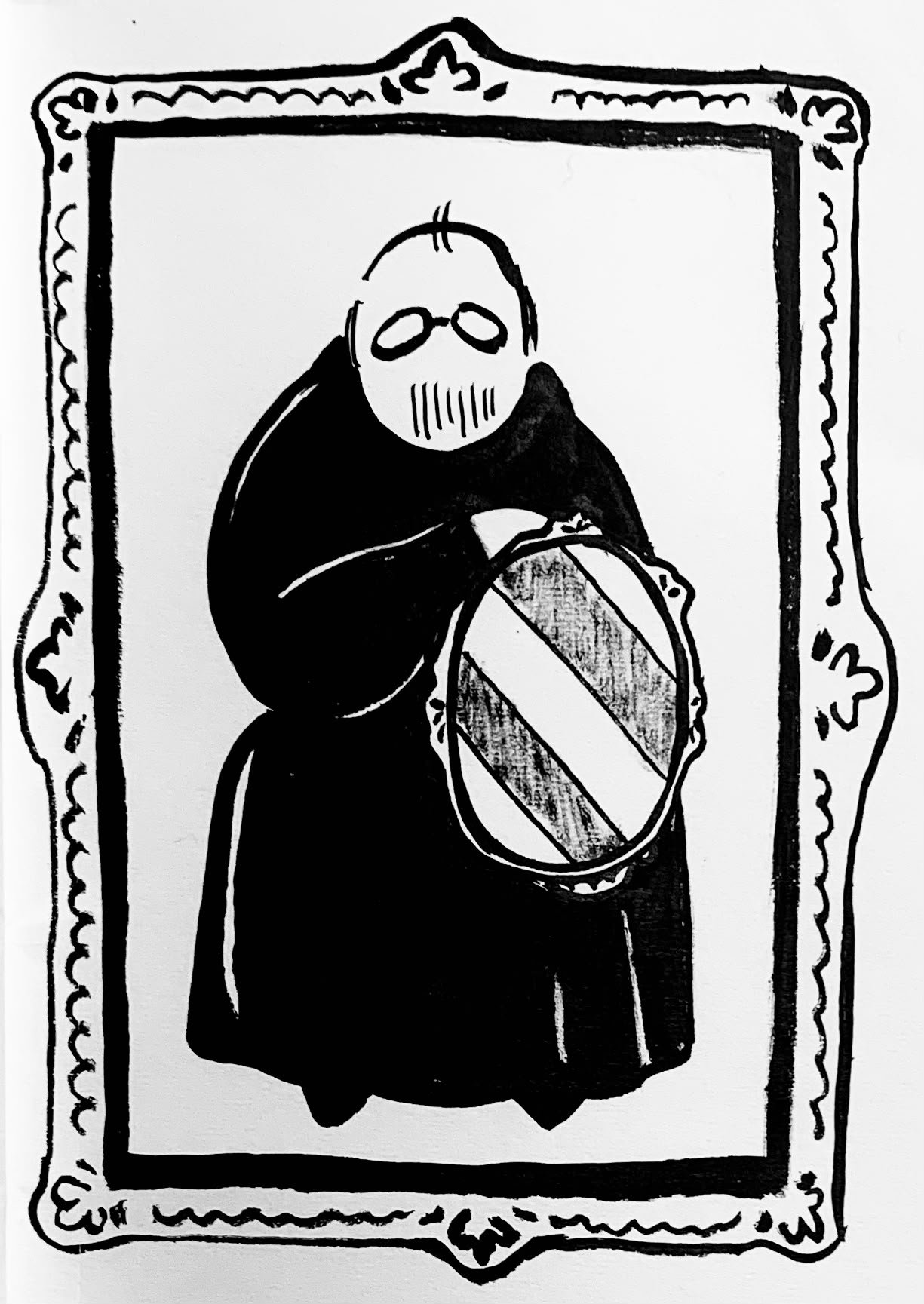
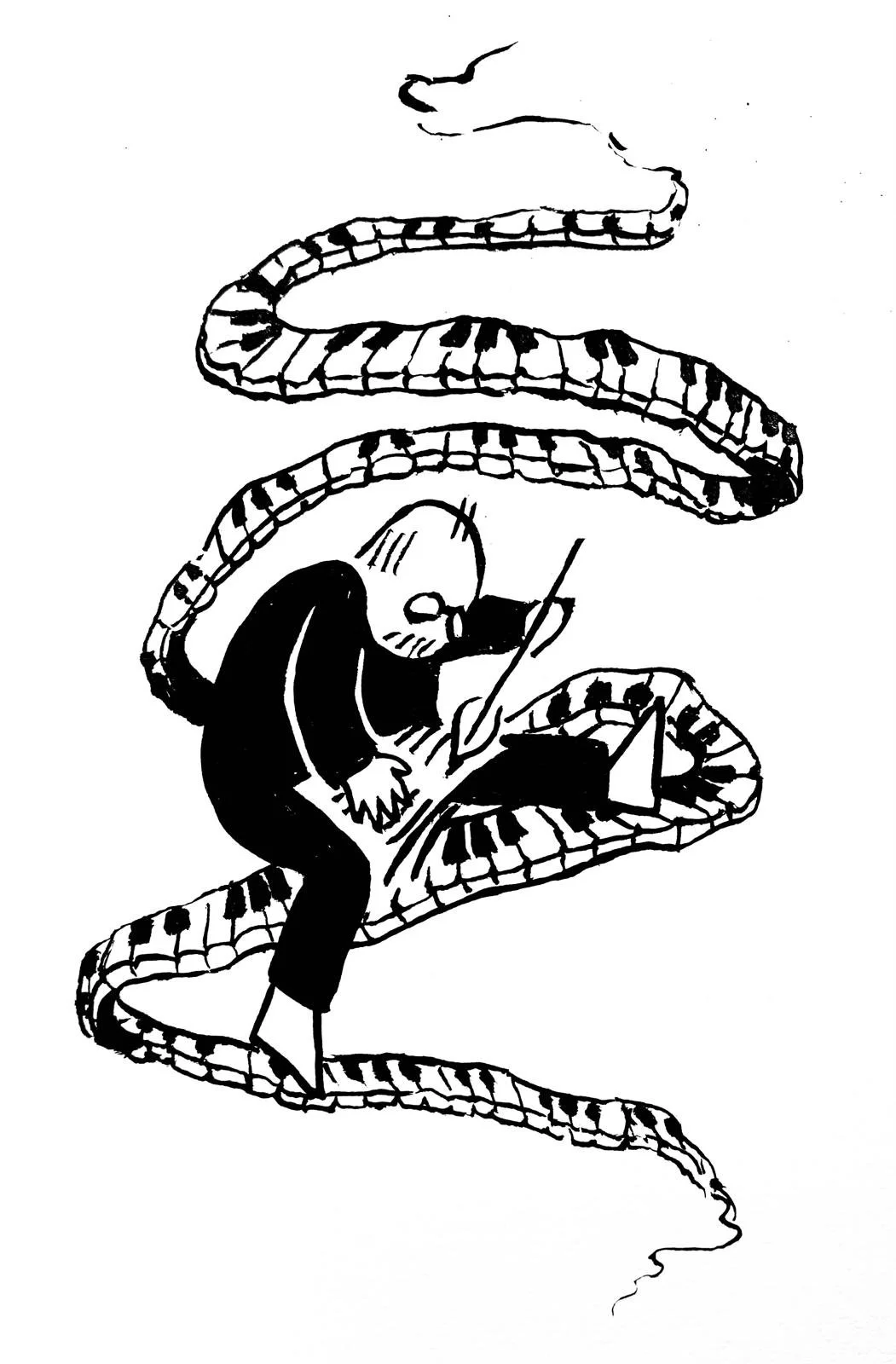
In October of 1898, a wheelbarrow containing a mattress and drawers made the long southward journey from Montmartre to his new lodgings. By the year’s close, two grand pianos had also arrived; these would be stacked on top of each other to save space in the tiny room at 22 Rue Cauchy. He composed at the piano, painstakingly to the point of idiocy. It took him twenty-five attempts to harmonise the short opening cabaret-tune of Marche franco-lunaire, for example, and in typical fashion bars 3-4 came before 1-2, with 16-32 completed beforehand. For an avant-garde, he was meticulous about proportion and symmetry, and counted bar numbers obsessively. Entry to his home was forbidden to all – only after his death, upon seeing the piles of debris and dust, did friends realise the squalor he lived in. No hot water or electricity ever reached the flat.
“I passed my days in an ivory tower – or one of some other (metallic) metal.”
© Annaliese Mansfield
Epilogue
7th August, 2026 – Central London to Harlesden, 11.1 km
I leave Lily around 7 pm in Pimlico to finish her ice-cream and teach her students, then I begin the walk. First, a detour through Belgravia, where post-work drinks are in full swing, floral sundresses and colourful cocktails all around, the evening warm and bright. Pastel-coloured stores display their perfumes, flowers, suits and cigars, before they all become those white stucco houses that the nice bits of London are famous for. I end up on Buckingham Palace Road, past Buckingham Palace and down The Mall before turning off for Mayfair. Passing the myriad of luxury boutiques, I realise I am not bored, or at least not feeling bored, though perhaps boredom is the name of that ceaseless stream of mundane thoughts that occupies the mind by default; emails, groceries, timetabling, that stuff, punctuated occasionally by, say, a particularly bright advertising screen, or a funny snatch of conversation I overhear. Through Marble Arch, then posh Mayfair suddenly gives way to Edgware Road – shawarma, baklava, rowdy chatter and late nights, all steeped in the smell of shisha. Large groups eat outside on tables, calling passers-by to join; Schumann's Concerto rattles through my head as I walk past, but I hear it as I practice it, note-by-note, step-by-step. It’s completely dark as I turn into Maida Vale. Quickly, the commotion evaporates, the streets empty save for the occasional idling Uber driver, their face lit by the dashboard. Only the sound of my footsteps accompanies me through Kilburn and Kensal, onto Wrottesley Road, home around 11 pm.