Ryan Wang, Pianist and Harvard-New England Conservatory Freshman: “You cannot have a proper musical education without knowing about the world around you.”
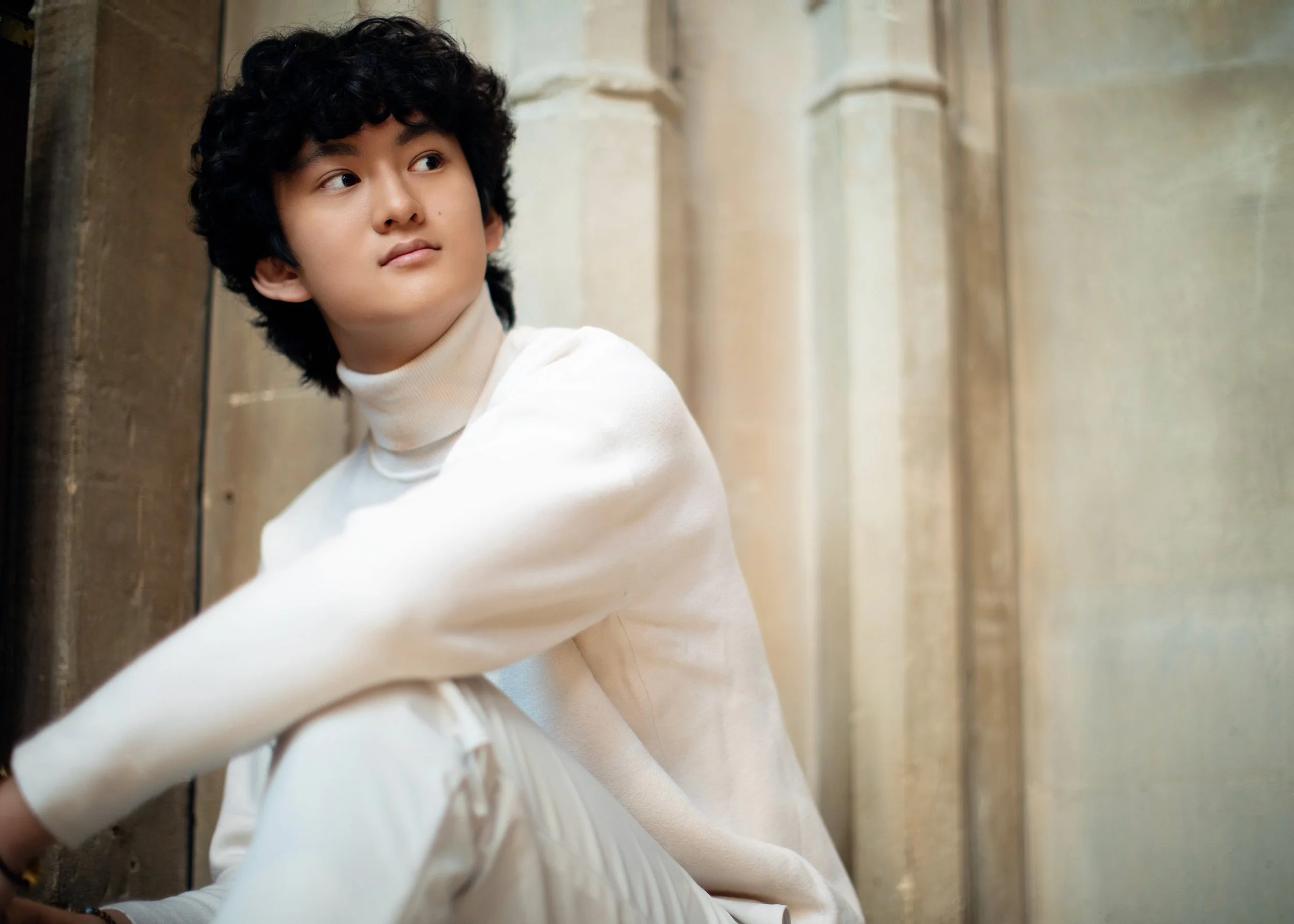
Ryan Wang. Photo provided by HarrisonParrot Group
Canadian pianist Ryan Wang approaches live with curiosity and enthusiasm. This will serve him well as he sets out to balance an international concert schedule with the excitement of being a college freshman. The BBC Young Musician 2024 just started the Harvard-New England Conservatory Dual-Degree program. TWoA talked to Ryan about attending Eton, the importance for every musician to experience live in many different ways, his unorthodox method for combating performance anxiety - and sunsets. Get ready for a smile on your face.
There is a reel on your Instagram account where you play Billy Joel’s “Piano Man” on the piano while accompanying yourself on the harmonica and playing Subway Surfers on your iPad, a popular mobile games that requires increasingly fast reflexes as your character evades dangers on a rail track. How did you come up with this challenge?
I'm a huge fan of Billy Joel. I love that he's a great pianist, a great singer and that his biggest hit is “Piano Man.” I always come across videos where people are telling a story with a game like Subway Surfers going on in the background. I thought I could do that while playing “Piano Man.” It took a couple of tries because you have to time it - you also need luck because the game has to match what you're doing. I was so proud of myself for getting it in the end. It was just a really cool thing to do.
While we are talking about games - what was the most defining musical moment of your childhood?
When I started at Eton, a lot of people found me performing on The Ellen DeGeneres Show online. I was five. For them, that became a very defining characteristic of me. But for me, I barely remember it, only little snippets. For me, the defining moment was when I first went to my piano teacher, Professor Lee Kum Singh. I think I was even younger than when I went to The Ellen Show. I remember that so clearly. I played a piece to him because I had done a bit of piano before then, but not very seriously. He was standing in the shadows, his room is always very dark, he was crossing his arms, looking very serious. He said: "What if you didn't move your head that much?” Or something like that. I still remember that moment. I still have a great relationship with him. He knows exactly what to say, how I feel at any given moment. I think he’s the person in the world who understands me the most, musically speaking, because he brought me up. The start of this ongoing relationship was the most important moment of my childhood, musically speaking. That lesson was a first meeting; I wasn't sure whether he was going to take me on. Right after the lesson, I asked my mom: “When is the next time I'm going to see him?” My mom said: "Oh, we don't even know if he's going to be your teacher!” I just loved that lesson so much that I wanted to go back. I saw him three times a week after that, and I enjoyed every single lesson.
What attracted you to the piano in the first place?
My neighbor played the piano. She hated the piano and I loved the piano. I would just go to her house and play the piano. I think that's how it started. I begged my parents to buy me a piano, and they kept saying no. Eventually, my grandma said: “You should just buy a piano.” I was pestering them so much. I was just very interested.
At age thirteen, you went to Eton. Why Eton?
I had my childhood in Canada, but I always wanted to live in Europe because so much of the music I play was written in Europe. Eton was a school that I had on my radar. I'd heard of it, but I never really thought seriously of applying. You usually have to apply when you're nine-years-old. I think I applied when I was twelve. They have one spot every year for a music scholarship. You can go audition, and if you pass all the tests, you get a place. I was very lucky: I went to the audition; I passed all the tests and got the place. It was so last minute. It was January 2020, I think. I did my audition, and then we moved. COVID started right after that. I am very happy that I went to Eton. I had a great time. My mom and dad were splitting their time half and half between Canada and the UK while I was there. We had a house near the school, so when we had short leaves - a weekend every three weeks when boys can go back home - I had a place to stay.
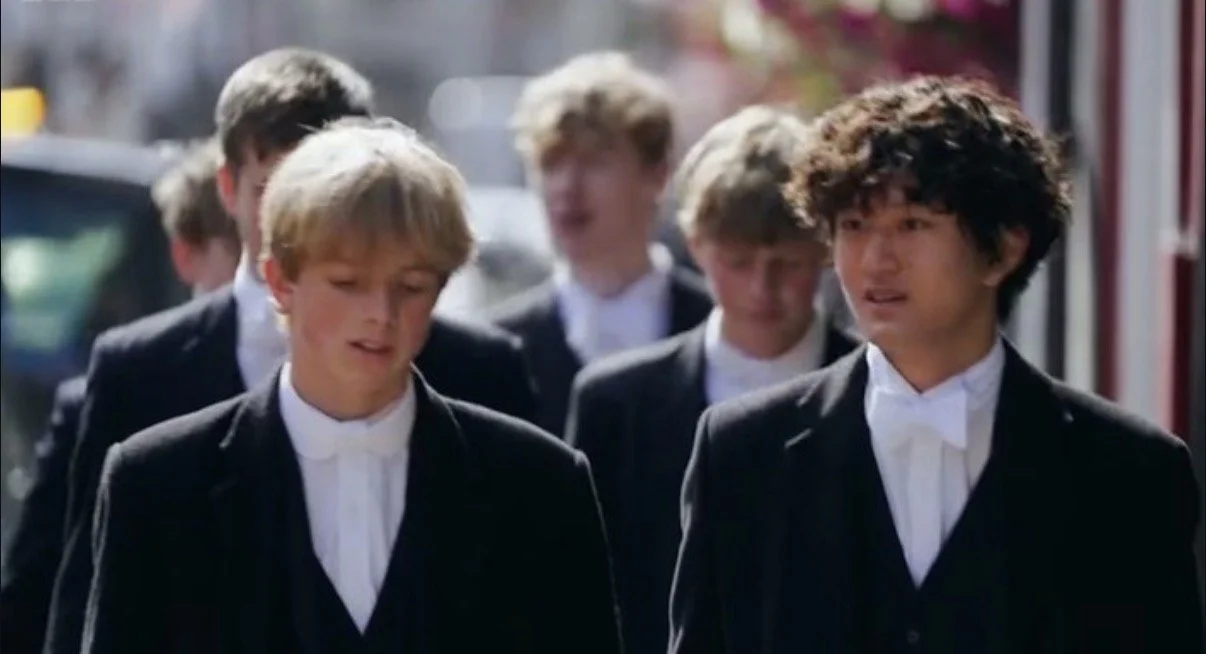
Ryan Wang at Eton. Photo taken by the BBC. Photo courtesy of Ryan Wang
What was the most enjoyable thing about Eton, and what was the most challenging?
The most enjoyable thing were the people. All my friends - I miss them so much. There were a lot of rules at Eton, which meant that breaking the rules was very fun. We were boys. Just having that camaraderie together, going through tough times together, that's the most memorable experience for me. As for the toughest thing - honestly, I loved it so much. I have nothing that I wish I would have done differently. I just loved it. It was a really good five years of my life.
Many young musicians of your caliber end up homeschooling or going to specialist music schools. Why did you and your family decide not to go down that path? How did you balance Eton’s challenging academics with your music?
My housemaster at Eton always told me that an education is more than getting good grades. He meant you have to do drama; you have to do music; you have to do sports. You do all these things, and that's what makes an education an education. I think the same applies to music: you cannot have a proper musical education without knowing about the world around you. I did A-levels Latin, Maths, Economics and Music. A-level Latin was nothing compared to what the Oxbridge candidates do, they read the whole of the Aeneid, but we read sections of the Aeneid. We read Tacitus, sections from the Annals and all these things. All this literature makes you more complete. I think with music you can tell when someone has something to say. You can tell when someone has a sense of humor, has been through hardships, if they're a happy person or if they're a bit more on the quiet, reserved side.
I think being surrounded by such characters at Eton - because there are lots of characters at Eton - made me more aware of all these things that are going on in the world, and I think it does help your music. I think, with my music: if I didn't go to school, I would be so serious, I would take things to heart too often. I approach things with curiosity and enthusiasm, and if there's hardship, I deal with it. And when I have lots of repertoire to do - Eton was really good at one thing: you do one hundred things to eighty or ninety percent rather than one thing to one hundred percent. I think that skill is so useful. That's why I'm good at multitasking. It’s because at Eton, they literally force you to do a million things at once. That's how I can have a lot going on in my brain. I can feel my brain – and then when I go on holiday, I shut it down completely. I think having that distinction is also really important.
During your final years at Eton, you also studied piano at the École Normale de Musique de Paris under Marian Rybicki. How did that work?
In my third and fourth year of Eton, I also did the artist diploma program in Paris. They allowed me to go every two or three weeks – basically every month, just to have lessons. I got the artist diploma at the end of two years. I got the artist diploma a year before I finished Eton.
You have already lived in several countries. How have the moves affected you?
Growing up in Canada, then moving to the UK, and now to the US – there is a different culture shock every time. All of my UK friends think of me as super Canadian, all the people here at Harvard think of me as someone from the UK. It’s this mixture of identities. I don't know how to feel about it.
What positive differences have you noticed in each country?
Canadians are just super nice people. The pride of people living in more rural areas, that's my favorite part of Canada. England: I just love British people. Their sense of humor is just so dry. I think they get things done very quickly, which I love, and which is instilled in me now. French people: the food in France is amazing. I always want to play in France, summer festivals in France are the best thing in the world. French people tell you everything that they feel, and they feel a lot of emotions. I think the second you see them, you feel like a warm hug because everything is on their face. Whereas British people can hide a bit, and then they warm up. The U.S. was just like a different world when I landed here. They just take life by the reins; they just embrace it. There's no filter whatsoever. My first week at Harvard was just dancing, all day long. I think I lost weight because there's just so much dancing going on. People are so genuinely happy, like you would only see at a nightclub or beach club in Europe. During my first week at Harvard, it was just people dancing in broad daylight, letting go and just enjoying life. I love that.
What about different cultural approaches to musicianship?
I think music is a universal language. You can find the people who understand you musically in any country. Having worked in so many countries, I think it's about the people, not really about the culture. I know that there are certain schools, but I think especially now, because travel is so easy and because of the internet, everything is blending together more. I think as long as you are convinced by your own musical interpretations and thoughts, you can also work with or convince other musicians from different cultures and countries. Being able to travel so much and to share my ideas with other people is what excites me. I found great musical friends all over the world.
Tell us about the Harvard-New England Conservatory dual degree program. How does it work?
I've known Wha Kyung Byun, my teacher at New England Conservatory, since 2023. We've had an ongoing relationship since then. I really enjoy working with her, chatting with her. She's an amazing person; she knows about everything, even football (soccer). I knew I wanted to study with her. She told me about the Harvard-NEC program, and I thought that if I didn't get into Harvard, I would just go to NEC. But I also really wanted to go to Harvard because I want to go university and get an education. I told myself: the only option I have is to do Harvard-NEC. When I told my housemaster at school I was only applying to Harvard-NEC, he called my parents: "Your child is crazy. There is no way he's only applying to one school.” He was trying to convince me to apply to another school. But in my mind, there was no other alternative. This was the only option that I had because I wanted to do piano seriously with the musician that I like and want to learn from, and then also get an education. I know how that sounds, but this is what I really wanted. I'm so lucky, so grateful because these two institutions are so amazing. I go to NEC once a week to have my private lesson, and I do the rest of the regular Harvard bachelor's course. In my fifth year, I do everything I need for a master's degree at NEC.
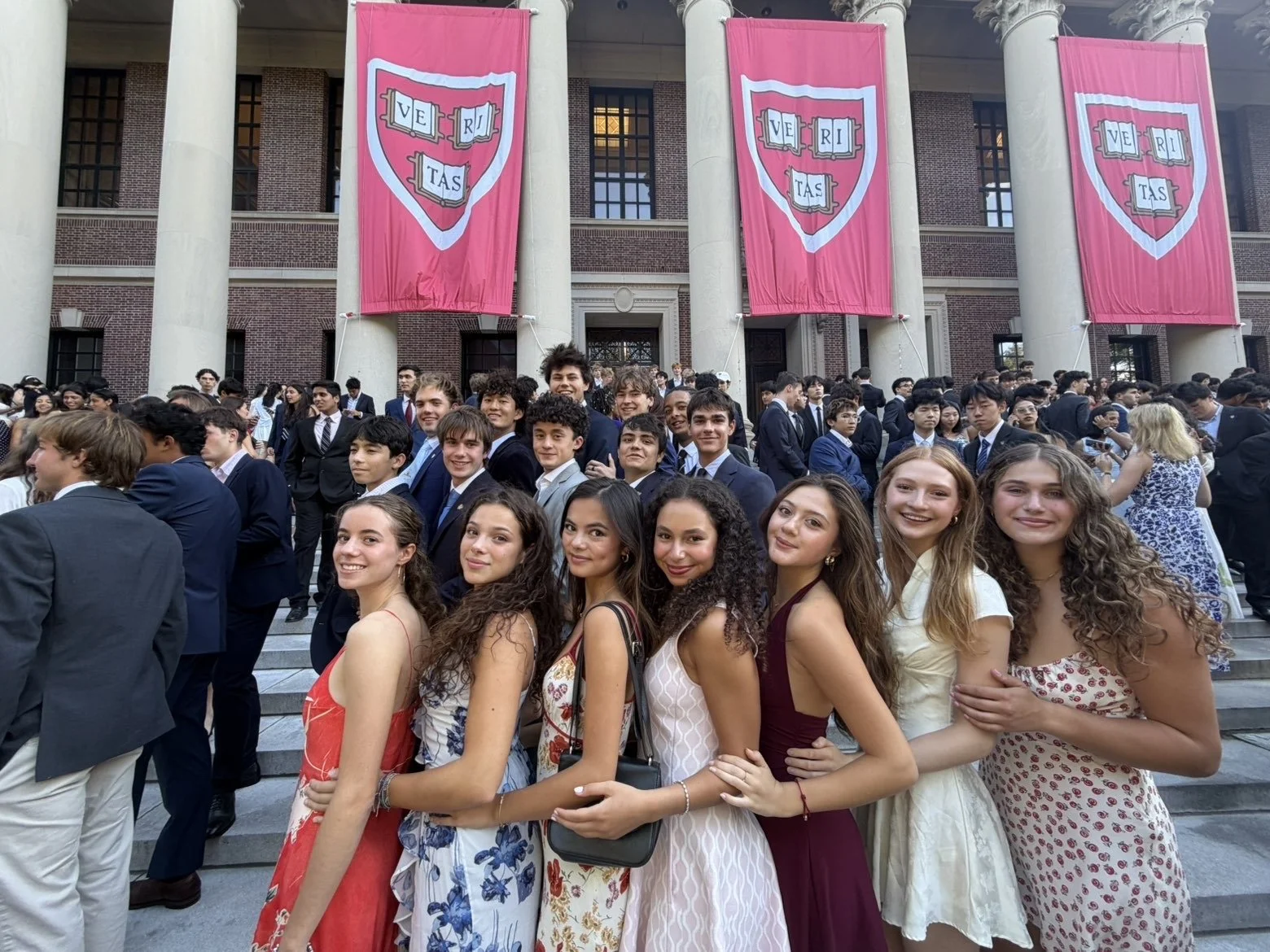
Ryan (back row) and friends at Harvard College Convocation . Photo courtesy of Ryan Wang
What courses are you taking in your first semester at Harvard?
I'm taking an economics course, which is great because I think there are about two-hundred people in the freshman class taking econ. I'm doing a philosophy course on happiness. People have been telling me I don't need that course, but I just want to take it anyway. I’m taking a Latin course, because I want to continue doing Latin, and then a music course. It’s an introduction to Western music. The professor teaching it is specialized in vocal music of the 17th and 18th centuries, and that's something that I don't know a lot about.
What do you enjoy most about being a musician?
I really enjoy traveling, going to see different places. And the food. I love the food. I always eat a lot when I travel.
What is the thing you like least about being a musician?
The following has always been on my mind, but it's never been more apparent to me than now at Harvard. I practice around two to three hours a day, which is the same what athletes do. Like the rowers, the tennis players: they also have training, but they're together all the time. They have teammates, camaraderie. But the piano you play by yourself. This is why I love chamber music: I get to work with people; I love collaborating with people. If I only did piano, it would be so lonely, just being in the practice room all day long. I think that's why I love school because I can talk to people about shared courses or interests. With music, it's just me and occasionally my teacher and maybe some pianist friends. But in the end, we all have to practice by ourselves. We can't practice together. That’s the most difficult thing. I've accepted that I have to be alone a lot, and I do enjoy, at times, just having that time to myself. During the first week of school, I went to the piano and thought: “Thank God I'm here in this room.” But especially when you're touring or performing a lot and you're on the plane by yourself and you're in the hotel room by yourself, it can get a little bit sad.
The benefit is: when I play a concert and people tell me how the music affected them - then I think it is worth giving up a bit of myself to what I love doing. I do love to help make people's lives a bit better. I'm willing to make that sacrifice if it means that I can make an impact on the world that way. It just makes it more meaningful in the practice room, knowing you're doing this to help people and to help myself as well. I understand myself better through music, and hopefully other people will understand themselves better as well through music. That's the beauty of it.
How do you keep inspired?
The people around me inspire me. I just love to learn things about people, and everyone is interesting. I watched the movie The Dead Poet Society. In it, the teacher says: we have firefighters, we have medics, we have all these people who do society a service, but the real purpose of life is to find this one moment of beauty in poetry or music or any art, in which you feel like your soul is transcending your body, where you feel just the beauty of it. I think that quest is what keeps me inspired; in the practice room, just trying to find those moments, and when the moment is coming in the concert, I'm getting excited for it. On a day-to-day basis: the people I'm around keep me going. The people here are so motivated. They're always pushing each other to study or go be productive. The people around you are really important because you are an average of the people you surround yourself with.
How do you keep your energy up?
I was calling my mom yesterday - I don't know how I haven't gone sick yet. For the past two weeks, I've been going to bed at three a.m. every day, and waking up at nine a.m. I'm just going on pure love of life. It’s a very exciting time. I recommend always smiling. I think if you're sad, you get really tired really easily. But if you smile, it's like you have lots of energy to give. And when you smile, people give you back that energy, and then it's like a loop.
You practice two to three hours every day. Can you discuss your practice choice?
Eton was very busy. A lot of the time, I didn't practice and I felt fine. But nowadays, I do have to practice more, things are getting more serious. I try to keep myself to at least two and a half to three hours a day. When I have something important coming up during the holidays, maybe four hours. But I think beyond that, it's just a bit pointless because I'm tired: I'm practicing things that I don't need to practice, I'm just practicing for the sake of practicing. And actually, it gets worse the more I practice it, and I could just be doing other things with my life than sitting in a practice room. There's a video of pianist Arthur Rubenstein saying: “I love to go outside and do other things rather than practicing, to see what life is about.” When the coursework does build up, it might have to be just early morning practicing, which I hate, but you have to make yourself accountable. No one is going to force you out of bed. You're the one that has to force yourself out of bed. It’s about really owning it. Sometimes, when it's really getting desperate, I look at my concert schedule, and then I get really panicked and then I go practice. Basically, whatever works.
What do you enjoy doing most when you're not making music?
Just spending time with people that you love, that you feel like yourself with. I love going on hikes, I love skiing. Be with people that you love. You can literally do anything, but as long as you're with the people that make you better and who you feel yourself around. That's the most important thing.
I love trying things that I'm not very good at and trying to get good at those things, just so that it puts into perspective how difficult things can be. After every time I go skiing, I come back to the piano and think: this is so easy because in skiing, you can literally die. With the piano, there's nothing life-threatening. I think: “I'm in a controlled environment right now. There is nothing that could kill me. On stage, there is nothing that could kill me.” When you get nervous, your body is going into fight or flight response, and you think that you're going to die, but you're not. The comparison trains your mind that you know you are not going to die on the concert stage. That really helps with performance anxiety. Doing things that excite you, new things, is really important.
Any upcoming plans you'd like to share?
On 15th October, I'm playing with the BBC National Orchestra of Wales, at the Bristol Beacon, which is the exact same orchestra and the exact same hall where I won BBC Young Musician two years ago. They're crowning a new Young Musician in October. I think it's really special that I get to play at the final with the orchestra and “pass on the flame” to the next young musician winner. I'm playing Saint-Saens second piano concerto, and I'm bringing that concerto to Japan in December with Lionel Bringuier. I'm going to Australia in February next year, which I'm very excited about. I've always wanted to go to Australia, and they have really good surfing there.
Any dreams for the future?
I get asked this question a lot: about the hopes of a young man who wants to achieve a lot in music. But at the end of the day, when I'm on my deathbed, what do I actually want? Be with people I love. I want to be a dad. I want to have a family. I want to be a grandpa. I know it sounds cheesy, but that's what I hope for. To give my love to my family, to my parents, to my younger brother, to people who I haven't even met yet. I just want to share my love with the world and with people who I love.
How do you feel about sunsets – one of your story highlights categories on Instagram?
At Eton, we had a pub in school where you could drink from age sixteen, which is very unusual for any school. One of my friends from Eton loves sunsets, so it was always like “beer and a sunset” at Eton. That's how I got into sunsets. When the sun goes a little bit below the horizon, the sun is already set, but the sky is still a beautiful range of colors. It's just so beautiful. How can anyone stay indoors when there are sunsets? That completely baffles me. I love sunsets. Thank you for asking that question.
You might also enjoy. . .
Happy World Ice-Cream Day: Rachmaninoff’s Cherry Malted Milk Float
Pianist Glenn Gould’s Radical Neurodivergent Legacy
Reclaiming Venus: How We Misunderstand Beauty
Margarita Balanas, Cellist and Conductor: “Live by your own rules and don’t have any regrets!”
In Conversation: Pianists and Cliburn Junior Competitors Saehyun Kim and Seokyoung Hong (2023)
Chung-Wing Lam, Paris Opera Ballet: “I never danced so well before I had my wealth management firm”