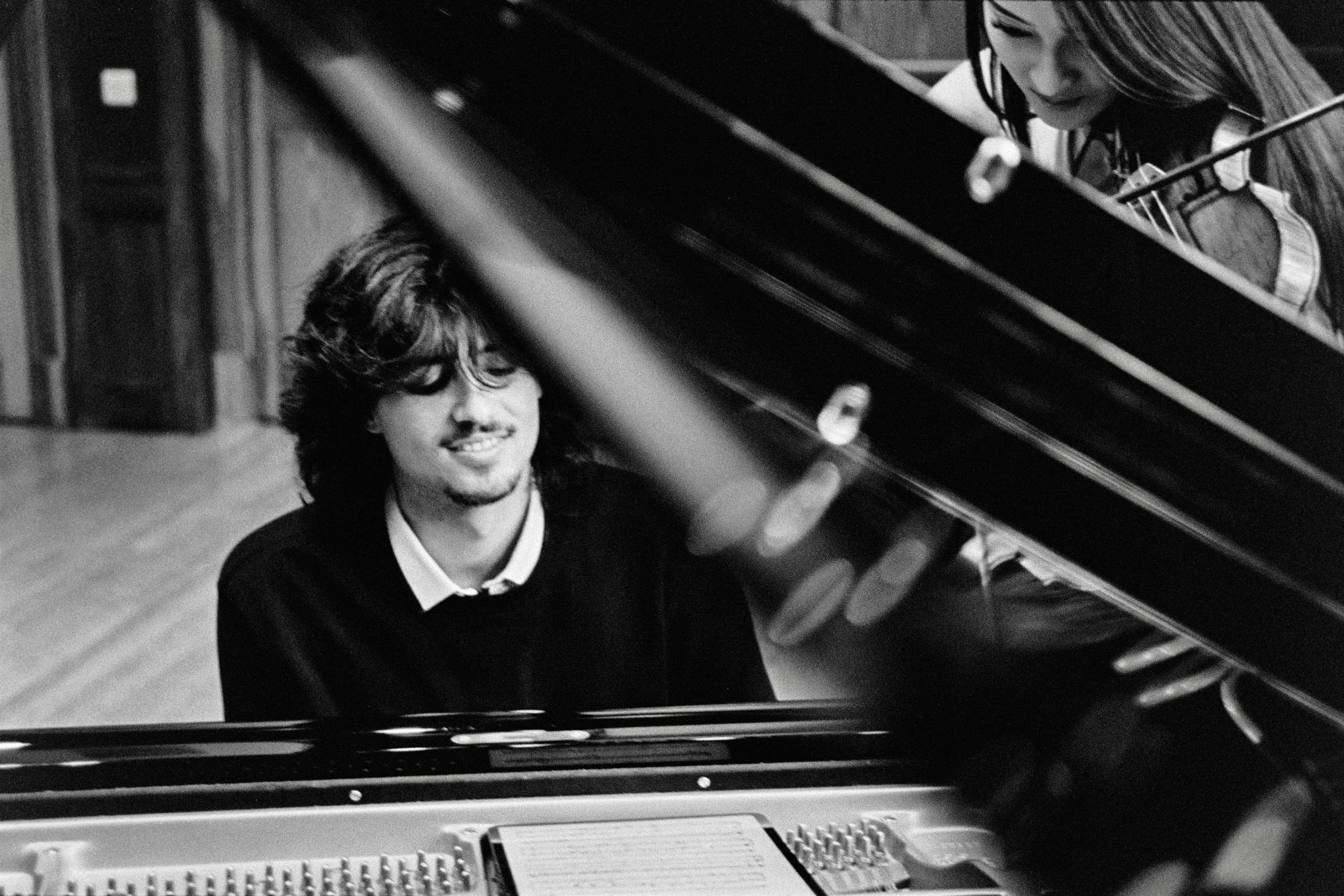
Sumina Studer and Maximilian Maisky. Photo by Florian Moshammer
Imagine you could turn into the proverbial fly on a wall, listening to a private conversation between two popular musicians talking about a much-anticipated upcoming concert? Violinist turned musical entrepreneur Sumina Studer and pianist Maximilian Maisky are making it possible. The couple recorded a conversation about their upcoming performance “Classical Club Night” at Ballhaus Berlin (Ballroom Berlin) – exclusively for TWoA.
“Classical Club Night” is the brainchild of flamboyant German Indonesian violinist Iskandar Widjaja, an artist who builds bridges between classical music, showbiz and different continents. “Classical Club Nights” at Ballhaus Berlin start with a one-hour concert at 9 p.m. and shift naturally into a relaxed DJ set. The concept reflects the eclectic spirit of Berlin, a city equally famous for its classical music scene and its nightlife. The Hanns Eisler- and Juilliard- trained violinist and the Royal College of Music scholar will join forces at Ballhaus Berlin, a real Berlin institution. Founded in 1905, the venue experienced its heyday in the late 1920s as the type of amusement temple featured in the series Babylon Berlin. Imagine the gentle clinking of teaspoons against cups as Sumina and Maximilian stir their coffee, talking about their concert preparations.
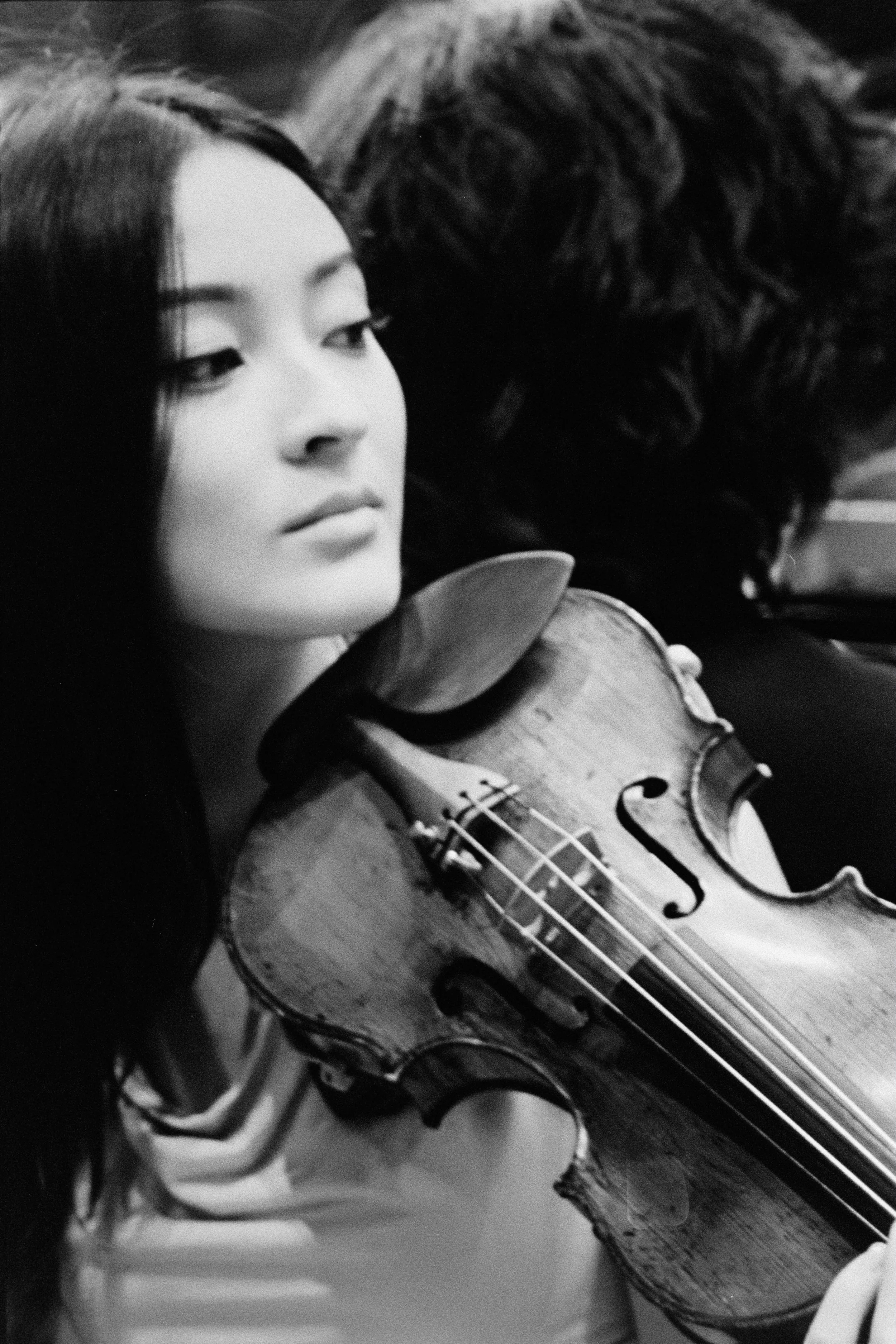
Sumina Studer and Maximilian Maisky. Photo by Florian Moshammer
Sumina
This is the first time we're playing together for a concert professionally. I never asked - how do you feel about it?
Maximilian
I’m very excited to play this concert because it's our first joint concert in public. We've played before in more casual settings, sight reading music together, and now that we get to prepare this wonderful program to perform in public, it's very exciting. How do you feel about it?
Sumina
I'm nervous… but excited. I don't play regularly anymore. I only play select concerts throughout the year, so it really matters to me who organizes a concert, what the repertoire is, who I play with. This is going to be a very special occasion for me, and it's a super rare occasion as well. Doing that in the city I used to live in for my undergraduate studies is going to feel like a homecoming.
Berlin is a city filled with energy, it has a lot of musical tradition and such a strong musical identity that really shaped my relationship to music and how I feel towards it. It wasn’t always the healthiest love to music while I lived in Berlin, but I can say wholeheartedly that I’m especially excited to return at this moment of my life and to redefine what music means to me in that city. How has your relationship to music evolved over the years?
Maximilian
It's also been tricky. I grew up in a musical family. It's just been there naturally since I was born. I started learning an instrument, but I actually never liked playing the piano as a kid. I preferred playing football. I think it’s fair to say that every young boy dreams of becoming the next superstar football player. But somehow at the age of thirteen, from one day to another, I fell in love with music to the point of quitting football the very next day. I felt that I absolutely had to pursue piano. I decided to apply to a music boarding school my piano teacher was opening at the time. I became one of the first students. It was an incredible school, helping us combine academics and music, which is a common problem for young musicians growing up.
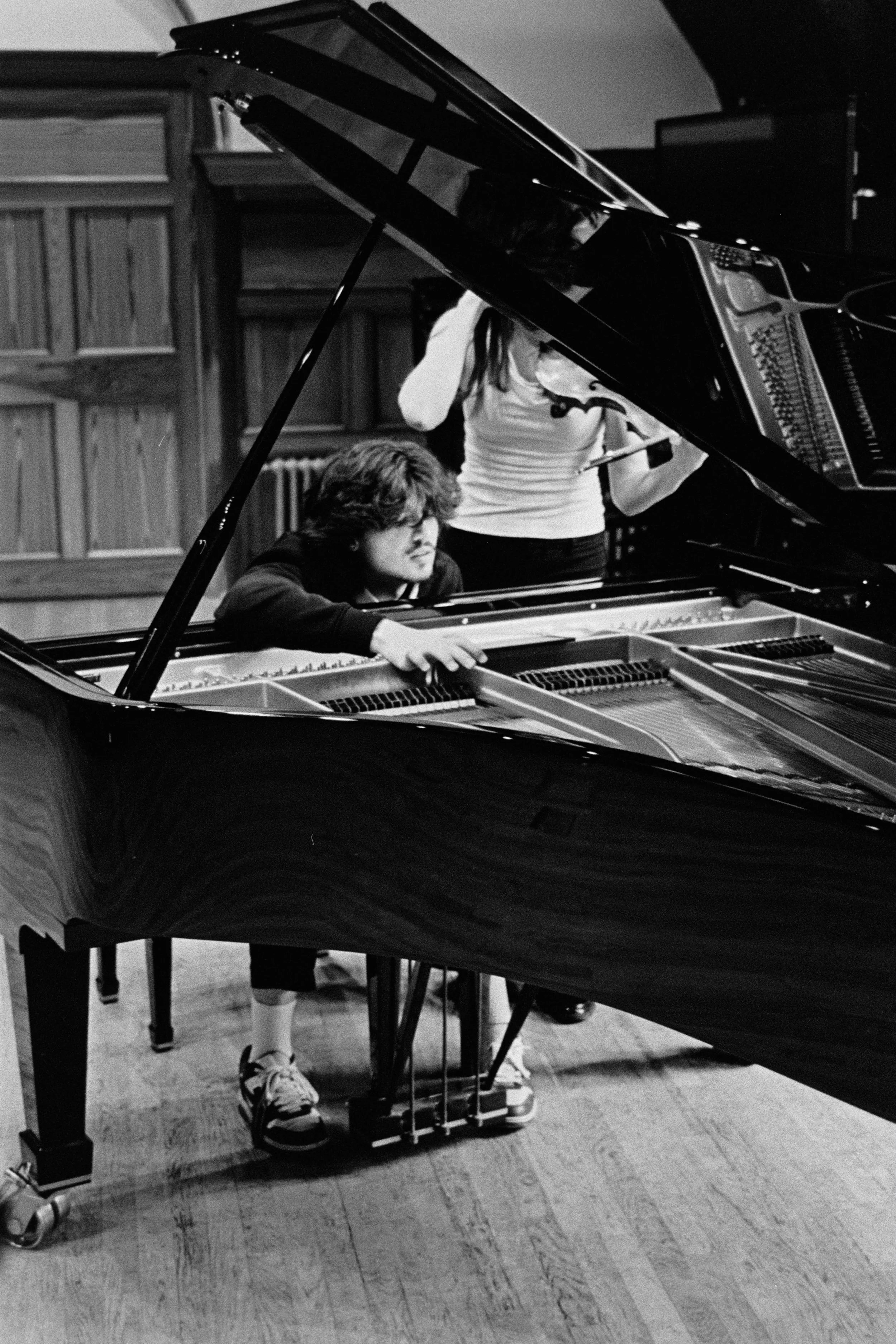
Sumina Studer and Maximilian Maisky. Photo by Florian Moshammer
Sumina
How did that school shape your relationship to music?
Maximilian
It made me love music even more. They gave me access to it. They taught me. I was surrounded by people who wanted the same thing. I really grew into this world of music and learned what it means to be a professional musician. I had been exposed to music before, but I was never forced into it. This way, it was purely my choice to learn the piano. I was initially exposed to this world because I grew up in a musical family, I have older siblings who play, and my dad, Mischa Maisky, is a cellist.
Sumina
Can you explain what you mean by “you were never forced into it”?
Maximilian
I was never forced into playing or choosing this as a career for myself. My family actually didn't want me to become a musician. It was always a choice that I made myself.
Sumina
I guess we share a lot of similarities when it comes to growing up in a family of professional musicians. But I think in my case, it was more like - if I hadn’t played an instrument, I would have been the weird one. Ultimately, this was implied. Growing up surrounded by music, you at least consider doing it. It's interesting that you came to it by yourself at around thirteen years old, which is considered late in the music world, and that you wanted to commit to the point of enrolling to a music boarding school.
What does musical success mean to you now?
Maximilian
Musical success means that you fulfill your dreams, and that you are able to support your life with it. I think it's important to think that we pursue our passions, but that they also need to be able to support our family, our future. Success to me is when we're able to do both. What about you?
Sumina
Success means freedom to me, both in terms of music and career. On stage in Berlin, I am hoping that we feel completely free. Given my circumstance of being a self-proclaimed “retired violinist,” I wouldn't have committed to this concert unless that was going to be the case. So that's my highest hope!
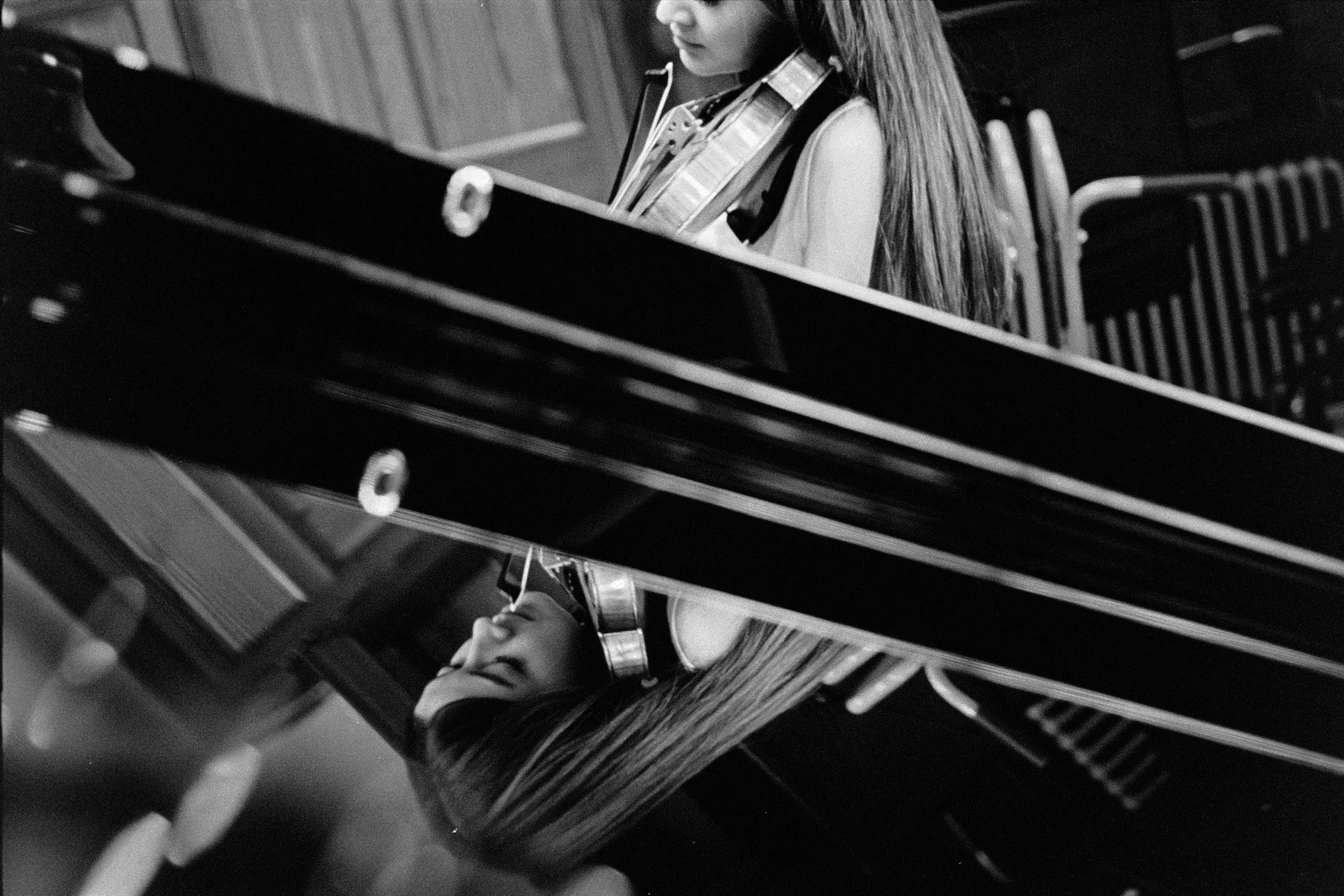
Sumina Studer. Photo by Florian Moshammer
Maximilian
So, you want to be artistically in your element.
Sumina
Yes, I want it to be a completely liberated experience for us, and the audience. The concert repertoire we curated is mostly just repertoire I love deeply, to be honest - so thanks for giving me that freedom of choice.
Maximilian
I think that's very important. Whatever repertoire you play, you have to love it - or the challenge of working on it. That's so important to me. I cannot play something I don't love. Of course, for example if you participate in music competitions, we all know that we have to learn something because they ask for it. But when we get to create programs, I ideally want to play stuff I love. So, I'm glad we get to do this together.
Sumina
Me too, because this is a repertoire that I've learned over the years: Franck, Mozart, Tchaikovsky. It makes me feel truly free. Partially because I’ve played it quite a bit throughout my active violin career. But I've also observed myself come back to it by choice in lonely moments or during overwhelming times of my life, or when I miss sharing music with peers a little more than at other times, or at sight reading parties with other musicians. This is repertoire that is super close to my heart, so I'm happy we get to do it together.
Maximilian
I'm glad! For me, it will be the first time that I will perform the complete César Franck Violin Sonata. I have played some of the movements but learning it has definitely already been quite an experience for me, especially with that second movement for the pianist.
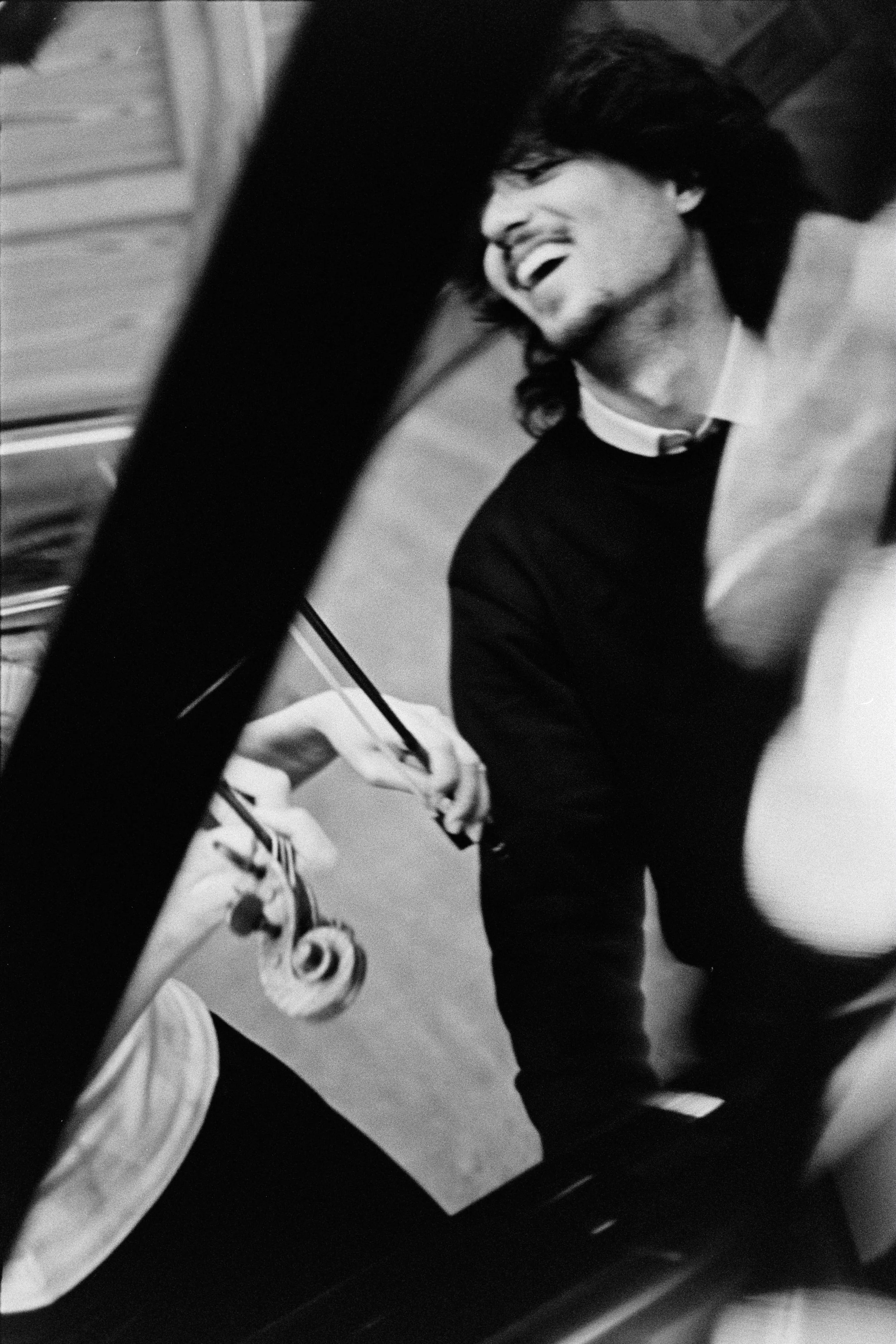
Sumina Studer and Maximilian Maisky. Photo by Florian Moshammer
Sumina
What exactly is so notoriously difficult for the pianist in the second movement?
Maximilian
There are just so many notes! I think every pianist who knows the piece knows that there are just a lot of notes and a lot of little tricky corners. But that's part of this sonata’s complex character, and it's simply such quality music. Since it’s my first time, it makes it even more special that I get to experience it with you on stage.
Sumina
I have to admit, I think it's essentially a piano sonata with a bit of violin in it, instead of being a “violin sonata with piano”…
Maximilian
…I think that's the case with most sonatas, isn’t it? If you take sonatas with violin or even with cello, it is usually more piano than the other instrument.
Sumina
I don't envy pianists for the amount of notes that you have. I posted a silly video on my Instagram, where people can hear you play Franck in the background, mentioning that we will be playing this in concert together. A follower commented: "He's practicing Franck for you? Oh, he LOVES you, loves you." I thought that was funny because it indeed is a hard piece, and I don’t take for granted that you learned it upon my wish. So - thank you.
Maximilian
I equally think it's great that we use this piece as the centerpiece in the program and then build the program around it – such as the Mozart Sonata for violin and piano in E minor, which is a heartbreakingly beautiful piece.
Sumina
It's painfully, tragically beautiful because Mozart wrote it around the time his mother passed away. You can hear the pain in the music - it is his only violin sonata in a minor key.
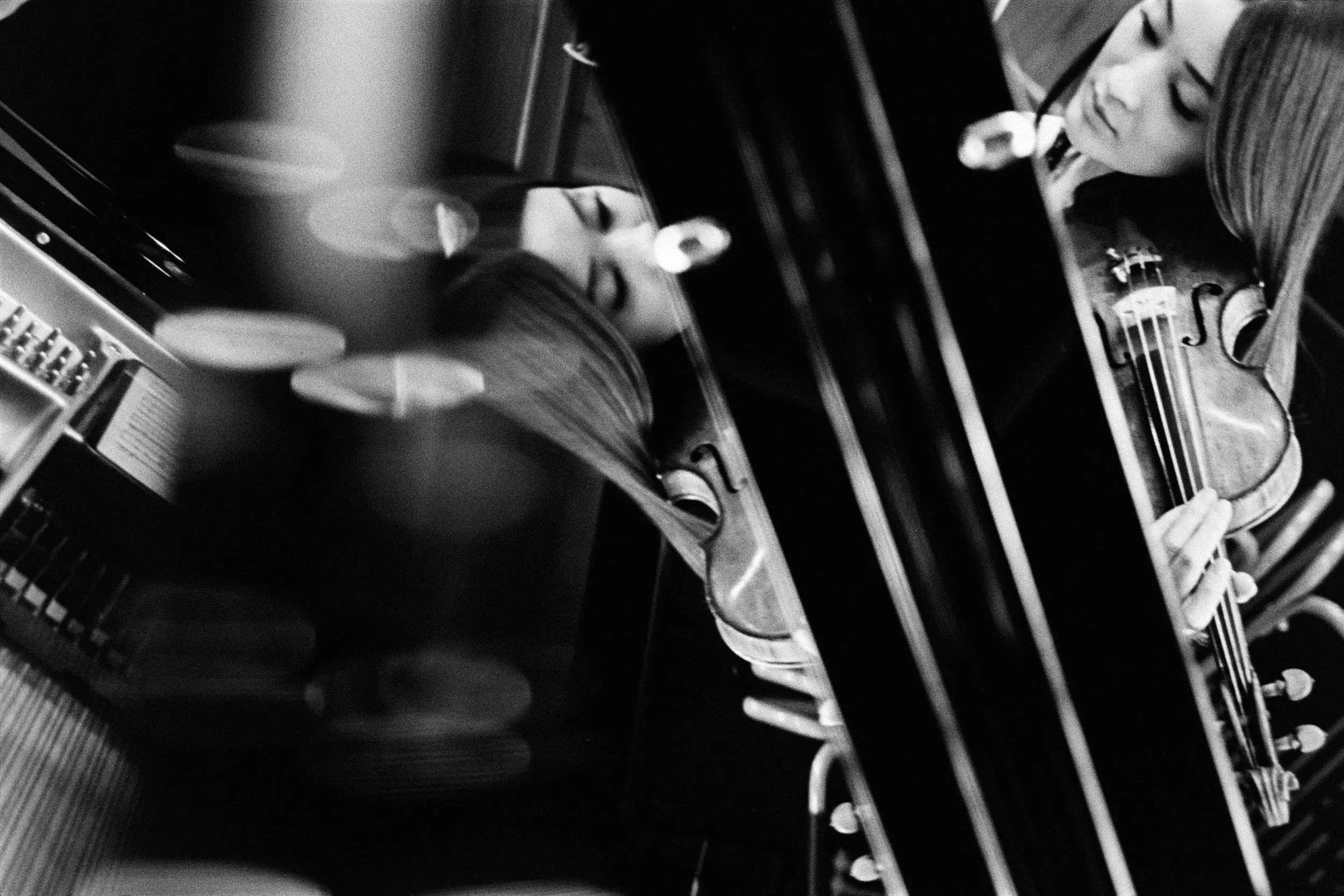
Sumina Studer. Photo by Florian Moshammer
Maximilian
Tchaikovsky’s “Melodie” and Elgar’s “Salut d’Amour” are little miniatures, but also really quite beautiful and meaningful to us. The whole flow of the evening is very intentional to us. How do you actually feel about the new concert series, “Classical Club Night,” that our friend Iskandar has created?
Sumina
Iskandar is the perfect person to create a concert series that's named “Classical Club Night” because he's an unconventional classical violinist: He comes from the hyper-classical music world, but pivoted to crossover with full pride. He plays at the Berlin Philharmonic one night, then does shows with Disney songs on another night, then opens for Bocelli. I've had my fair share of interactions with pop or jazz-leaning musicians, but Iskandar is one of a kind. I've rarely seen someone so principled, dedicated and devoted as a teacher, but when it comes to conceptualizing concerts and his own performances, he has a completely wild side that is also true to him. There’s no limit to what he wants to do and what he can do, and he has so many interests that he wants to bring to life. He’s a force of nature who is unapologetically himself, and that's why the name of “Classical Club Night” feels very appropriate.
We were on a car ride in southern Switzerland when he called to ask whether we wanted to perform, and our answer was pretty much immediately “yes” because we just trust his vision so much. He's also just a really good friend whom I trust, and whom I've performed with before. When he has an opinion, he's very unapologetic about it. Our concert is going to be a lot less “club” than “classical,” but we are excited to bring live classical music to a club venue. In such a digital world, I need live experiences more than ever. What’s your take on that?
Maximilian
That's the most important aspect, especially now. We need it even more in this digital world! At live concerts, you get this connection between the artist and the audience. You don't get this while only listening to something. And as a performer, I love live concerts because, whether I'm listening or playing, I really get to connect with the other side and communicate with active listeners.
Especially in these times of AI and the digital world, it's become even more important to keep physical and emotional connections real. It's something that’s decreasing in many other areas because we're increasingly using AI to make life easier. But it's crucial that we keep live concerts and this community going, and sharing creativity amongst us. You also work a lot with the digital world, but you're still authentic to your core principles - you're really a connection between both sides. How do you combine these worlds without sacrificing your values on live experiences?
Sumina
I actually think that digital advancements in social media and streaming music have proven one thing in particular: audiences connect the most to other individuals. Now more than ever, people don't feel very attracted to music that is “faceless,” that doesn't have a story behind it, or that doesn't have a person attached to it. The reality is, there are still people who cannot tell apart whether a song is AI or not. That is the most concerning thing: People sometimes get deceived to think it’s a real person, but it's just an AI song. As a musician, it's heartbreaking to see this, but for the most part, people who are even remotely interested in art - whether it’s visual art or performing arts, or audible art such as music - love to see that there's a person attached to it, a story, an identity. In that sense, this makes them more actively want to go to a live concert. I enjoy seeing people care a bit less about perfectionism and technique, and a little bit more about what the artist is trying to say. That is exactly how social media works: Nine out of ten times, people get attention on social media because they have something unique to say. That also means that people actually would rather go to a concert and support someone who has a story to tell, and who shares it. In that particular sense, I find that the digital world has influenced live performance in a positive way.
You might also enjoy. . .
Sumina Studer, Violinist and Music Entrepreneur: London’s Hidden Music and Art Spots