When the Dead Return: Halloween and a Century of Nosferatu
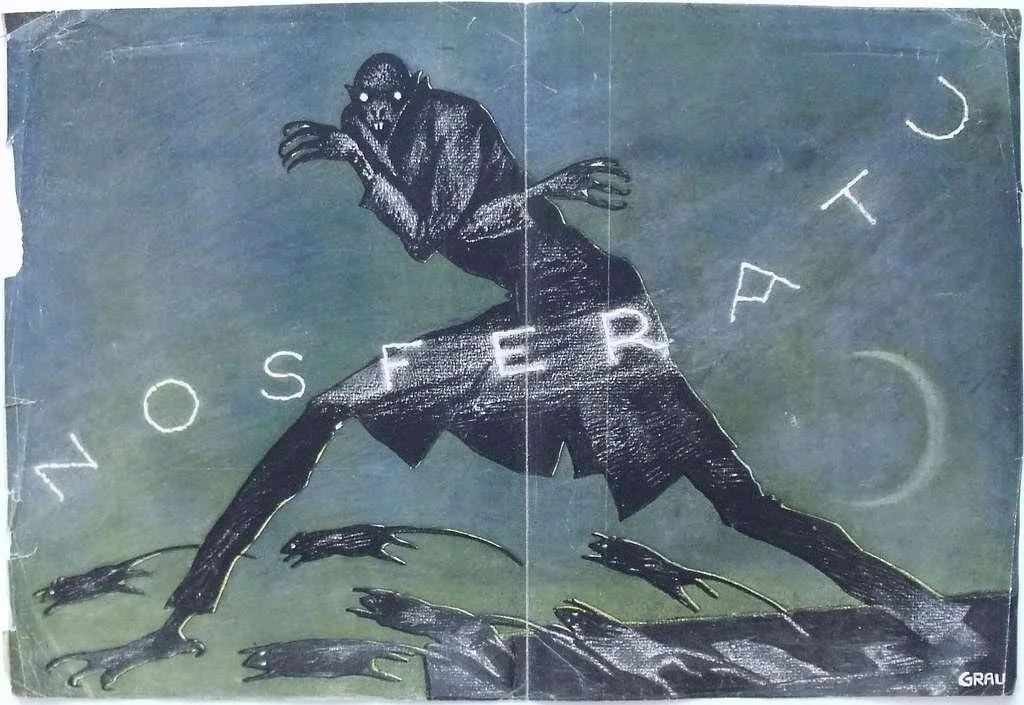
Nosferatu original poster 1921. Wikimedia Commons
22 October 2026
Every October, the dead return, symbolically speaking, of course. Skeletons as decorations, carved pumpkins, and the annual costume hunt are waiting to jump-scare us, as Halloween is right around the corner. We humans have always been concerned with the question of death, and wondered where the boundary between the living and the dead lies. One of the many genres that play with this boundary is horror cinema. Looking at its history shows us how our fears and fantasies have evolved. A particularly interesting example to consider in this context is Nosferatu, the classic story of a vampire who brings death, disease, and destruction into the world of the living. With Halloween approaching, let’s revisit this classic and compare F. W. Murnau's original 1922 film with Robert Eggers' 2024 adaptation. But before we turn to the vampire, let us take a look at how Halloween became the consumerist celebration we know today.
From Samhain to Halloween
The origins of Halloween are commonly traced back to Samhain, a festival celebrated in ancient Celtic communities, particularly in Ireland. Samhain marked the end of the harvest season and the beginning of winter, the transition from light to darkness. For agricultural societies, the approaching winter brought a period of uncertainty. Have we harvested enough for the coming winter? The changing season quite literally meant a greater proximity to death.
In later Irish traditions, Samhain was also seen as the time in the year when the boundary between the living and the supernatural world became particularly thin. Spirits could make their way into the human world. While historians debate how directly these ancient beliefs influenced the Halloween we know today, the connection between this time of year and the supernatural has certainly survived. With the spread of Christianity, older seasonal traditions became intertwined with Christian commemorations. November 1st became All Saints' Day, a day dedicated to honouring all Christian saints, particularly those without a feast day of their own. All Souls' Day followed on November 2nd, commemorating the faithful departed, with prayers for their souls. The evening before All Saints' Day was called All Hallows' Eve, which eventually became Halloween.
Over the following centuries, customs developed across Ireland, Scotland, and other parts of Europe. People disguised themselves, visited neighbouring households, and exchanged food or small gifts. The nineteenth century brought another important development: Irish and Scottish immigrants carried their Halloween traditions across the Atlantic to the United States, which is where the holiday gradually took on the characteristics we know today. By the twentieth century, Halloween had developed into a largely secular celebration of costumes, sweets, parties, and, eventually, horror movies.
A Century of Nosferatu
In 1922, German director F. W. Murnau released Nosferatu: A Symphony of Horror, an unauthorised adaptation of Bram Stoker's 1897 novel Dracula. To avoid copyright issues, the filmmakers changed the names of the characters and parts of the setting. Dracula became Count Orlok, and the story moved to the fictional German town of Wisborg. Unfortunately for the filmmakers, the changes were insufficient. Stoker's widow successfully sued, and the court ordered the destruction of the film's copies. But luckily for us, some of them survived.
The film follows Thomas Hutter, a young estate agent who travels to Transylvania to arrange a property transaction with the mysterious Count Orlok. What begins as a business trip turns into a nightmare when Hutter makes the creepy discovery that his client is a vampire. Watching Murnau's film more than a century later is an interesting experience, to say the least. The exaggerated acting and pacing of silent cinema take some getting used to, but the film's imagery remains remarkable. One particularly memorable and Halloween-like scene shows Orlok's shadow climbing a staircase, his unnaturally long fingers reaching towards Ellen Hutter, Thomas's wife. It is such a simple image, but somehow it is far more unsettling than many contemporary horror scenes involving an incredible amount of special effects.
Max Schreck's portrayal of Orlok is equally striking. With his bald head, pointed ears, long fingers, and rat-like teeth, he looks less like the charming vampires that we know from pop culture classics like “The Vampire Diaries” or “Twilight” but more like a corpse walking around. The historical context adds another dimension to the film: it was released only a few years after the First World War and the devastating influenza pandemic. The character of Nosferatu emerged in a society familiar with mass death and uncertainty. Orlok's arrival, accompanied by rats and a spreading epidemic, reflects the anxieties of these years.
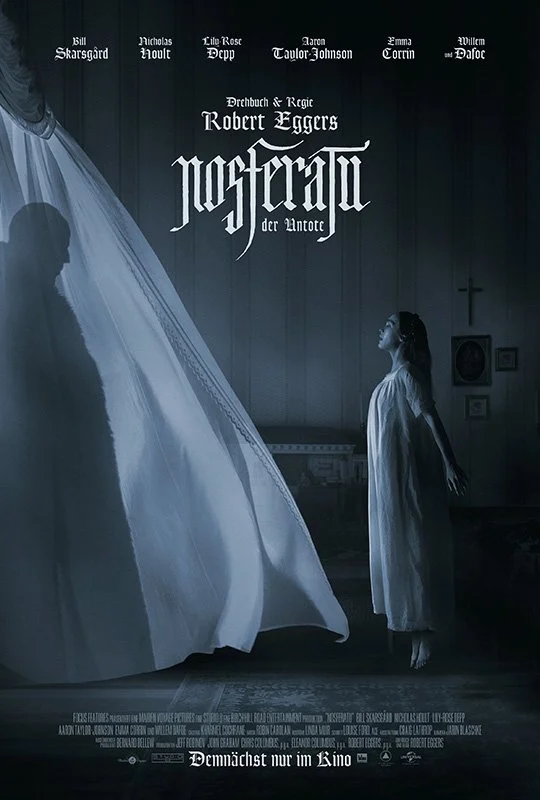
Official poster of Robert Eggers’ Nosferatu, 2024
More than a century later, Robert Eggers returns to the story of Count Orlok. His 2024 adaptation is visually stunning, with gloomy landscapes, elaborate costumes, and candlelit interiors that make almost every scene look like a nineteenth-century painting. Bill Skarsgård, who is already well-established in the horror genre for his role as the clown Pennywise in the It movies, portrays Count Orlok. The most interesting difference, however, is not the vampire himself; it is the character of Ellen Hutter. In Murnau's version, Ellen, played by Greta Schröder, ultimately sacrifices herself to save the town. She discovers that a woman can defeat the vampire by willingly offering him her blood and keeping him occupied until sunrise. She allows Orlok to feed on her, and as he is destroyed by the morning light, Ellen dies.
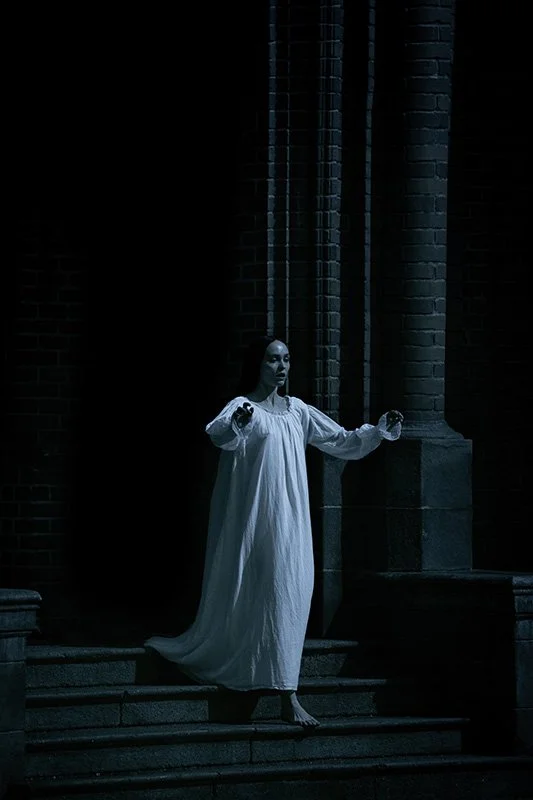
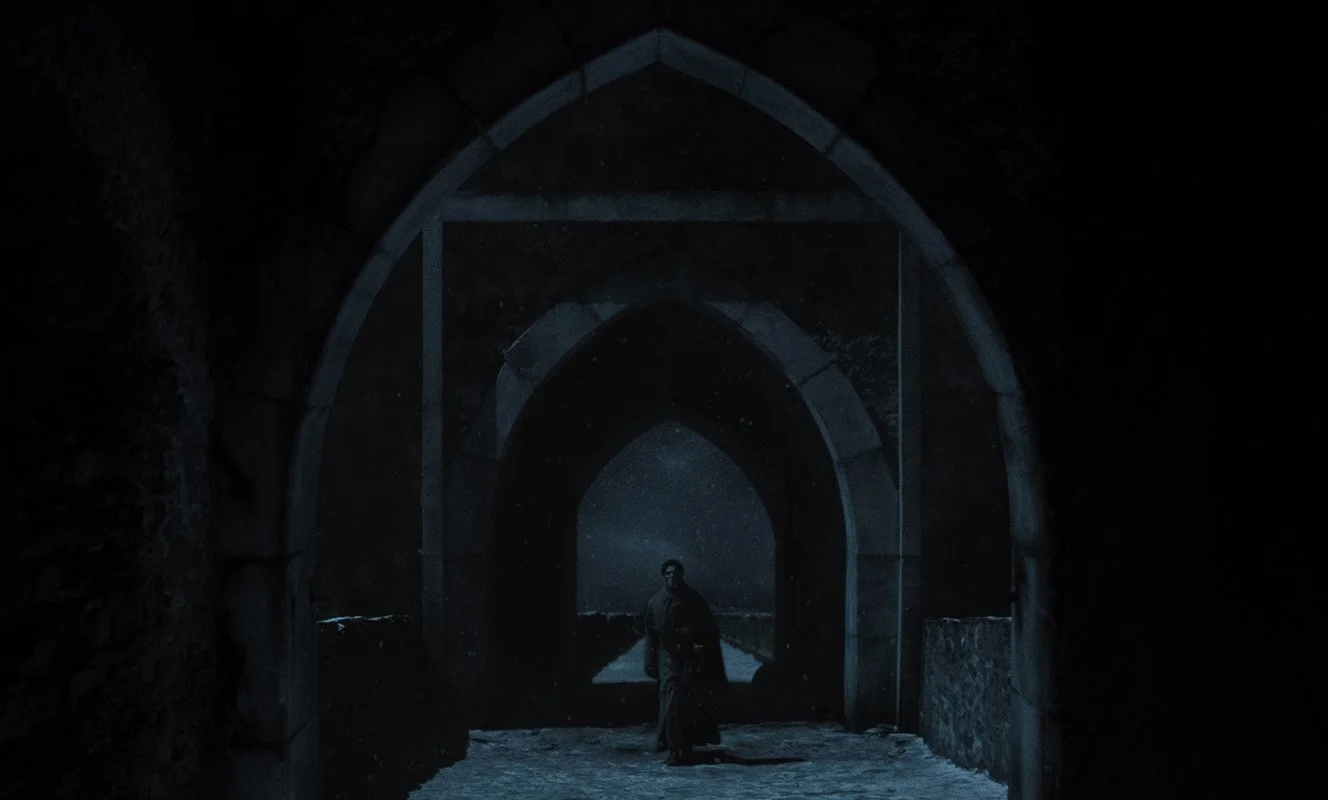
Film-stills of Lily Rose Depp as Ellen Hutter and Nicholas Hoult as Thomas Hutter. © Universal Pictures
While Eggers keeps this ending, he fundamentally changes our understanding of Ellen. Played by Lily-Rose Depp, Ellen is no longer just the innocent wife who is threatened by a supernatural monster. From the beginning, the audience learns that she has a mysterious connection to Orlok, as she summons him as a lonely young girl desperate for companionship. Their relationship is characterised by fear, obsession, and a disturbing mixture of desire and repulsion. Living in nineteenth-century Germany, Ellen's emotional and physical experiences are repeatedly dismissed or interpreted as symptoms of illness. The men around her try to diagnose, protect, or control her, without properly listening to her first, reflecting the historical treatment of women whose behaviour or sexuality challenged the social expectations of the time.
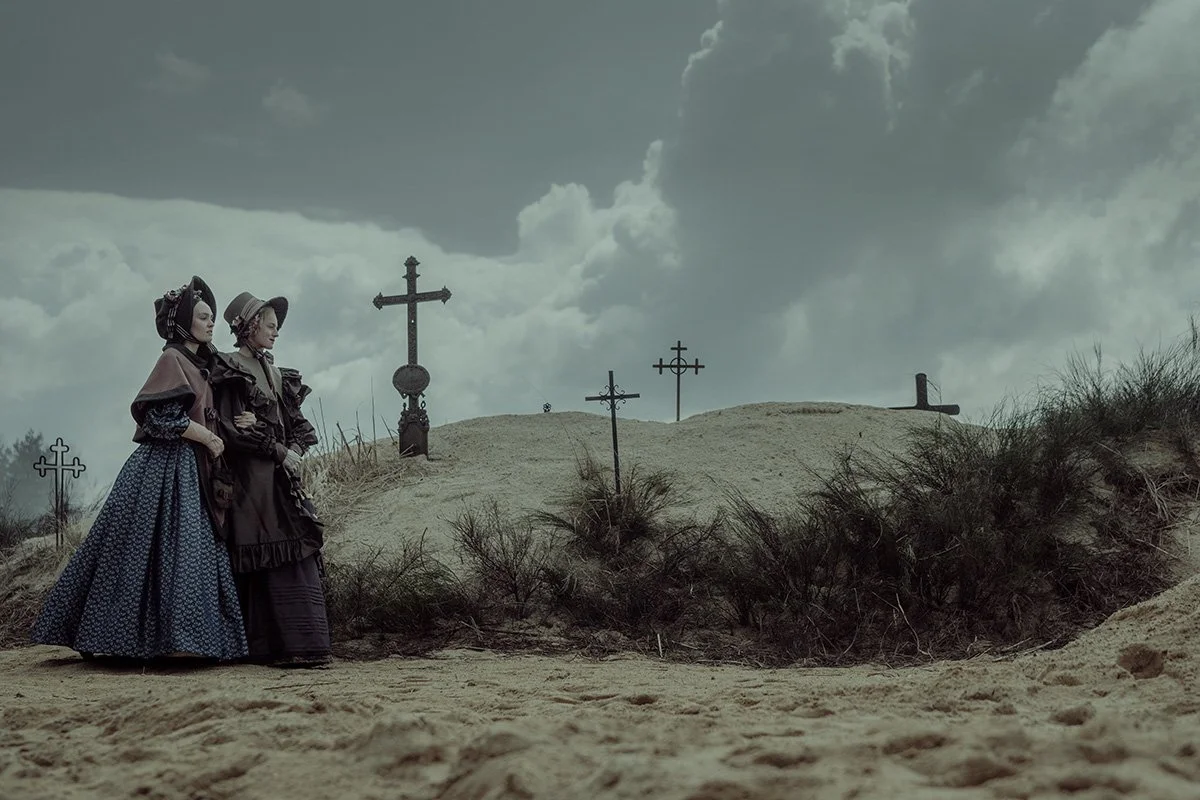
In Murnau's film, Orlok is an external threat. Eggers turns the story into an exploration of the monster's relationship with Ellen's inner world. Horror is no longer something that enters the house from the outside, but is tied to emotions and desires society refuses to acknowledge, because they scare us. In 1922, the central horror was the arrival of a monstrous figure who threatened an entire community. In 2024, the monster remains, but much of the horror comes from the psychological relationship between him and Ellen.
Why Do We Keep Returning to the Dead?
The horror of Nosferatu brings us back to the horrors of Halloween itself. Both Nosferatu and Halloween deal with the uncomfortable possibility that the boundary between life and death is not as secure as we would like to believe. Of course, Halloween has changed enormously over the centuries. It became a commercial celebration, complete with plastic skeletons, costume parties, and pumpkin-flavoured everything. But our fascination with the frightening has remained. Comparing the two versions of Nosferatu shows us that horror does more than entertain. It reflects the concerns and fears of the society in which it is created. Murnau's vampire can be read against a background of disease and collective uncertainty, while Eggers' adaptation places greater emphasis on psychological suffering, sexuality, and female autonomy.
Both films are absolutely worth watching. The original for its extraordinary visual language and its importance to the history of cinema, the new adaptation for its atmosphere, performances, and more complicated treatment of Ellen. And with Halloween approaching, what better time to revisit both films and see for yourself how much our fears have changed over the past century? If you hear something strange outside your window, let's hope it's just someone asking for candy.
You might also enjoy. . .