From Riga with Love: On Singing, Soft Power, and the Very Best Food of My Life
24 May 2026
My dearest artlings,
I’d never seen so many stars. Living in London, you forget there’s a sky out there–that’s vast, and blue, and blotted by bodies that draw you under a shield of light. But that’s the Latvian countryside for you–and we’ve just left it behind for the capital, Riga.
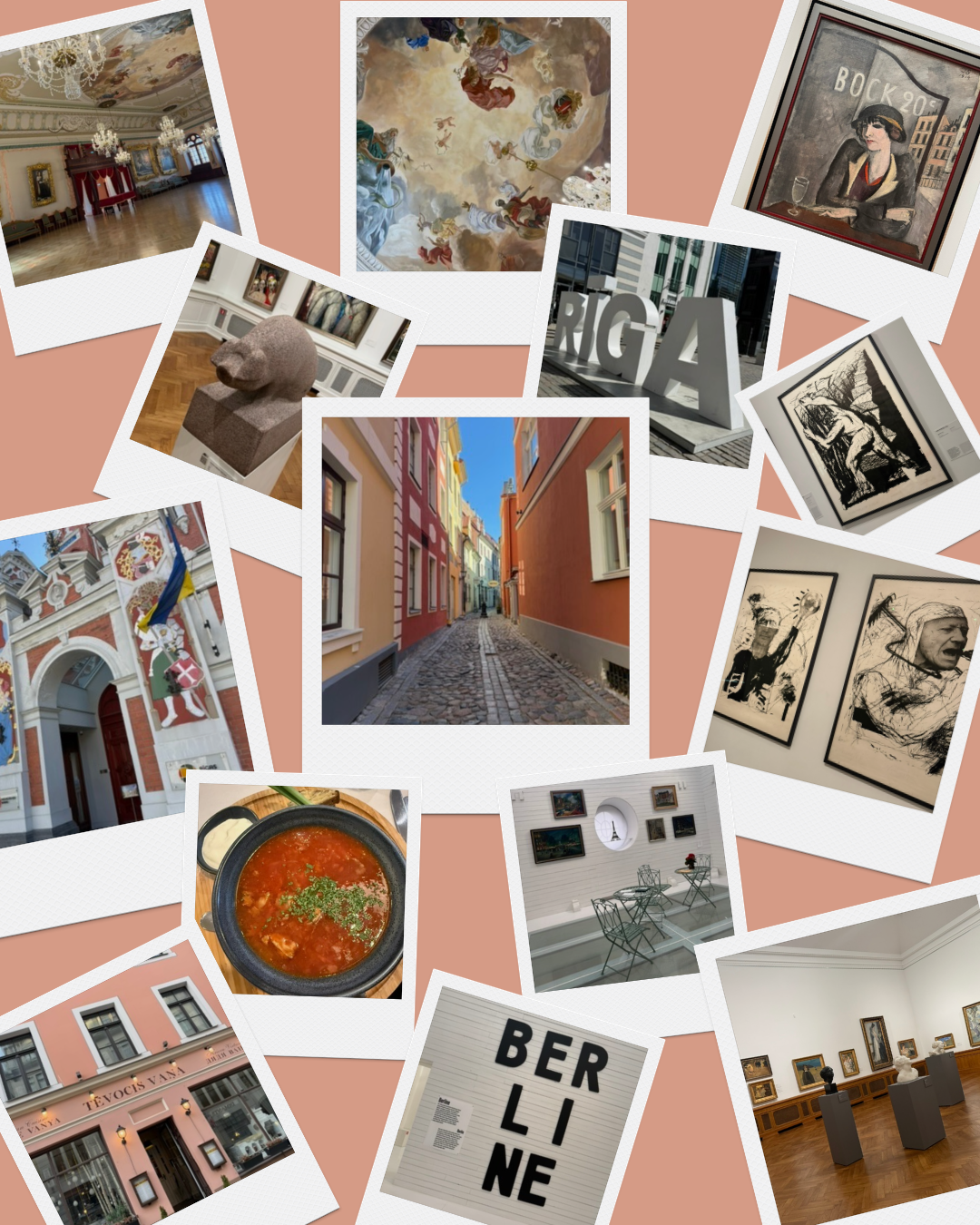
Riga is an amalgamation of many places you might know. Its streets are half Austria, half Eastern Europe, and its architecture–part medieval, part nineteenth-century Art Nouveau. The coloured three-storey houses are like Italy’s, a story too tall to be on a Greek island in the Ionian Sea. And as you pass them by, the words you hear oscillate between Latvian and Russian, the country’s two most spoken languages. Finally, there’s the food–my favourite of all–a succulent mix of Baltic, Germanic, Scandinavian, and Russian cuisine, made even more drool-worthy by the freshness of its ingredients. While the cuisine in itself deserves a whole letter, we’ve come to Riga on a mission: to discover the relationship between the city’s political history and its culture. It is with this thought that we head out into the blistering cold.
Strolling down the cobblestones–with red ballet flats, not a great idea–all the way to Old Town, we stop before the first museum of the day: the House of the Black Heads. Built in the fourteenth century, it originally housed the guild for unmarried merchants, shipowners, and foreigners. It was, in other words, Riga’s very own medieval NED–a private club for the city’s finance bros, guided by a strict code of honour, commercial ambition, and civic loyalty. A quote from the head of the Brotherhood encapsulates its similarities to British pub culture all too well: “I forbid anyone to leave until all the ale has been drunk!”
But to return to the building. After being bombed during WWII and demolished under Soviet rule, it was built anew, and today it serves as a museum with a spectacular silver collection. Skipping up the stairs to the second floor, we discover the Hall of Composers, which houses the busts of Haydn, Handel, Bach, Liszt, Schubert, Wagner, and Brahms–along with a magnificent ceiling painting, Apotheosis of St Maurice. With this much space and intention dedicated to the arts, the House of the Black Heads offers our first clue that, in Riga, culture, history, and civic pride were all intrinsically linked.
Music, in particular, became even more instrumental during the Soviet era–and not only in the capital. Just consider this: in the late twentieth century, singing itself served as a political instrument when, during the Singing Revolution, thousands of people across the Baltics gathered in mass song to peacefully resist Soviet rule. To them, music was not ornamental. It was a shared language through which identity, memory, and political autonomy could be voiced.
Whether that’s still the case for music today, I don’t know. I think about it through lunch, at least until the pelmeni arrive, and I become speechless yet again. What I do know is that it is certainly true of visual art, judging by what we see next: the Latvian National Museum of Art’s permanent collection. In a remarkable feat of soft power, it features almost entirely Latvian artists. In a country whose history has so often been shaped by others, that’s a deliberate and startling assertion of cultural continuity.
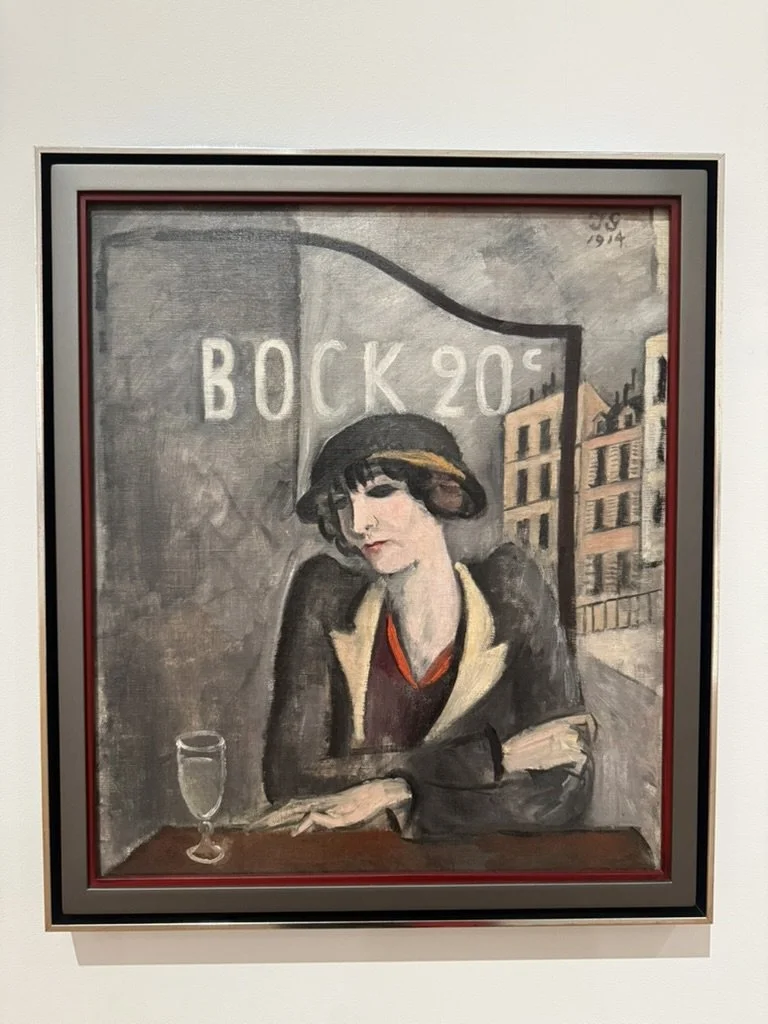
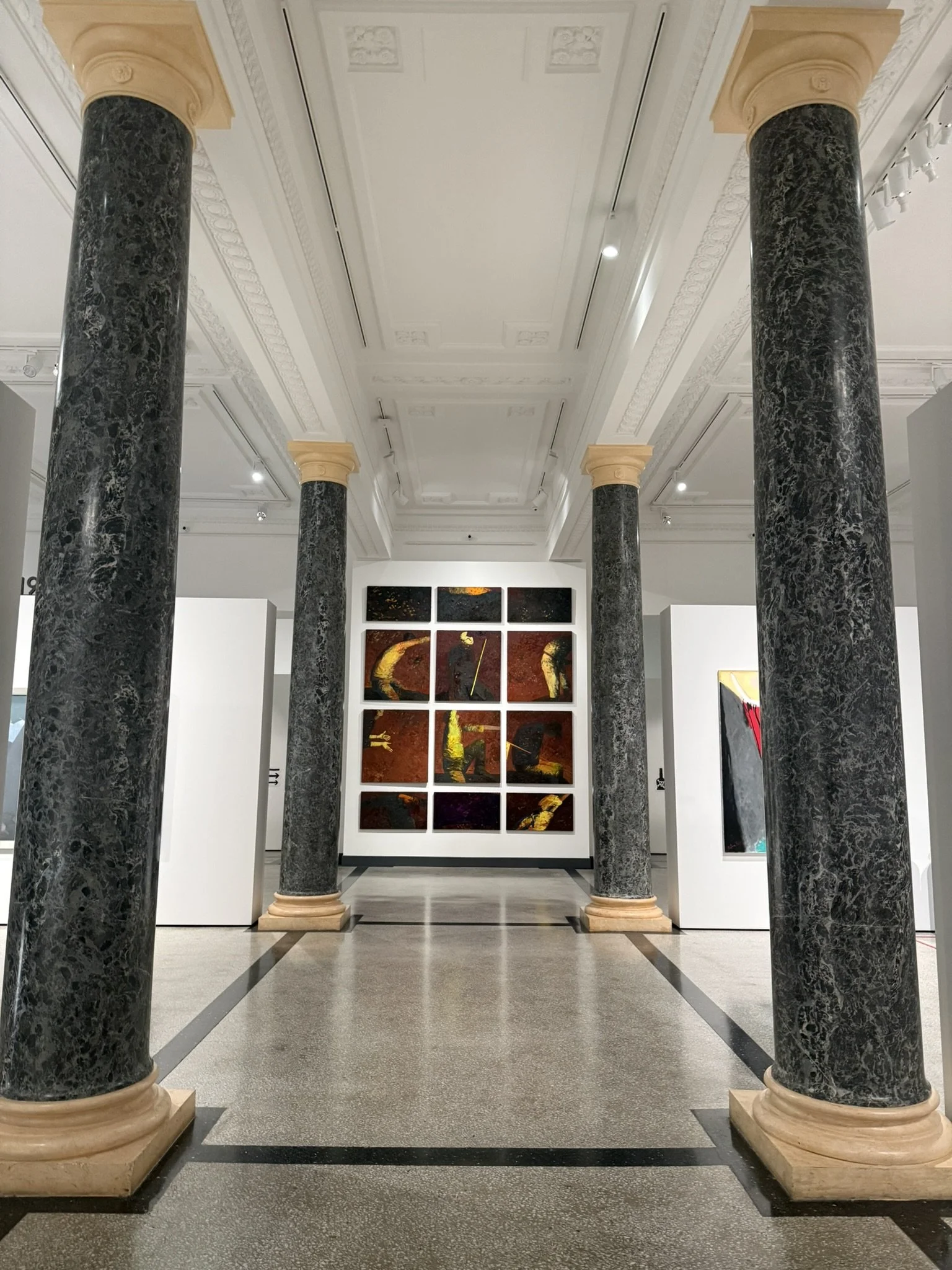
As for the “others,” they occupy the exhibition we visit next: Wandering the Streets: Urban Visions of Latvian Modernists. Tracing the dialogue between Riga, Berlin, and Paris in the early twentieth century, the show approaches Latvian artists as flâneurs of the modern city, attentive to boulevards, shop windows, crowds, and riverbanks–and their Western colleagues. Moving between the luminous Parisian nights of Ludolfs Liberts, the sharp graphic figures of Kārlis Padegs, and the haunting outskirts captured by Aleksandrs Čaks, I find myself thinking: this is Latvian art positioning itself firmly within European modernism–and standing in direct opposition to the cultural and political confines of Soviet rule.
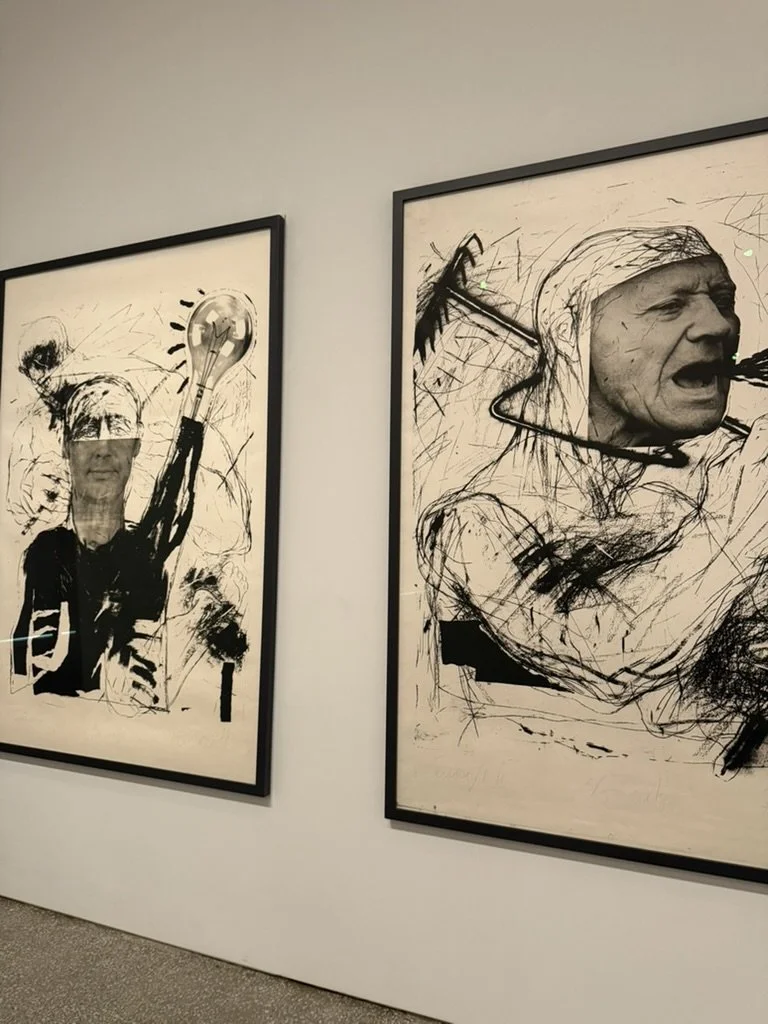
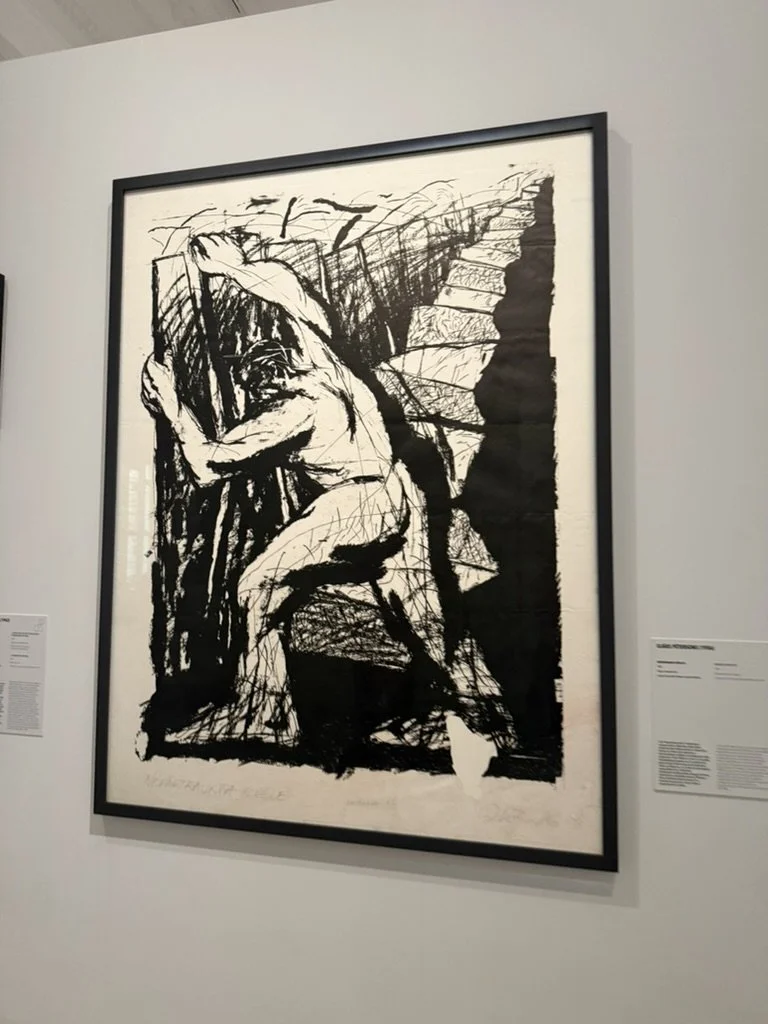
This idea intensifies in the next exhibition, Dismantling the Wall. Tracing the emergence of Latvian contemporary art in the final Soviet years, it presents artists responding openly–and defiantly–to the structures surrounding them. Through installations, neo-expressionist prints, and conceptual works, the art confronts propaganda and censorship–and, at the same time, articulates a shared vision of resistance and autonomy. Like everything we’ve seen today, it leaves me with little doubt that in this country, and in this city, art does not merely comment on national identity; it stands as one of the mechanisms through which it survives.
But we’ve grown tired of looking, and cold, so we hurry down the cobblestones to a small Russian restaurant–hypocritical, I know–where I devour my third borscht in two days. It is, without exaggeration, moan-worthy, and I honour it as such.
Tomorrow we return to London, and I can't be too upset. Nineteen degrees, sunshine, and a notebook full of new recipes await.
From Riga with love,
Maya
You might also enjoy…
From London with Love: “Mayerling” - When a Crown Prince Longs for Death
From Paris with Love: The Annual Performance of the Paris Opera Ballet School at the Palais Garnier
From Bruges with Love: Digital Surrealism in Medieval Bruges - “Dalí Cybernetics”
