Rave Culture in China
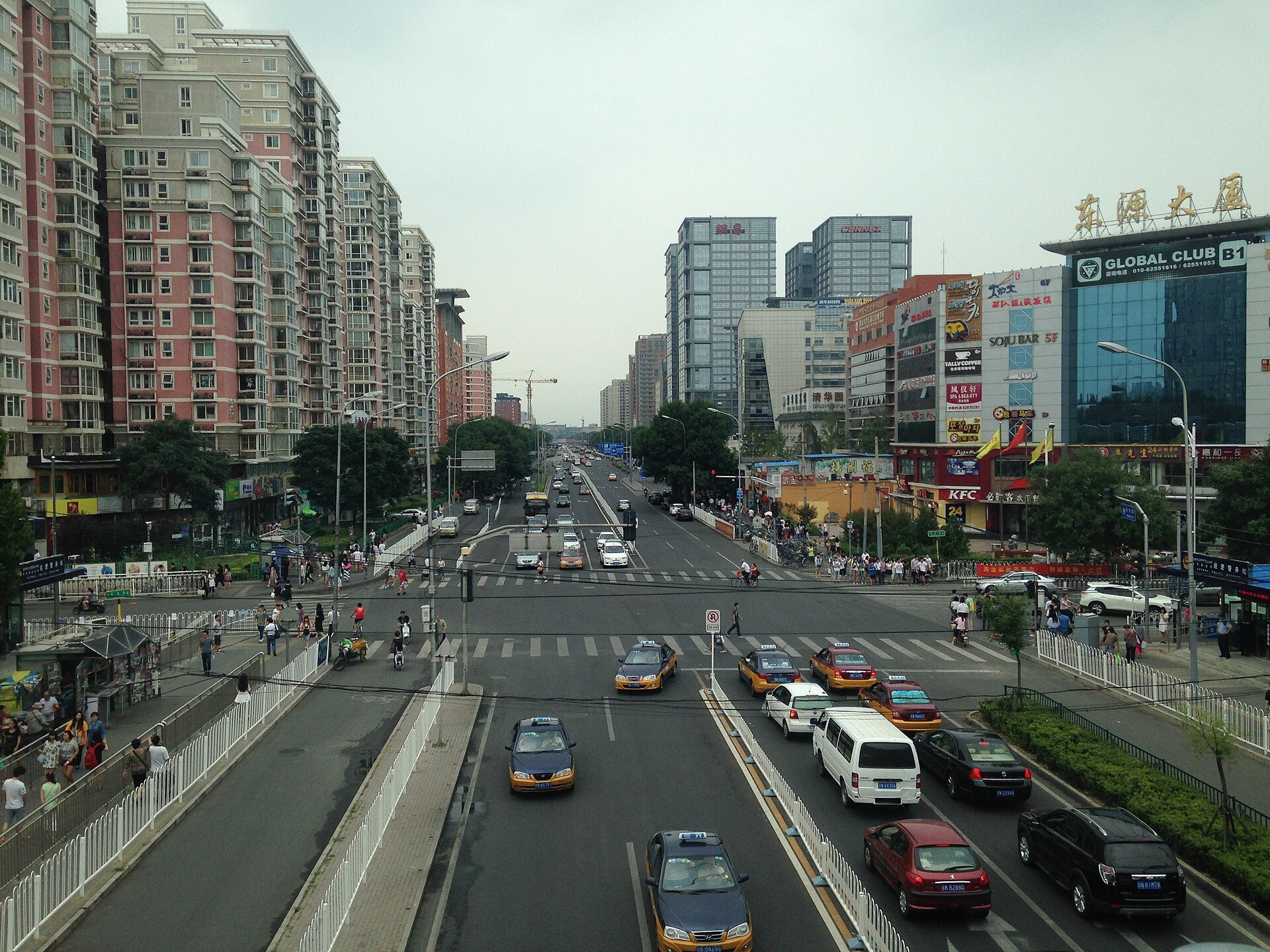
Neighborhood of Wudaokou, where the D22 club was located. Beijing, China, 2015. Wikimedia Commons
September 2026
“[T]he experience of rave grew out of dissatisfaction with the outside world, so an enclosed space was created … an artificial community, an artificial experience that is so far from reality nothing can replace it”
Quoted in Scott Hutson, Technoshamanism.
Raves were as quick to appear in China as they were to disappear. As grassroots anti-establishment dance parties, they were a response to the aftereffects of the Maoist vision of China, one which demanded social harmony, obedience, and cultural uniformity. But it would not be until fifteen years after the end of the Cultural Revolution that raves would begin in the country, as they required two international imports: CDs and ecstasy. This article will discuss the rise and fall of raves in China.
One of the only means through which Chinese music aficionados could get their hands on Western records was dakou, cut-out CD and tape recordings sold to the country as scrap. They were cut in such a way that only part of the recording was lost, soon being sold on the black market and introducing the youth to genres otherwise banned by censors: rock, punk, and eventually, techno, house, and drum & bass.
Simultaneously, China’s opening up to international trade led to a spike in drug trafficking, especially across southern port cities, giving the country the easiest access to illicit substances since 1949. By the early 1990s, British expats brought a form of dance party to Hong Kong which was already being declared dead in the water in the UK. The people of Hong Kong started getting a taste for the combination of ecstasy and electronic dance music, and by the mid-1990s these all-night dance parties had seeped into mainland China, marking the first raves in the country.
By 1997, raves and rave clubs had become a fairly mainstream form of nighttime entertainment. Clubs such as White Rabbit, D22, and The House became infamous underground venues in Beijing and for two years, raves and ecstasy usage existed unfettered by central and local authorities. In fact, club owners paid local authorities for the protection of their venues, or rather, to turn a blind eye to the open ecstasy usage within these clubs. This changed in 2000.
To understand the disappearance of raves in China, we first need to understand what a rave truly is. Raves are ritualistic, impromptu gatherings which create communities in defiance of wider society. As François Gauthier and a number of other scholars have pointed out, raves have an inherent religious quality. Communal ecstasy consumption acts as an opening rite to the rave ritual ceremony; the DJ functions as a preacher, delivering a musical service from his decks-stroke-pulpit; ravers themselves (in part due to the effects of ecstasy) form intense community bonds with one another, creating “surrogate” family units. The important takeaway is not that raves are religious per se, but that, like religious communities, they galvanise people together. When groups are galvanised by notions of, say, rejection of the establishment, one can begin to see what issue this poses to a government.
In 2000, President Jiang Zemin, began a two-year crackdown on “prostitution, gambling, drug use, drug trafficking, and other social evils”. Even though the words yědí (rave, or literally “wild dances”) or ruìwǔ pàiduì (rave party) did not appear in the notice document, raves and rave clubs were the most severely affected by the crackdowns. Clubs became subject to frequent police raids, and club-goers to indiscriminate drug tests. Consequently, rave clubs were pushed further underground. The Shanghai-based Club Fang-chengshi, for example, was founded in 2000 after the first series of clampdowns. It was hidden on the third floor of a building with no front entrance or signs to indicate its existence. Only those in the know could find and get admitted to the club. But despite its covert appearance, Club Fang-chengshi was frequently raided and soon disappeared.
Strictly speaking, raves did not entirely disappear after these crackdowns, but presently their occurrence is exceedingly rare, and ecstasy consumption does not seem to be a major issue. It is curious, then, that those few raves continue to be met with the same police suppression. After all, Chinese raves exhibit no “prostitution, gambling, drug use, [or] drug trafficking”. It is indicative of the fact that the “social evils” of rave culture extended beyond the consumption of illicit substances to something more fundamental.
Now, the Chinese government is not unique in its suppression of drug usage and rave culture. The UK government banned unlicensed raves under the Criminal Justice and Public Order Act of 1994; moral panic led the municipality of Toronto to ban raves for a period in May of 2000; the Israeli government aggressively polices rave parties, with participants reporting brutal enforcement and arrests; the Kyrgyz government continues to employ armed raids on rave events. In all such cases this suppression has been enforced under the auspices of cracking down on drug consumption, or “delinquent” and “degenerate” behaviour more generally. But China is unique in both its principal disdain of religion and its supreme suspicion of cult-like formations. Why this is the case is a topic unto itself, but in large part one can blame both Mao’s political ideology, and his own cultic following. The cultic fanaticism of Mao’s Red Guards had disastrous consequences for the country, and this informed the China that Deng Xiaoping carved out following the end of Mao’s reign.
As much as the fanatically religious report to a power higher than the government (usually God; or in the case of the Red Guard, Mao, who also just so happened to be the government), ravers, too, report to a power higher than the state: the value of freedom from authority. The creation of communities which define themselves in opposition to government, or any political power structure, is an obvious threat posed to the state. The suppression of rave culture in China, I argue, though justified by the threat of “delinquent” behaviour, is truly motivated by the threat to state power. The true “social evil” of rave culture is the desire for the freedom from authority.
For those interested in pursuing the topic of Chinese rave culture in more detail, I recommend the scholarship of Matthew Ming Tak Chew, and the articles of Josh Feola.