From London with Love: The Royal Ballet School’s 100th Graduate Year, with the School of American Ballet
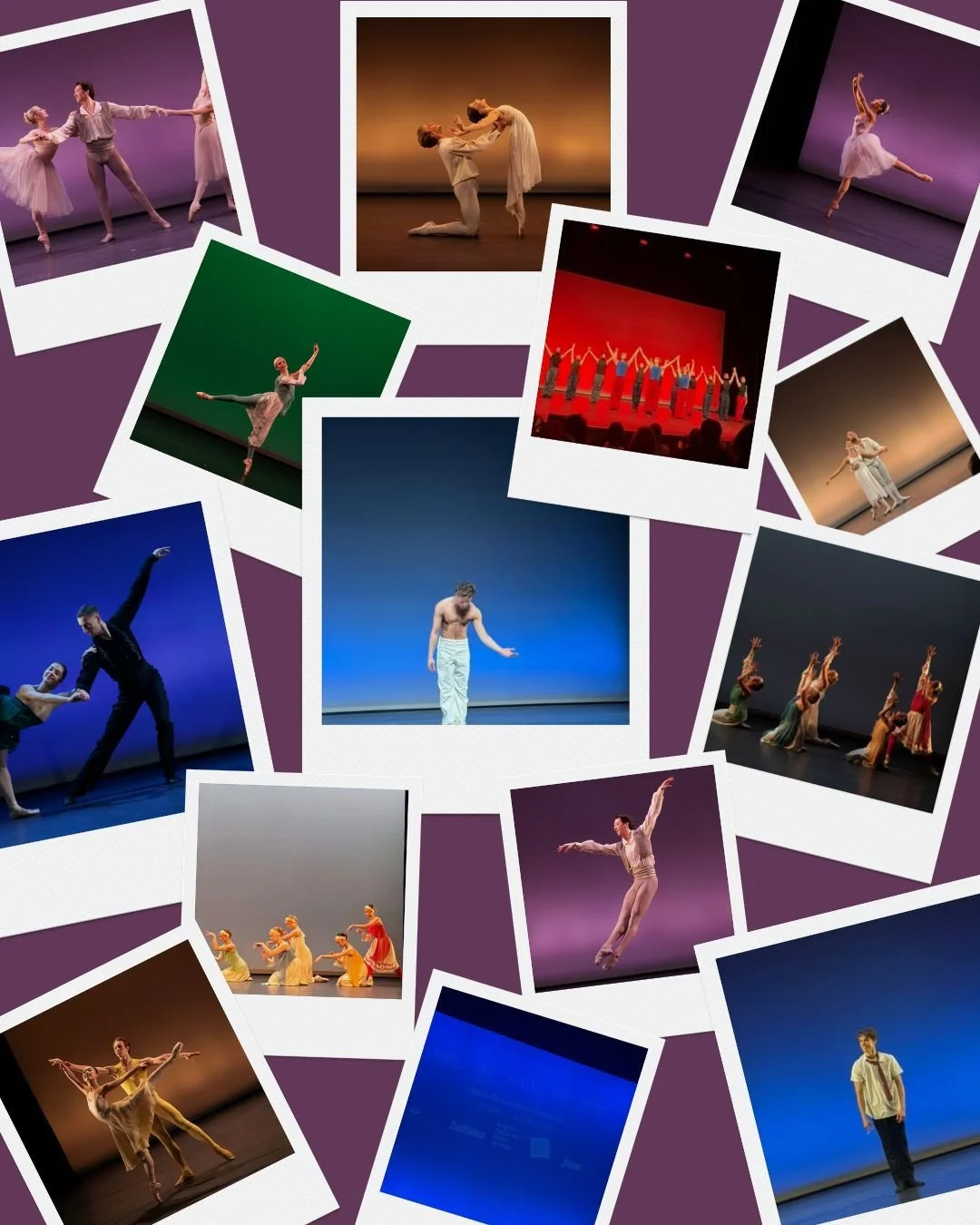
Mix of photographs by Maya Stoilova and the RBO ©️ The Royal Ballet School. Photographed by Rachel Cherry. Credit for SAB: Photographed by Rachel Cherry
5 July 2026
My dearest artlings,
I’ve been in a bit of a slump lately. I don’t know if it is the heat, or my newfound free time, or the realisation that everything I thought I wanted, career-wise at least, may not actually mean much to me in practice. That’s natural for a young twenty-something, I think: the confusion, lethargy, and sense that there’s so much potential in you – but you don’t quite know how to unravel it.
Anyways. With these things on my mind, it’s been more difficult to get myself to do things, especially if I’m not on a deadline. (Deadlines, I’ve found, are magical; they seem to cast all my doubts aside and get me to work. I do consider myself their newest, biggest fan.) Luckily for me, this Thursday, I had both a deadline – this very City Letter – and tickets to the Royal Ballet School’s graduation performance. So I sucked it up and headed to Covent Garden.
As I strolled down Bloomsbury on route to the Royal Ballet, I clutched my purse extra tight; my flatmate had gotten mugged the week before. I’d also occasionally stop by the entrance of one of those Georgian terrace houses, back facing the street, pull out my phone, and change my music; Sade was cutting too close to my melancholy. Abba? Yeah, that sounded like a better option.
By the time I reached the RBO, I’d listened to Gimme, Gimme, Gimme thrice; I can’t claim it has much musical merit – not that I’d know if it did – but it did boost my mood. So did seeing a few older ladies – beautiful, likely in their sixties – standing with their feet in third position, as if still by the barre, not the bar. That’s the most reliable way of spotting former dancers at the ballet, I think, to find women who can’t seem to shake the habit of keeping their feet turned outward, one foot resting behind the other. Smiling at them, I headed down the stairs to the Linbury Theater, a cuter, smaller alternative to the RBO’s big concert hall where the graduate students were about to have their final performance. How suitable, really – a smaller stage before they went professional and danced onto the big one.
The theater brimmed with people–parents, friends, dance instructors, and the occasional interloper like myself. The audience felt more engaged, more enthusiastic than usual. Perhaps because tonight bore a personal meaning for them: it was their son, daughter, student, or friend dancing to maturation. I, too, was starting to feel better. Over the next two hours, we would see thirteen performances – what a number –, including variations from Raymonda and Romeo and Juliet. So I sat back and watched the blue projection on the stage – Next Generation Festival, 12 June-4 July 2026 – fade, as the screen turned white and Iain Mackay, artistic director of the Royal Ballet School, stepped onto the stage. “A dancer’s journey,” he began, “is far more an expedition than a journey.” Some chuckled. Others sighed. The more optimistic bit came next: out of this year's thirty graduates – who comprised the school’s hundredth cohort – all had found jobs, a true coup in this economy.
I could see why. As soon as five colour-clad graduates pointed their way to the stage’s centre, I realised just how talented these students were. Dancing to Marius Petipa’s Variation of the Four Cavaliers, they entranced me in their movement, and the music, silencing everything I’d felt lately. In its place: presence and a deep, warm, soul-engulfing pleasure. Then followed Ninette de Valois’ The Arts of the Theatre – also beautiful. But it was the third performance that left me spellbound: Fabrizzio Ulloa Cornejo's interpretation of Calvin Richardson's Dying Swan. I’d never seen anything like it. Set to music by Camille Saint-Saëns, the variation was initially choreographed by Michel Fokine for Russian prima ballerina Anna Pavlova; with its graceful, wiggly hand movements, it became her signature role. Over the years, it got associated with Maya Pisetskaya and Ulyana Lopatkina, another two Russian graces. But Cornejo danced to Richardson’s contemporary reinterpretation, inspired by the footage of a male dancer performing The Dying Swan with cellist Yo-Yo Ma. He waved his white hands like wings, glided through the air, and finished dead, on the floor. His artistry conveyed extraordinary emotion, grace, and softness, balanced by the occasional sharp, dense movement that set his interpretation apart from its classical predecessor. It was mesmerising, and the deafening applause – insufficient in comparison. Even now, words fail me, and the tear still sheds.
The following performances were also good. Only the call for intermission could pull me out of my trance. But as people gathered to leave, I remained seated, worrying my feet would give out, and the melancholy would set back in. I didn’t dwell on that much. “The difference between graduate dancers and professionals,” I overheard the man on the back row say, “is obvious in their jumps. Professionals have more force, more prowess, more explosiveness.” I nodded my head yes, eyes still trained onto the stage.
A few more minutes of eavesdropping – awful manners, I know – and the second half began. Rhapsody’s Pas de deux was good, Eccentric Pulses was great, but Ben Van Cauwenbergh’s Les Bourgeois bewitched me. Millan de Benito Aranconflirted his way through the crowd, his dancing at once rakish and controlled. He compelled not through the Dying Swan’s inwardness but through an outpour of swagger and puppet-like movements – and a cigarette.
As I watched, I found myself performing a variation of a game I like to play in museums: I see a painting and try to guess its artist, date, and place of origin. Here, I was observing a dancer and attempting to place them in a different role. Arancon would make an excellent Petrushka, I thought. I also found myself a fierce Carmen and a Giselle, with expressive eyes and emotional presence.
“Ballet people always cry,” the man behind me whispered as the screen changed colours one final time. True. My eyes still glistened with awe. There’s this thing about dance: it touches you not through its implied emotion but through its uncanny ability to unclog whatever stifled feelings you carry within – and bring them out in movement, or the appreciation thereof.
As the performance came to a close, through Christopher Wheeldon’s Christening Suite, I realised I did not want to leave. The showcase had stilled my mind and soothed me in ways that nothing else could. I wanted to sit there, to watch, to stay entranced. But I had to go.
Good thing I’d managed to take something away: appreciation, connectedness, oneness.
For a moment, I felt I could even dance home that night.
From London with Love,
Maya
You might also enjoy. . .