Connecting Voices Behind Bars: How “Sing Inside” Cultivates Choral Community in Prisons
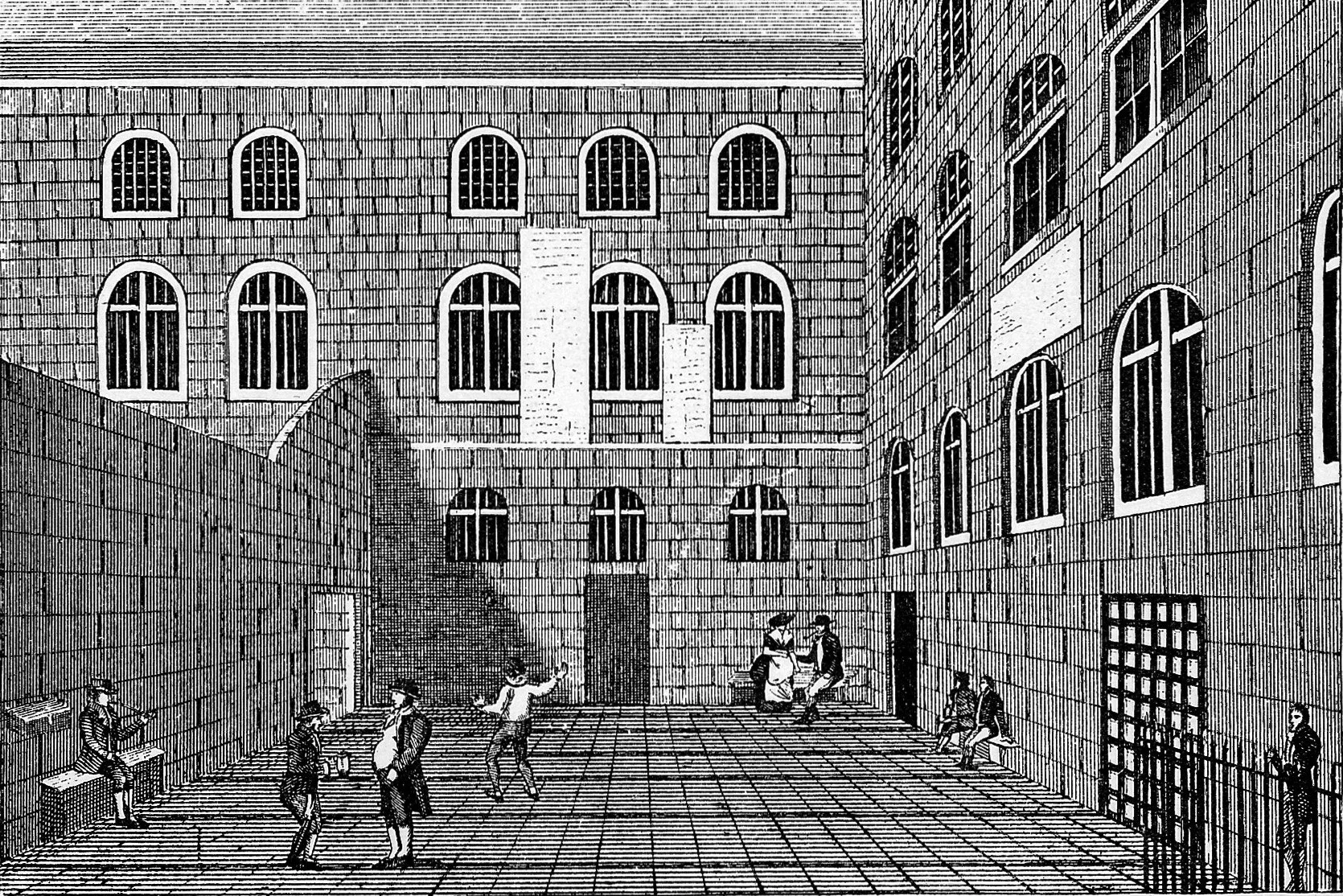
Newgate Prison, Inner Court, 18th century, from a contemporary print
24 July 2026
Imprisonment rates in England and Wales are the highest in Western Europe. According to the House of Commons Library, the number of prisoners in the country has quadrupled since 1900, while the number of the general population merely doubled. Sentences are lengthening: within the last ten years, sentences of over four years have risen by ten percent. UK prisons are thus more populated than ever before, with residents who are separate from society for longer periods.
Into these spaces, the CIO (charitable incorporated organisation) Sing Inside brings choral music. The organization frames its aim as “promoting music and the performing arts for all who live or work within a prison setting using volunteers drawn from UK universities and local choirs.” They aim to empower residents and workers in prisons within England and Wales with vocal and creative gratification choral singing can enable. They also aim to train and develop musicianship and educational leadership skills of volunteers drawn from UK universities and local choirs.
Sing Inside’s approach prioritizes building connections between the people in the room. The workshops they lead are meant for residents, prison staff, and Sing Inside volunteers alike. Rather than starting off immediately with singing, a workshop day always begins with some casual conversation. Volunteers are encouraged to introduce themselves to residents and staff, building an initial foundation of familiarity and trust in the room.
An initial feedback form goes around - asking participants about their expectations for the day, and what led them to sign up. Following an energizing vocal warm up, three to four hours are dedicated to learning selected songs. Songs are taught through call and response, rather than relying on any musical literacy. The Sing Inside ethos continuously reassures that the workshops are meant to be accessible to all regardless of any prior musical experience. This is another reason why Sing Inside relies on volunteers that may be music students or singers in community choirs: the distribution of confident singers in the room helps boost the experience without putting pressure on less experienced musicians. The song-learning section of the day is intentionally spaced with multiple breaks, giving the participants as many opportunities as possible to chat (which tends to become easier throughout the day).
Song selection for the workshops vary, and many songs are suggested by residents. The musical committee of Sing Inside generally tends to select and arrange familiar songs that will be most accessible. Often, day workshops are characterized by a theme that ties repertoire choices into one experience. Following a workshop day, volunteers may collect song suggestions from residents and staff for future encounters. Sometimes, residents suggest songs or poetry they compose themselves - which are then adapted by Sing Inside for use in future workshops. Some prisons attempted an “ambassador” model: a team of residents meets with Sing Inside volunteers several times in advance of a workshop to decide together about repertoire and the structure of the day. This way, the residents can use Sing Inside workshops to express themselves more fully and take artistic initiative - as was often the reported experience of ambassadors.
After a few hours of song learning and chatting, and a communal lunch, workshop days must end with some sort of musically rewarding closure. This can be a performance to other residents and staff, or a recording - which all participants later receive a copy of as a souvenir. Click here to listen to some recordings of the music sung during the workshops.
Sing Inside’s activity has mostly been restricted to one-off workshops, due to finance and resource limitations. However, given increasing demand in prisons and the growing team of volunteers nationwide, the organization has recently launched two weekly choirs in prisons in the North West. This enables the community building, empowerment and creativity that may be sparked in a one–time workshop to be nurtured on a regular basis, for the benefit and musical fulfillment of residents, staff, and volunteers alike.