Paper Dolls, Etching Plates, and Theatre Costume: The Artistic Pursuits of Queen Victoria
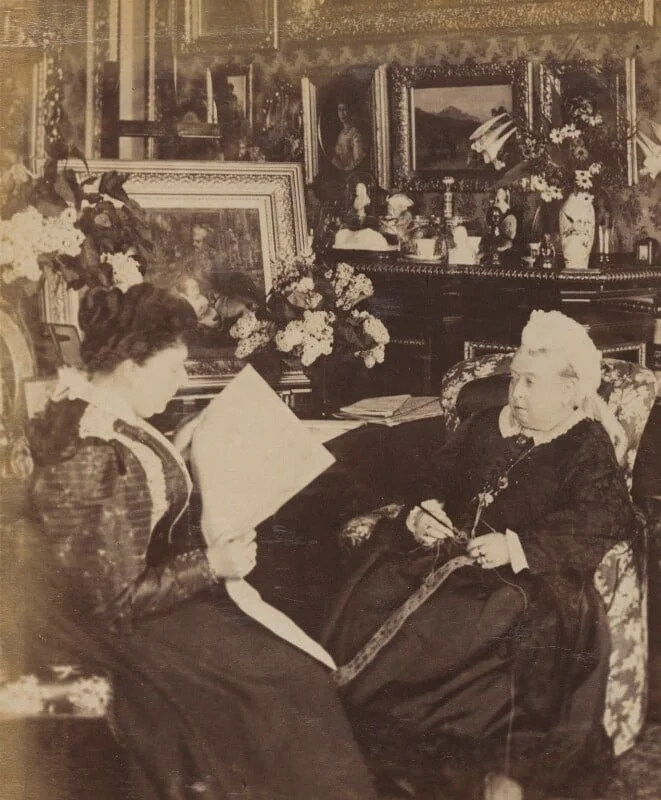
Mary Steen, Princess Beatrice of Battenberg: Queen Victoria, 1895, albumen print, © National Portrait Gallery, London
24 July 2026
As well as being a passionate patron of the arts, Queen Victoria was also an artist herself. From the age of eight, Queen Victoria became fascinated with painting and taking inspiration from the world around her. Having lived an isolated childhood and a strict social life in her adulthood, Victoria indulged in a life of creation and imagination alongside her duties as a monarch. Many of her creations, which have been found tucked away in her journal volumes, filed in the Royal Archives, and passed between private collectors and auction houses, provide an exceptional insight into Victoria’s most treasured hobbies, interests, and relations.
Throughout Queen Victoria’s life, her love for the theatre and the performing arts remained a constant. During her days as a young princess, Victoria and her governess Baroness Lehzen worked together to design and make over one hundred and thirty wooden dolls and many paper dolls, boasting ornate designs, dramatic silhouettes, and thoughtfully chosen colours. The paper dolls, many of which were painted by Baroness Lehzen, may have sparked Victoria’s early interest in costumes and fashion design. At the age of fourteen, Queen Victoria painted a series of watercolours depicting ballet dancers and their costumes. In each illustration, Victoria demonstrated a clear attention to detail, paying attention to puff sleeves, ribbon, adornments, and their textures.

Queen Victoria, Leonore, Arabella and Rosa, 1841, etching on paper
As successful as Victorian marriages go, the partnership between Queen Victoria and Prince Albert was one of both love and convenience. Excitingly, Queen Victoria found a fellow art enthusiast and artist in her husband. As newlyweds in the 1840s, the couple enjoyed etching, completing a total of ninety-three plates during the decade. Victoria and Albert gained much of their artistic skills from reputable artists such as George Hayter and Edwin Landseer. Landseer often painted the Queen, capturing herself and Prince Albert in extraordinary fancy costume at the Bal Costumé in 1842. The couple’s admiration and enthusiasm for art, design, fashion, and cultural history is clear here. This was the first of three costume balls held by the royal couple at Buckingham Palace.
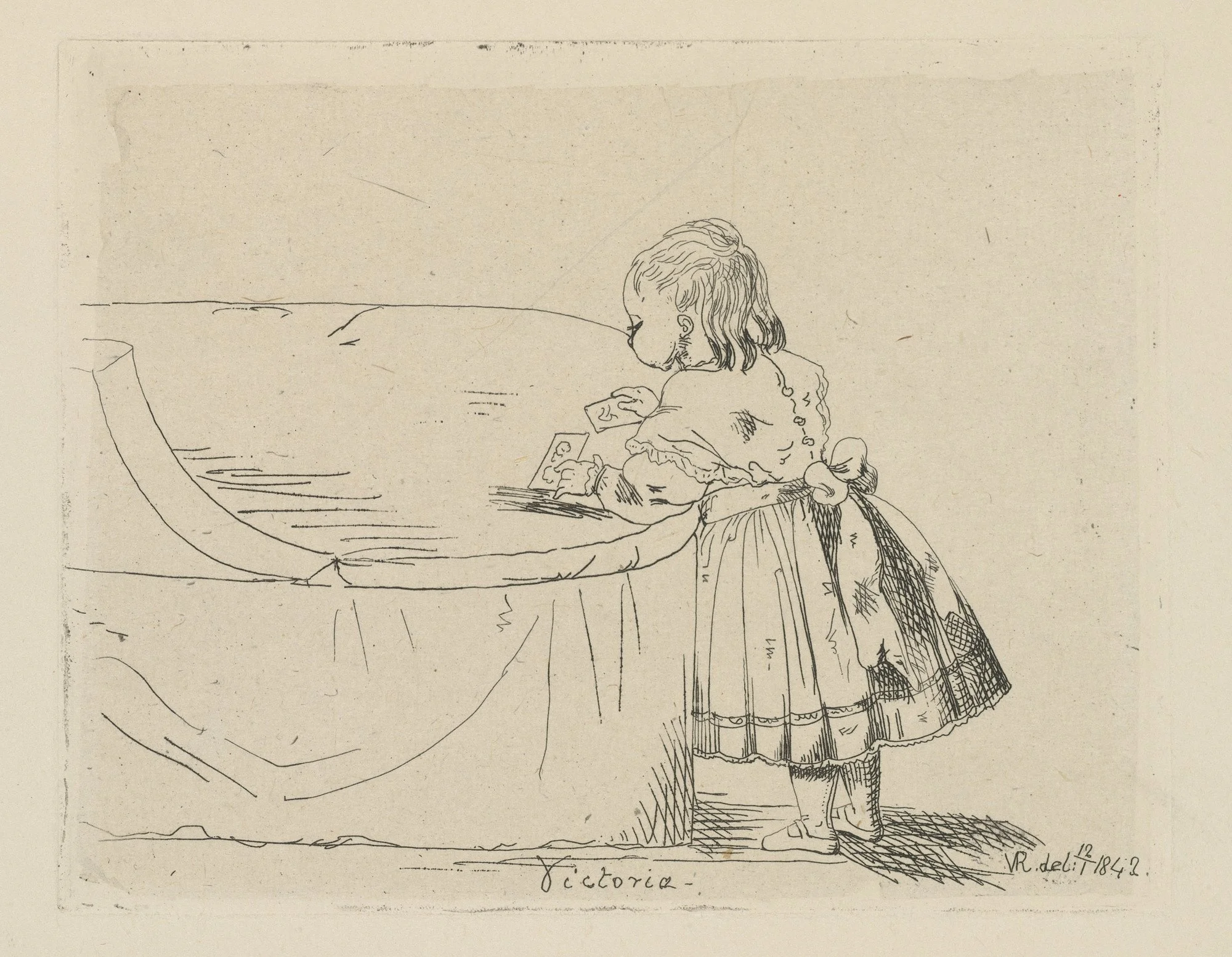
Queen Victoria, Victoria dated 12 Jan 1842, 1842, etching on paper
Indulging in the theatrical garments seen on stage and the mysterious allure of their stories was a shared recreational pursuit between Victoria and her children. A Scene from Racine’s “Athalie” was painted by Victoria in 1852, depicting the royal children performing a scene from the 17th century French tragedy Athalie by Jean Racine. With aid from their French governess Mme Rollande, the children organised an evening performance to celebrate the Queen’s wedding anniversary on 10th February 1852. Victoria’s delicate embellishments on the children’s dresses, the excellent depiction of translucent veils, and the incorporation of a painterly background hinting to the classical past transports the royal children from Windsor to the Temple of Jerusalem.

Queen Victoria, A Scene from Racine’s “Athalie,” 1852, oil on canvas
Although few of these creations remain, Queen Victoria also knitted, crocheted, and embroidered delicate items of clothing and accessories. Some of her creations were gifted to her close friends and family, notably a pair of embroidered shoes covered in a rosebud and leaf design, gifted to her second daughter Princess Alice. However, not all her creations were for the sake of handmade gifts. Using crochet lace, Victoria’s work promoted the material produced by Irish women who were struggling during the Great Famine of 1845-1852. Similarly, Victoria’s wedding dress was embellished with Honiton lace across the chest and sleeves, kickstarting surging sales for Britain’s floundering lace industry. Queen Victoria’s selection and use of arts and crafts materials was not just due to aesthetic preference but a patriotic choice, using her monarchic influence to support the working arts and crafts industries across Victorian Britain.
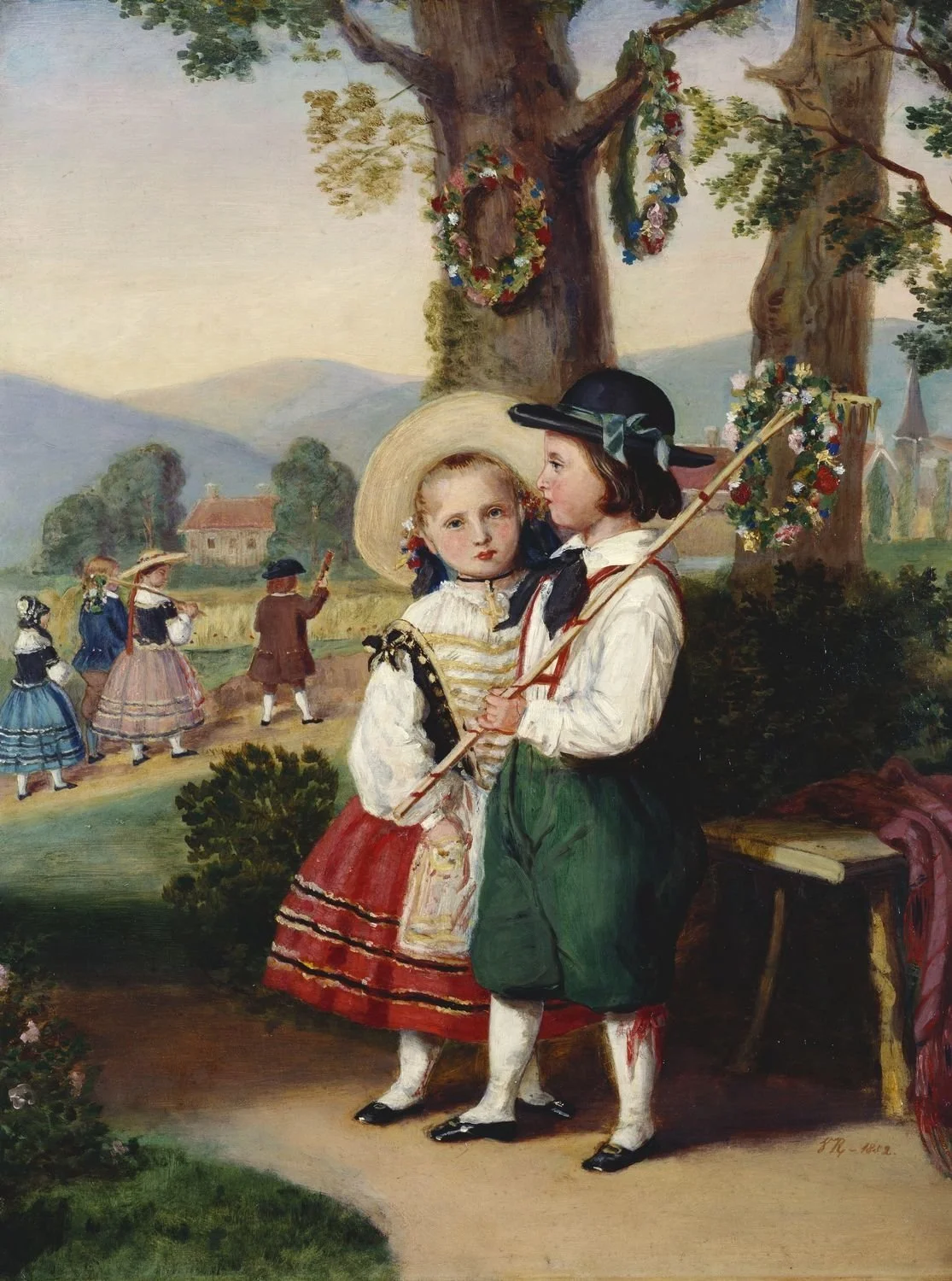
Queen Victoria, A Scene from ‘Der Hahnenschlag,’1852, oil on canvas