Wendy Carlos - Twentieth-Century Music’s Electronic Pioneer
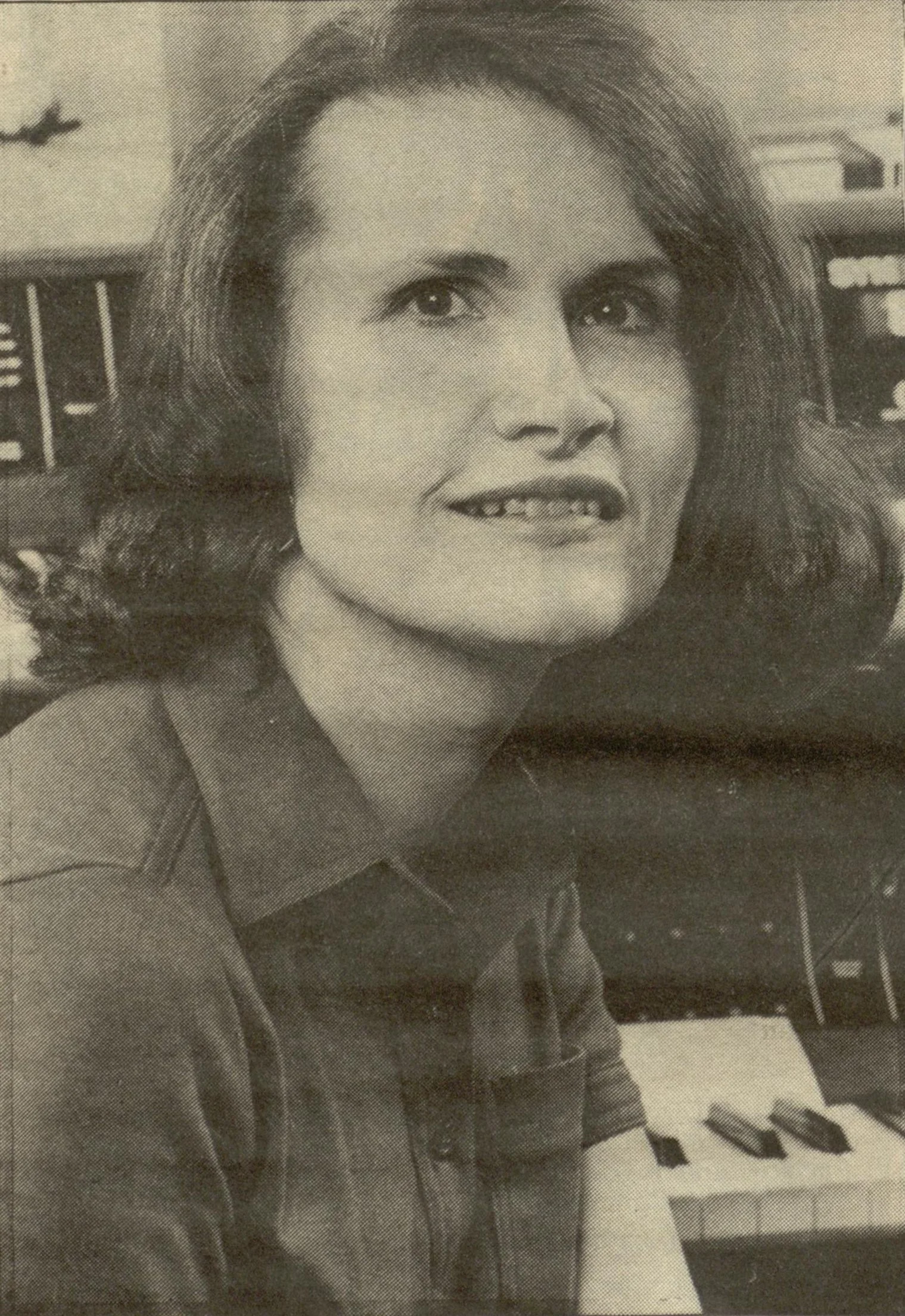
Photo of Wendy Carlos by V.L. Smith / Bay Area Reporter. Bay Area Reporter, 6 June 1985. Wikimedia Commons
In twentieth-century music, not many musicians and composers were as influential and unusual as Wendy Carlos (b. 1939). For starters, the list of key players includes few women. It includes even fewer women who dedicated their lives to electronic music, which Carlos helped shape. Even after only a brief examination of her life and work, her status as a trans woman almost seems a mere footnote in the long list of features that make Carlos a singular figure in music history. She has never been a fan of commentators who relegate discussions of her to her gender identity (if her disapproval of the 1978-9 interviews she gave for Playboy - where she first came out as trans - is anything to go by). And rightly so, because what truly makes Carlos one-of-a-kind is her music, or more specifically, the sound worlds that she created, sometimes literally, with her own two hands.
The works she composed and recorded on the Moog synthesiser are those usually associated with Carlos. In 1964, she met Robert (Bob) Moog, the instrument’s inventor and namesake, and their meeting blossomed into a partnership in which Carlos contributed elements that shaped the Moog’s capabilities. Carlos asked to add several features that would later become staples of both the synthesiser and her music, including a touch-sensitive keyboard and portamento (an audible slide into or between pitches). “Now,” she would later state in an interview, “I had a keyboard that could make the notes come alive.”
Composing on the instrument, however, was arduous. Each timbre on Carlos's Moog modular had to be constructed manually by patching and adjusting oscillators, filters and amplifiers. With no means of storing settings, and only one note sounding at a time, each line was performed separately on the keyboard and assembled on multitrack tape. It was on this instrument that Carlos recorded Switched-On Bach, a set of arrangements of Bach pieces that showcase the colours and contrasts possible on the synthesiser, and which became one of the most commercially successful classical albums of all time. It reportedly took over 1100 hours to complete. The album is often credited with bringing the Moog into the mainstream, which led to its use in some of the decade’s most iconic music (e.g. The Beatles’ Abbey Road). Carlos would later compose the music for Stanley Kubrick’s A Clockwork Orange, a soundtrack that brought her great acclaim but, like Switched-on Bach, relied heavily on classical arrangements.
Though Carlos remains best known for her Moog arrangements, her distinctive voice is heard most clearly in her original compositions. Beauty in the Beast (1986), realised not on the Moog but on a digital synthesiser, is a prime example. The album draws heavily on Balinese scales and on alternative tuning systems of Carlos's own devising, opening up a sound palette with few parallels in Western composition. Like much of her music, it is hard to find online, but it is – in this writer's opinion – where her voice emerges more fully than in any of her arrangements. Plunging into the unknown is a staple of Carlos' craft, as the Van Gogh quotation on the album's back cover suggests: "I am always doing what I cannot do yet, in order to learn how to do it."
Here are some links to her music:
Beauty in the Beast: https://www.dailymotion.com/video/x2j1gy2
Switched-On Bach: https://www.mixcloud.com/dvrtimemachine/walterwendy-carlos-switched-on-bach-original-pressing-recording-year-1968/
You might also enjoy. . .
Wayne McGregor: “Infinite Bodies” - Dance, Technology and the Future of the Human Body