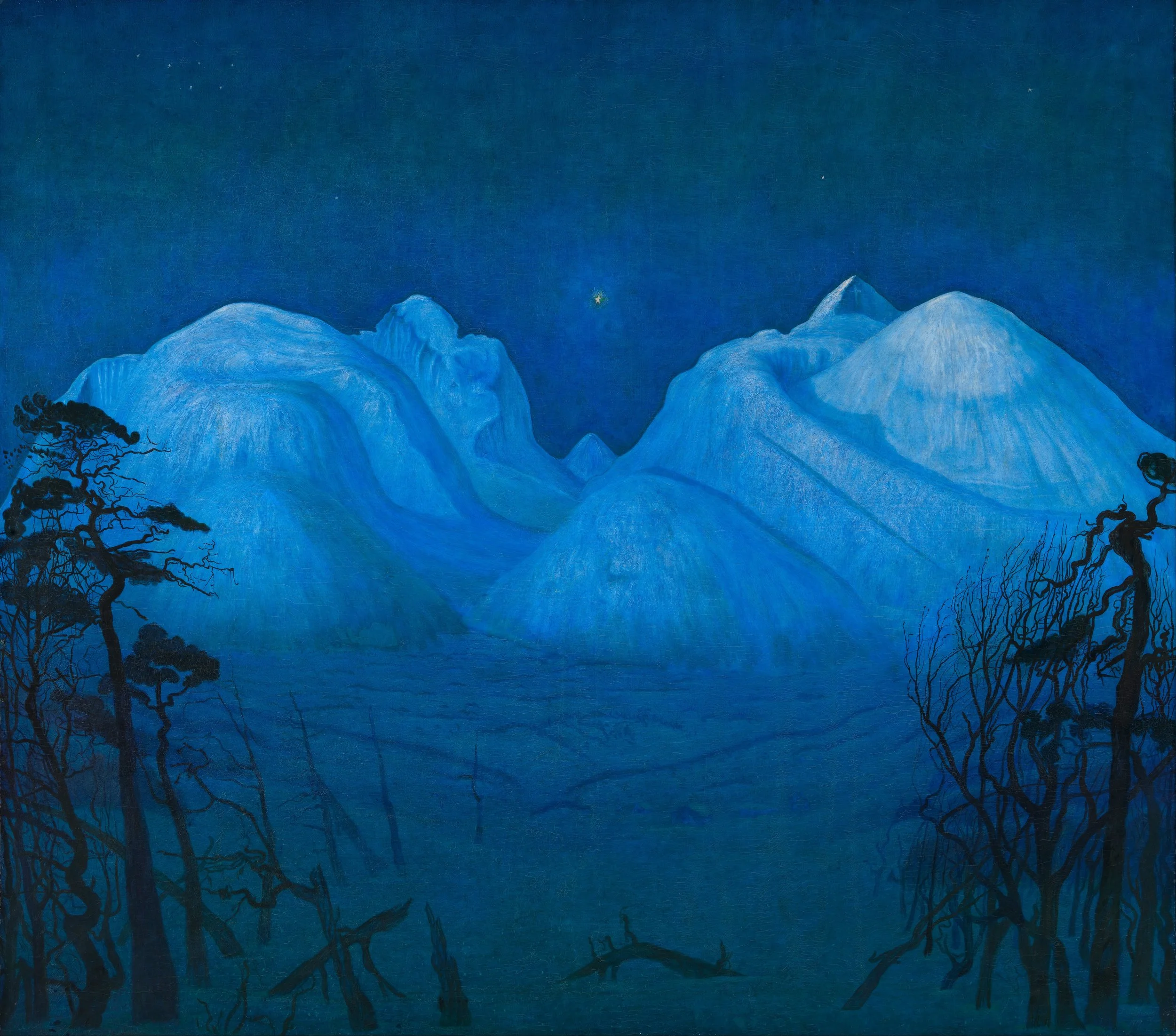
Harald Sohlberg, Winter Night in the Mountains, 1914. National Museum of Art, Architecture and Design, Oslo
19 December 2025
The winter solstice is the shortest day of the year, celebrated between December 20th and 22nd in the Northern Hemisphere (and between June 20th and 22nd in the Southern Hemisphere). On the other side of the solstice, the days once again get longer as we look towards spring, and daylight slowly but surely returns. If you’ve ever noticed the preponderance of winter holidays that fall right around the end of the calendar year, this can be attributed to nearly every culture across the Northern Hemisphere boasting celebratory festivals to mark the solstice. Many of these festivals emphasize the triumph of light over darkness, and incorporate music, food, and dance in the festivities. Three in particular center dance: Iran’s Shab-e Yalda, Scandinavia's St. Lucia Day, and Peru’s ancient Incan festival, Inti Raymi.
Shab-e Yalda, or Yalda night, is an Iranian celebration traditionally centered around the birthday of the sun god Mithra. On the longest, darkest night of the year, families gather for food and community, storytelling and poetry, and dance. A wide range of traditional Iranian and Persian folk dances, as well as free-form social dance, or raqs-e mehmooni in Farsi, can take place on Yalda night, joyful movement celebrating the rebirth of light. In southern Iran, bandari, a party dance tradition from Persian Gulf port cities, is often performed. Bandari is a chain dance with hand movements that call to mind those of fishermen working together, reflecting its seaside origins.Contemporary celebrations can include modern adaptations of these traditional dances, integrating new styles of movement with ancient themes.
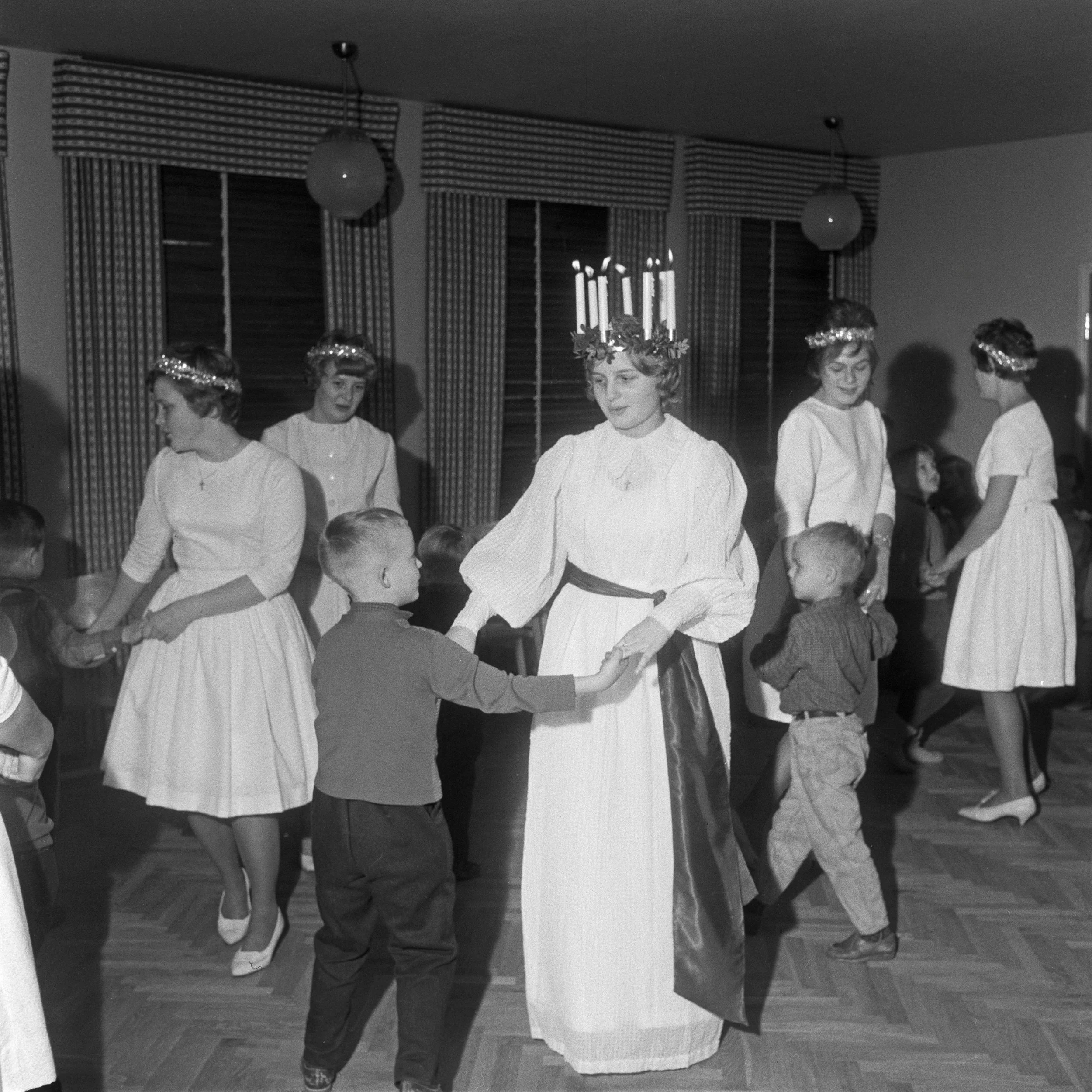
St. Lucia of Hanko Kerstin Fast in Folkhälsan's daycare in Hanko. December 13, 1962. Copyright: Finnish Heritage Agency
In Scandinavia, blending Norse mythology-based pagan and Christian traditions, the St. Lucia Day winter solstice celebration evolved as a time to light bonfires and ward off dark spirits during the year’s longest night — though they actually celebrate a week in advance of the solstice, on December 13th. The holiday eventually incorporated the early Christian saint, St. Lucia. The festival traditionally includes a procession and culminates in passionate and spontaneous folk dancing. The procession is the celebration’s main event, wherein a girl dressed as St. Lucia leads others, all holding or wearing candles. Nordic folk dance is usually done in couples, composed of lots of turning and changing of partners, with popular forms including the many regional variations of the polska, and the hambo, a lively polska fusion.
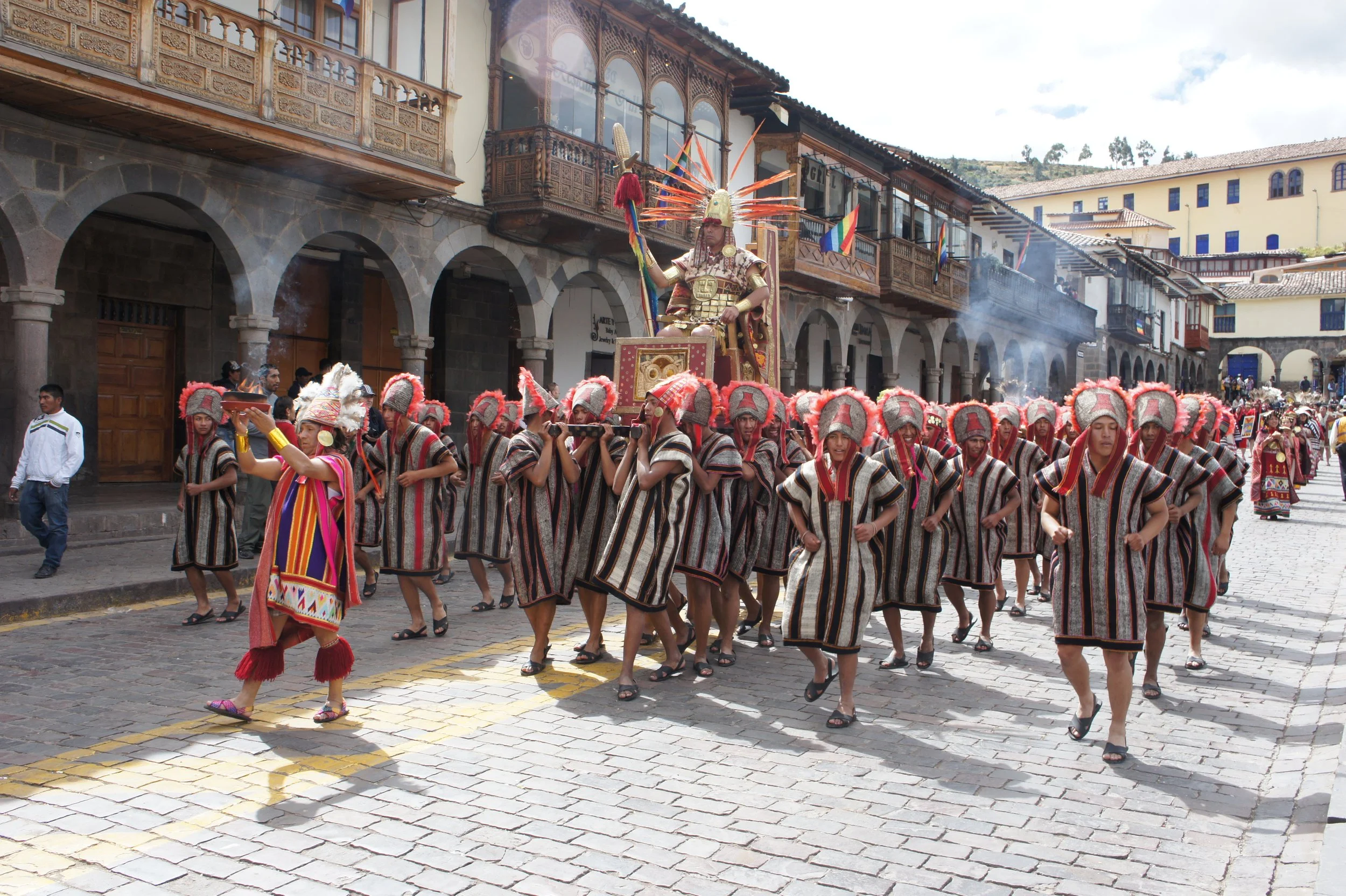
Inca carried on his golden throne during the Inti Raymi, Inca Festival of the Sun, 2011
Located in the Southern hemisphere, Peru’s winter solstice takes place in June. The ancient Incan Inti Raymi festival honors the sun god, Inti, as the solstice promises the return of longer, sun-filled days. In the time of the ancient Incas, the festival featured feasts and sacrifices, before the Spanish conquistadors banned the celebration. In 1944, Peruvians revived Inti Raymi as a theatrical reenactment, which takes place in Cusco every June. The festival is complete with historical Incan costumes, Quechuan chants, and a dazzling array of music and traditional dance, as performers travel from around the globe to participate in the grand ceremony.
These three celebratory solstice traditions from disparate corners of the globe, all featuring instances of communal dance, are beautiful examples of the interconnectedness of all people, particularly during the darkest times of the year. However you choose to mark the solstice, may turning this corner into a future with more light be full of joy!