Arnault vs. Pinault: When Luxury Empires Compete Through Art
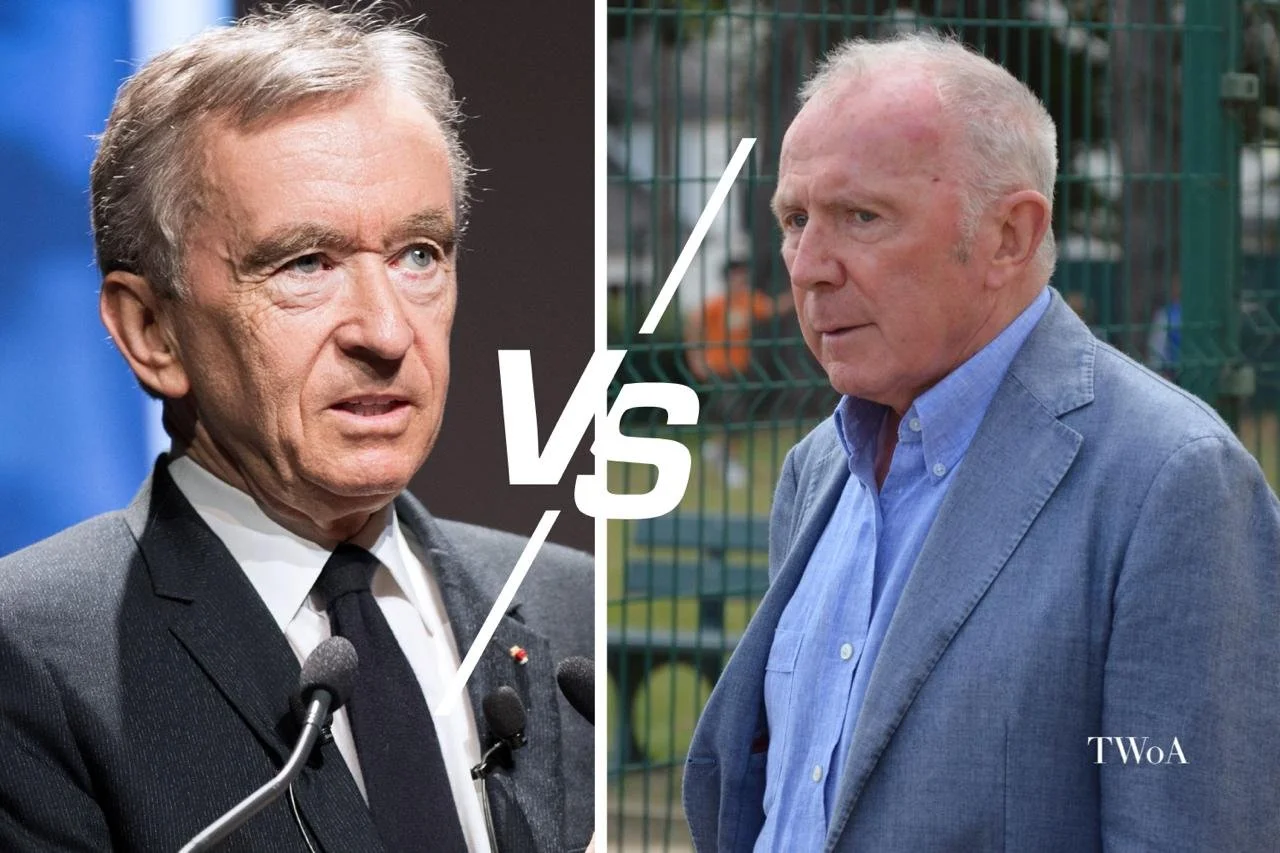
Bernard Arnault, 2017, photo by Jérémy Barande, and François Pinault, 2015, photo by S. Plaine.
2 April 2026
The biggest rivalry between two French billionaires is no longer just about handbags and fashion houses. It now plays out through art collections, exhibitions, museums, and cultural influence. For decades, Bernard Arnault and François Pinault have competed to dominate the global luxury market. Arnault, founder and CEO of LVMH, leads the world’s largest luxury conglomerate, the empire behind brands such as Louis Vuitton, Dior, Tiffany & Co., Bulgari, and Sephora. Pinault built his own powerhouse through Kering, the group that owns Gucci, Balenciaga, Bottega Veneta, and Saint Laurent, along with the investment company Artémis. Their rivalry has shaped the modern luxury industry, but over time it expanded beyond fashion and into another arena entirely: the art world.
The competition hasn’t just stayed within their taste in art; it has played out in visible ways, including the art market itself. Pinault acquired the auction house Christie’s, while Arnault followed by purchasing Phillips. Today, Pinault still owns Christie’s, whereas Arnault sold Phillips during the financial crisis at a significant loss. Their philanthropy reflects this quiet rivalry: after the 2019 fire at Notre-Dame Cathedral, Pinault pledged €100 million toward its restoration, followed shortly by Arnault and LVMH with €200 million.
One of Arnault’s most prominent projects is the Fondation Louis Vuitton in Paris. Designed by architect Frank Gehry, the building rises in the Bois de Boulogne like a floating glass cloud above the trees. Opened in 2014, it hosts major exhibitions while showcasing works from Arnault’s private collection, particularly post-war and contemporary art.Pinault, on the other hand, approaches the art world primarily as a collector. Over the years, he has built one of the most significant private collections of contemporary art. Instead of placing them in a single museum, he created a network of exhibition spaces, including Palazzo Grassi and Punta della Dogana in Venice, as well as the Bourse de Commerce in Paris, a former stock exchange transformed into a contemporary art museum.

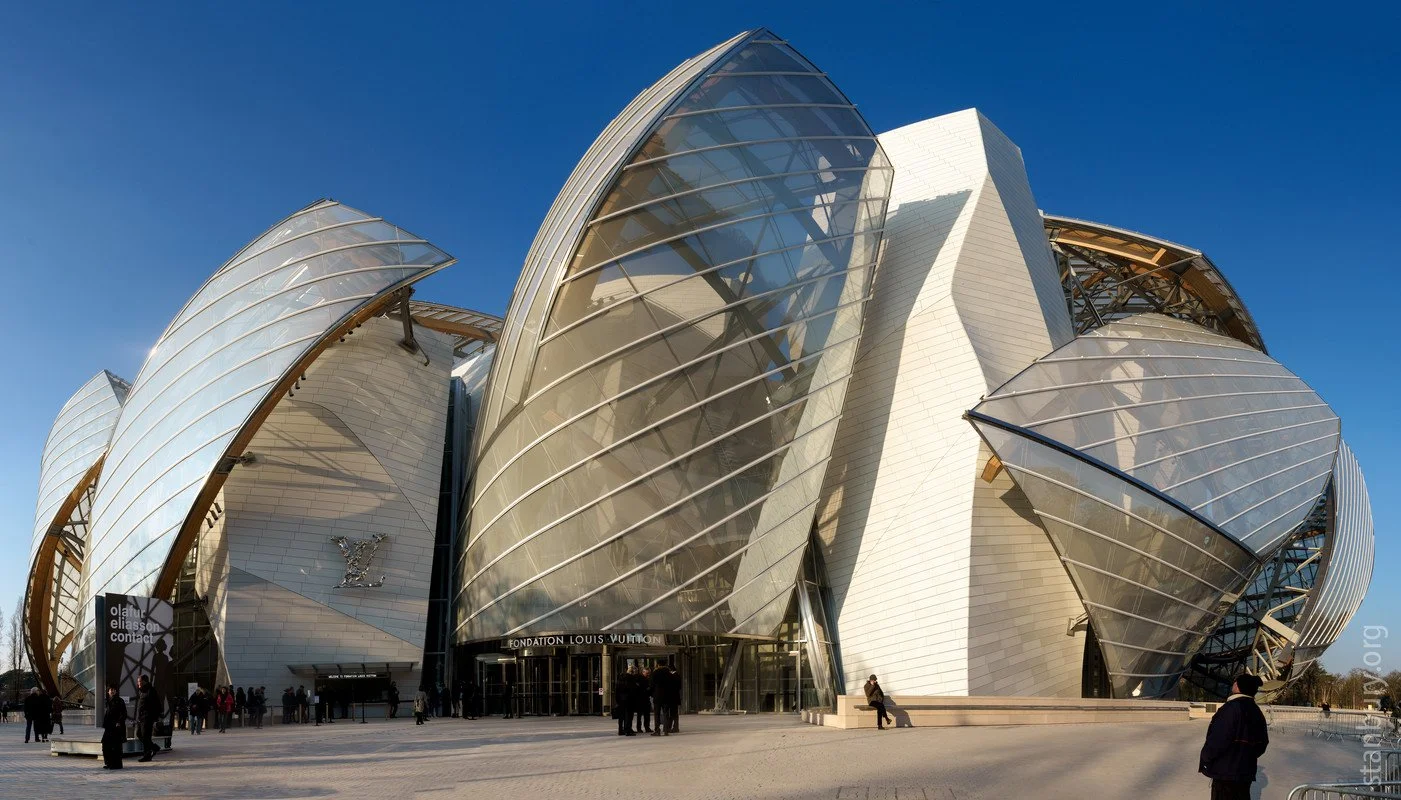
Bourse du Commerce, Paris, photo by Chabe01 and Fondation Louis Vuitton by Howard Stanbury
These venues host rotating exhibitions that keep collections in dialogue with global audiences. In April 2026, the Fondation Louis Vuitton presents an exhibition dedicated to Alexander Calder, Un équilibre. Meanwhile, Pinault Collection spaces feature artists such as Michael Armitage and Amar Kanwar at Palazzo Grassi, Lorna Simpson and Paulo Nazareth at Punta della Dogana, and works by Pierre Huyghe, Laura Lamiel, and Fujiko Nakaya at the Bourse de Commerce.
At this level, the rivalry is no longer just about who owns the most valuable artworks. It is about cultural capital—the power to shape taste, influence artistic conversations, and define what matters in contemporary culture. Museums begin to operate almost like luxury brands: curated, visible, and tied to prestige.For luxury companies, this connection to art is no coincidence. Luxury thrives on exclusivity and craftsmanship. By aligning themselves with contemporary art and cultural institutions, brands signal that they stand for creativity and cultural value, not just products. In that sense, Arnault and Pinault are no longer only competing as businessmen—they are competing as tastemakers, shaping not just what we wear, but what we see, value and remember.