Can and Should Contemporary Operas Engage With Controversial Topics?
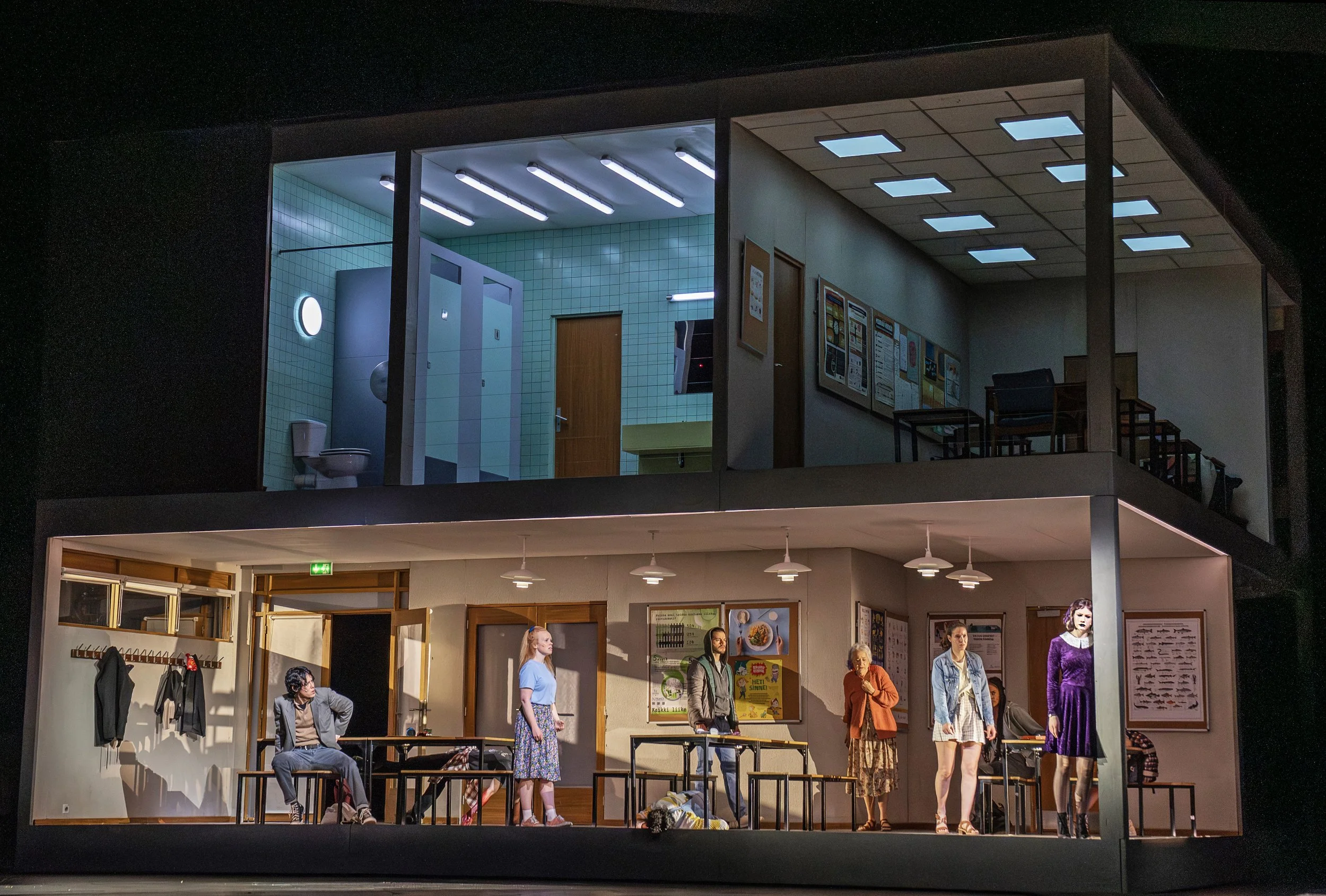
Simon Kluth as Anton, Beate Mordal as Lily, Camilo Delgado Díaz as Jerónimo, Lucy Shelton as the Teacher, Marina Dumont Anastassiadou as Alexia, Julie Hega (partially hidden) as Iris, and Vilma Jää as Markéta in a scene from Saariaho's Innocence. Photo: Karen Almond / Met Opera
1 May 2026
Over the past fifteen years or so, popular art and media have begun to include the subject of school shootings as a way of engaging with topics that feel timely. Shows such as American Horror Story or Thirteen Reasons Why have included it as subplots, while films such as The Fallout, or more recently The Drama, have caused controversy by using it as primary subject matter. In the world of opera, Kaija Saariaho’s Innocence covers the same ground.
The opera, which premiered in 2021 and is currently playing at New York’s Metropolitan Opera, follows a dual storyline of a wedding and a school shooting. As it unfolds, the connection between the two is slowly revealed. Innocence was uncomfortable, to say the least—the type that makes you squirm in your seat. The production does not shy away from the horrors of mass shootings, audibly playing gunshots and showing teenagers covered in blood lying on the floor. The highly effective set design, centered on a revolving building, slowly turns as characters run through corridors and between storylines, everything unfolding with a sense of dread. There are many moving parts: the interwoven narratives, the set, a combination of languages ranging from Finnish to French to German to Spanish, and a mix of singing and speaking.
The reviews of the opera, while generally positive, have been mixed. One in particular, in New York Magazine, spends most of the article applauding the opera for being masterfully crafted, but ends by denouncing the subject matter, arguing that the operatic art form, with all its grandeur, inherently sensationalizes such an act. The argument is not well thought through or fully explained, which makes it feel empty; it comes across more as someone who—understandably—couldn’t deal with being made uncomfortable by Innocence. But that is no reason to say it should be criticized as a work of art.
A piece of art with such current and depressing subject matter raises the question: is this necessary? The short answer, I would argue, is yes. In fact, it is essential. Audience members engage with art for a variety of reasons: to see the sublime, to be moved, to be made to think, to experience catharsis, or to be made uncomfortable to a point of growth—sometimes a combination of these. Once we hastily label a piece of art as immoral or a subject as unfit to be made into an opera, we might deprive audiences of experiences they might have valued. There is a fine line between this kind of condemnation and censorship.
Innocence is one of the most timely and important operas I have seen. It makes you uncomfortable because it’s meant to—and because it should. As long as a work of art is well constructed and does not directly harm anyone, difficult subject matters shouldn’t be excluded just because they are difficult. When a piece of art manages to successfully engage with a timely subject, it should be praised.