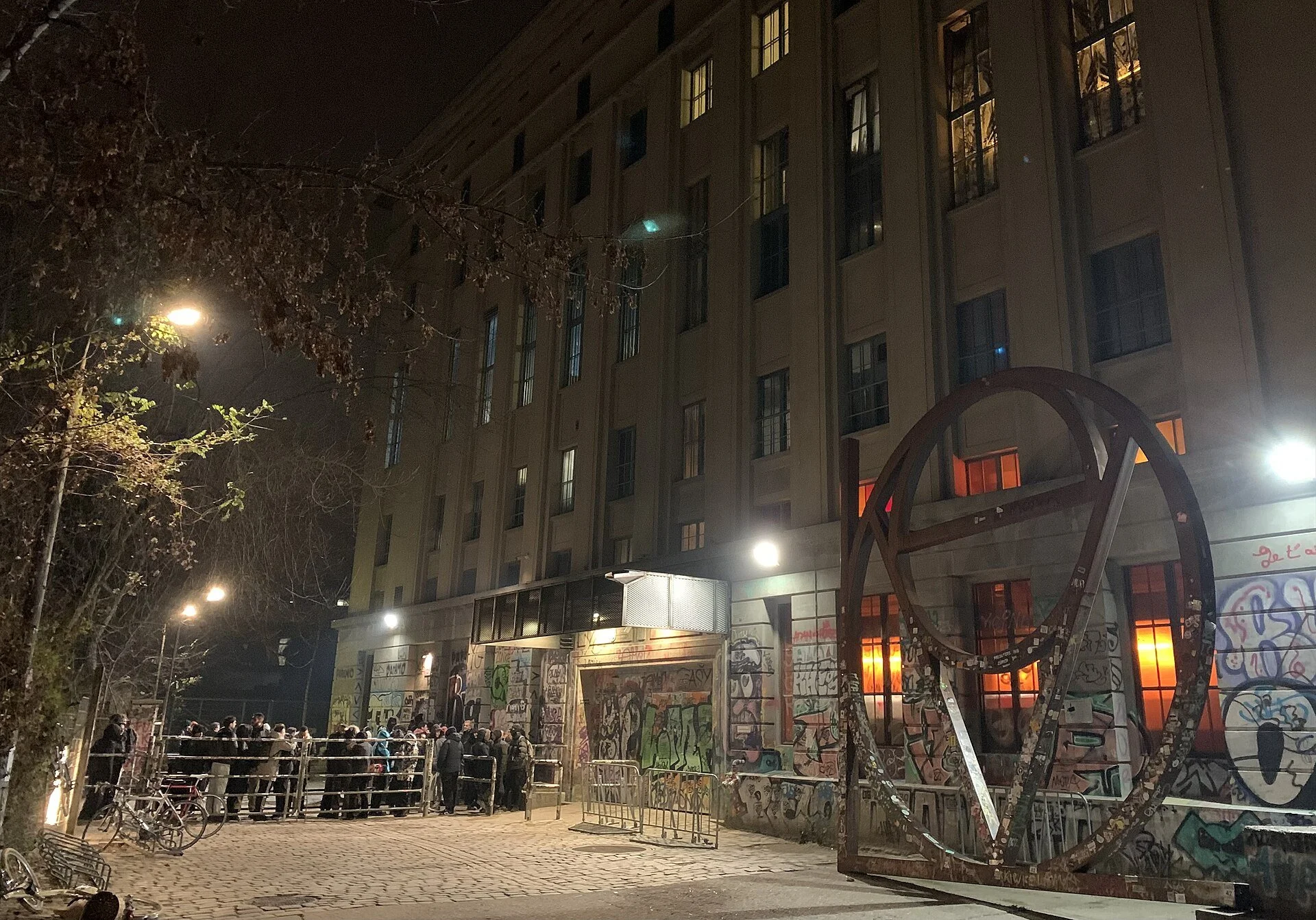
Berghain in Berlin 2025. Wikimedia Commons
Berlin. A melting pot of contrasts, where the desire to belong coexists with an almost stubborn refusal to be defined. Every scene has its individuality and unwritten rules, yet the city is also shaped by a mindset of challenging, bending or simply ignoring rules.
With a heavy heart and the last notes of Puccini’s Madame Butterfly still echoing her tragic fate, we step onto the U-Bahn, taking us east. About an hour later, our bodies make one with the pulsating crowd on Berghain’s dance floor, pulsating to the hypnotic techno beats. In another city, this might seem like an unlikely itinerary. Here, it feels almost natural. In fact, it is, in the most cliché and unique sense of the word, “so Berlin.”
Berlin's cultural landscape is striking in its polarity. Grand opera houses and experimental underground venues, world-class classical concert halls and industrial techno temples, established traditional institutions and buzzing independent scenes. These worlds seem to exist at opposite ends of the cultural spectrum, yet somehow belong to the same cultural fabric. And as much as many barriers separate them, we shouldn’t be too quick to assume that their audiences are different people.
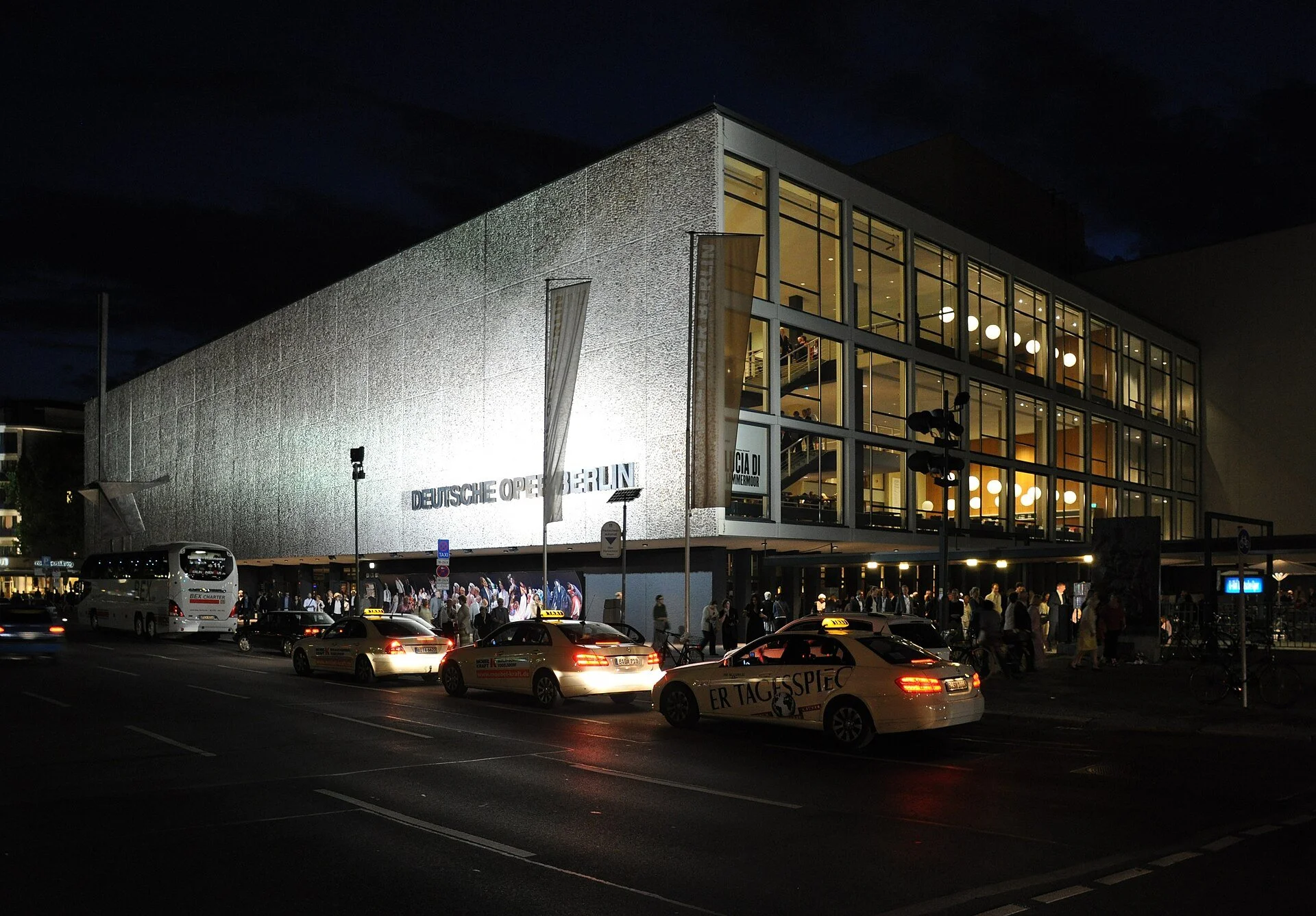
Deutsche Oper Berlin by night, June 2012. Photo by Andreas Praefcke. Wikimedia Commons
They don't necessarily move between these worlds, but rather, they embody them. Immersing into Berlin's cultural scene means, by definition, moulding oneself to the extraordinary range and diversity of its landscape. One evening might call for the elegance of an opera house, the next for the anonymity of a dark dance floor in a bunker. Neither experience cancels out the other. Instead, embracing this contrast becomes a way of embodying the multiplicity of the city itself.
There is a kind of paradox in Berlin's relationship with identity and belonging. Acceptance of the different is celebrated, however, unwritten rules and expectations still seem to dictate each cultural microcosm. Even those that celebrate freedom and the breaking of conventions inevitably seem to develop codes of their own. We navigate between these environments, adapting ourselves to their particular flow while simultaneously seeking the freedom to escape them. Perhaps this constant negotiation is what makes Berlin's audiences so difficult to define.
The city’s nonchalance even affects this coexistence of worlds. Opera and techno? Sure, what’s the big fuss about? My very writing about it goes against the coolness that’s supposed to flow with the embodiment of these two scenes.
And maybe the distance between these opposing experiences is not as great as we imagine. What connects a heartbreaking soprano aria and the somatic calling of dark techno? Both reach beyond our everyday existence, touching something nearly spiritual: one through the purity of human voice, the other through a somatic rhythmic healing.
In a city that has long embraced experimentation, reinvention and the avant-garde, there is little need to justify one's cultural taste. Berlin contains a universe of different worlds, and as a byproduct, the people embody this range by simply riding the spectrum of its cultural landscape. There simply exists an appreciation for what is, a natural following of what our hearts call for, and the possibility of experiencing things that exceed expectations and boundaries.
Perhaps what unites them is precisely their indifference to labels, embodying a freedom to move between worlds, to embrace contradiction, and to remain undefined.