What’s in a Name? Exploring the Misogynistic Roots of Opera’s Divas and Prima Donnas
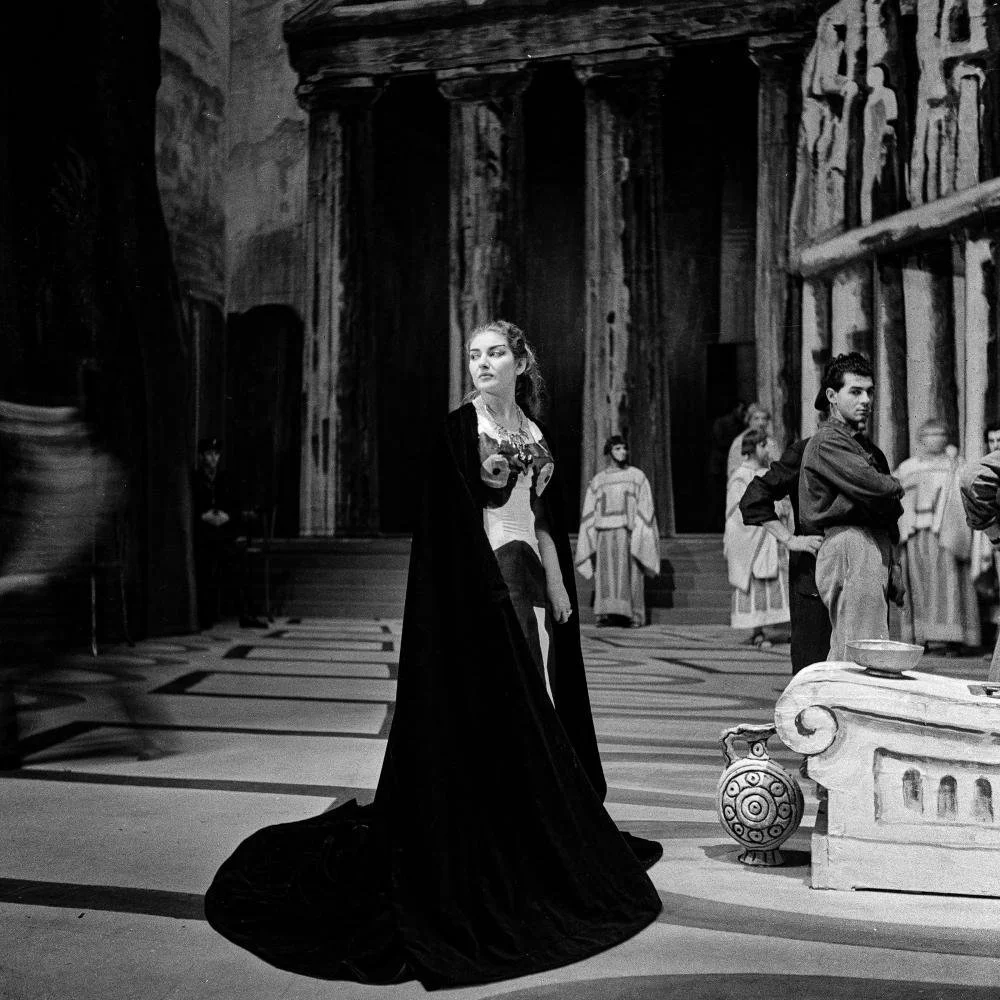
Maria Callas during rehearsals for Luigi Cherubini's opera Medea at Teatro alla Scala, Milan, 1953. Photo by Erio Piccagliani
9 July 2026
It is a truth universally acknowledged that an opera can only be as good as its leading soprano. It doesn’t matter whether the tenor is a world-class soloist or how well the chorus blends with the orchestra. It is the soprano who dictates the success of the performance, as her portrayal of heartbreak, illness, or madness captivates the audience, drawing them in with her dramatic coloratura lament. Women, therefore, have been placed on opera’s pedestal of fame. You’ve undoubtedly heard their names before - Maria Callas, Joan Sutherland, Leontyne Price, Renée Fleming, Cecilia Bartoli - the most famous women to ever grace the operatic stage, all earning the coveted titles of prima donna and diva. While these terms are used to describe a soprano of spectacular talent, they are also entangled with a complex and problematic history of misogyny (prejudice against women) that has plagued the opera industry since its inception.
The term prima donna, meaning “first lady,” originated in 18th-century Venetian opera to describe a lead female singer responsible for most of the vocal workload. Back then, sopranos weren’t the star performers; that title belonged to castrati—men castrated in boyhood who possessed a powerful, high vocal register. As castrati declined in popularity around the 19th century, sopranos rose to prominence as the most coveted high voices. Consequently, prima donna came to signify an exceptionally talented soprano, highly sought after by top opera companies across Europe and North America. Some prima donna sopranos of the late 19th century and early 20th century were so revered for their voices that they transcended their roles and became cultural icons, earning the titles of Divas - the Italian term for goddess - on account of their divine voices.
While these terms were originally used to describe immense talent, they soon became entangled with an unpalatable persona, used to describe female singers perceived as self-important, temperamental, and demanding as a result of their success. The trope of the “demanding diva” or “pompous prima donna” was invoked by male conductors, agents and administrators to tone police female singers who spoke out against systemic abuse or corruption they faced within the opera industry. Women’s concerns regarding personal safety, fair compensation and overall well-being were often ignored as a result of this trope, leading to further harm. For instance, due to contractual obligations and pressure from musical directors, Maria Callas was forced to repeatedly sing demanding roles such as Medea and Norma without sufficient time to recover. She was labelled as “uncooperative” and “demanding” by the media for protesting the repertoire, and the constant dismissal of her concerns eventually led to permanent vocal damage, contributing to the premature end of her career.
The opera industry has consistently profited from women’s voices while simultaneously silencing them. Male conductors, singers and musical directors who assert themselves are seen as strong leaders, whilst women are regarded as demanding, unreasonable and narcissistic. It is precisely this misogynistic double standard that has become synonymous with the terms prima donna and diva, which, in my opinion, render them unacceptable to use, especially given that systematic gendered harassment and abuse still persist within the opera industry today. The first step to challenging these stereotypes is to address them, and the language we use has meaningful and lasting consequences, which we can either use to perpetuate the issues at hand or to make a conscious effort to fight them.